Research
Will renewable hydrogen ever gain traction in the Netherlands?

The EU’s renewable hydrogen targets for industry and transport are ambitious, but they do not automatically translate into a rapidly expanding market. In the Netherlands, implementation results in a relatively limited obligation. This report examines what that means for renewable hydrogen uptake and the prospects for market growth toward 2030 and beyond.

Summary
Introduction
A few years ago, expectations for renewable hydrogen in the Netherlands were high. The combination of large-scale offshore wind capacity, major seaports, and a sizable industrial sector appeared to give the Netherlands a favorable position in the emerging northwestern European hydrogen market. Since then, development has proven more challenging than anticipated. Electrolyzer capacity targets have been pushed back, hydrogen projects have struggled to get off the ground, and offtakers have shown only limited willingness to absorb the cost premium associated with renewable hydrogen.
At the same time, EU targets are ambitious. The Renewable Energy Directive III (RED III) contains targets for the use of renewable hydrogen and derivatives, which are defined under RED III as renewable fuels of non-biological origin (RFNBOs). The directive requires that by 2030, at least 42% of the fossil-based (“gray”) hydrogen used in industry be replaced by RFNBOs. For the transport sector, RED III mandates that RFNBOs account for 1% of the energy supplied to the sector by 2030. In addition, the ReFuelEU Aviation regulation introduces minimum blending requirements for synthetic aviation fuels from 2030 onward.
On paper, the EU targets point to rapidly growing demand for RFNBOs, but these are not synonymous with renewable hydrogen. While renewable hydrogen is an essential component of RFNBOs, the final products often consist of a combination of renewable hydrogen and other elements, such as carbon derived from CO2. As a result, demand for RFNBOs does not translate one-to-one into demand for renewable hydrogen. The volume of renewable hydrogen required varies by application and depends on the composition of the end product as well as the efficiency of the production process.
This report therefore examines not only the extent to which a market for RFNBOs is likely to emerge in the Netherlands, but more importantly the implied uptake of renewable hydrogen resulting from these developments. Based on the EU RFNBO targets, we estimate which sectors are expected to drive this uptake toward 2030 and assess the scope for further expansion of the renewable hydrogen market.
Unless stated otherwise, the term hydrogen in this report refers to renewable hydrogen. Hydrogen produced from fossil feedstocks without CO2 capture is consistently referred to as gray hydrogen.
The Netherlands scales back its hydrogen ambitions
RFNBOs will play a limited role in the Dutch energy transition. While pre-Covid RFNBOs were viewed as a broadly applicable means of decarbonizing transportation and industry, it has since become clear that this assumption is no longer valid. The key issue is that RFNBOs are too expensive (in Dutch) and that the production requirements are too complex, preventing the market from gaining traction.
This makes RFNBOs unsuitable as a generic decarbonization route. Their value therefore lies in targeted use in specific niches, such as applications where electrification is not feasible or prohibitively expensive, or where RFNBOs are essential as molecular feedstocks. This implies that the uptake of RFNBOs in the Netherlands will be lower than previously assumed in policy assessments and scenario analyses.
Production costs for RFNBOs also vary significantly. In countries with favorable conditions for renewable energy, RFNBOs can be produced at a substantially lower cost. Imports from these countries are expected to remain less expensive than domestically produced RFNBOs, even after accounting for transportation costs.
This new reality is now also reflected in the Dutch repositioning with regard to the future market for RFNBOs. The focus is shifting toward the Netherlands as an importing rather than a producing country. This has resulted in a revision of the targets for domestic production capacity. In 2025, the previous ambition of achieving 3GW to 4GW of electrolyzer capacity by 2030, with a view to reaching 8GW by 2032, was revised to 3GW to 4GW by 2035 in a letter (in Dutch) to Parliament. According to the government, this revised ambition is better aligned with realistically expected uptake and the availability of infrastructure over the medium term.
Industrial uptake will be lower than RED III suggests
The uptake of RFNBOs through 2030 will be driven entirely by EU targets translated into binding national obligations. Without these obligations, voluntary offtake is unlikely to materialize, as renewable hydrogen is three to four times more expensive than gray hydrogen.
However, there is a significant gap between the EU target for industry and the statutory obligation imposed by the Netherlands on operators of industrial installations that use gray hydrogen. RED III stipulates that, by 2030, RFNBOs must account for 42% of the gray hydrogen used in industry at the member-state level. The Netherlands transposed this target into a statutory annual obligation of only 4% for individual industrial installations.
This approach is possible because RED III is a directive, which gives member states flexibility in transposing it into national laws and regulations. As a result, there is a substantial gap between the EU target and the statutory obligation in the Netherlands.
In addition, an exemption is being considered for ammonia producers, whereby only 40% of their hydrogen use would count toward the RED III obligation. Because the ammonia sector is by far the largest industrial user of hydrogen, this would significantly reduce mandatory uptake. A full exemption (in Dutch) is also being considered for hydrogen produced in facilities that have received partial funding from the European Innovation Fund and that achieve a 70% annual reduction in greenhouse gas emissions from their ammonia production.
Furthermore, the following categories of hydrogen are exempt from the 42% EU target under RED III across all member states:
- Hydrogen produced by decarbonizing industrial residual gas and used to replace the specific gas from which it is produced.
- Hydrogen produced as a by-product or derived from by-products in industrial installations.
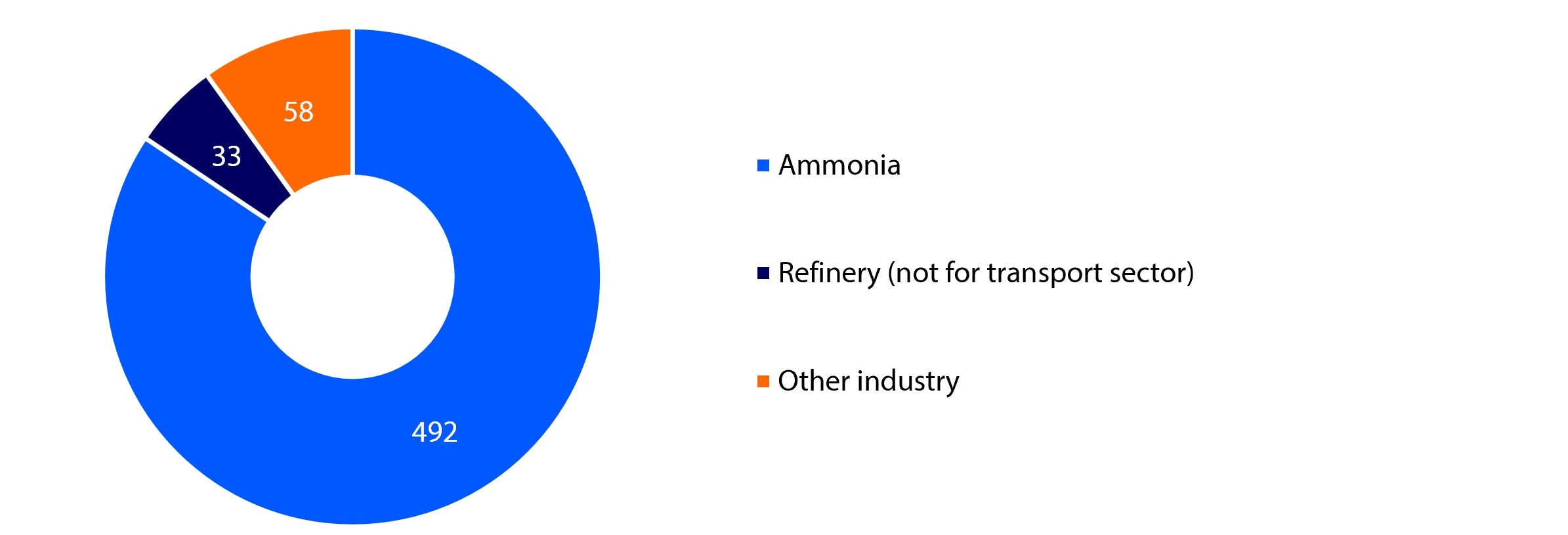
Figure 1 shows that ammonia producers are the largest industrial users of gray hydrogen. Exemptions for this sector would therefore have a significant impact on the volume of RFNBOs subject to the statutory 4% annual obligation.
Under RED III, refineries are largely classified within the transport sector, as the hydrogen they use is primarily associated with the production of transport fuels. As a result, although refineries are the largest users of gray hydrogen in the Netherlands, most of their use isn’t subject to the EU’s 42% industrial target.
Figure 1: Current gray hydrogen uses in Dutch industry in kilotons*
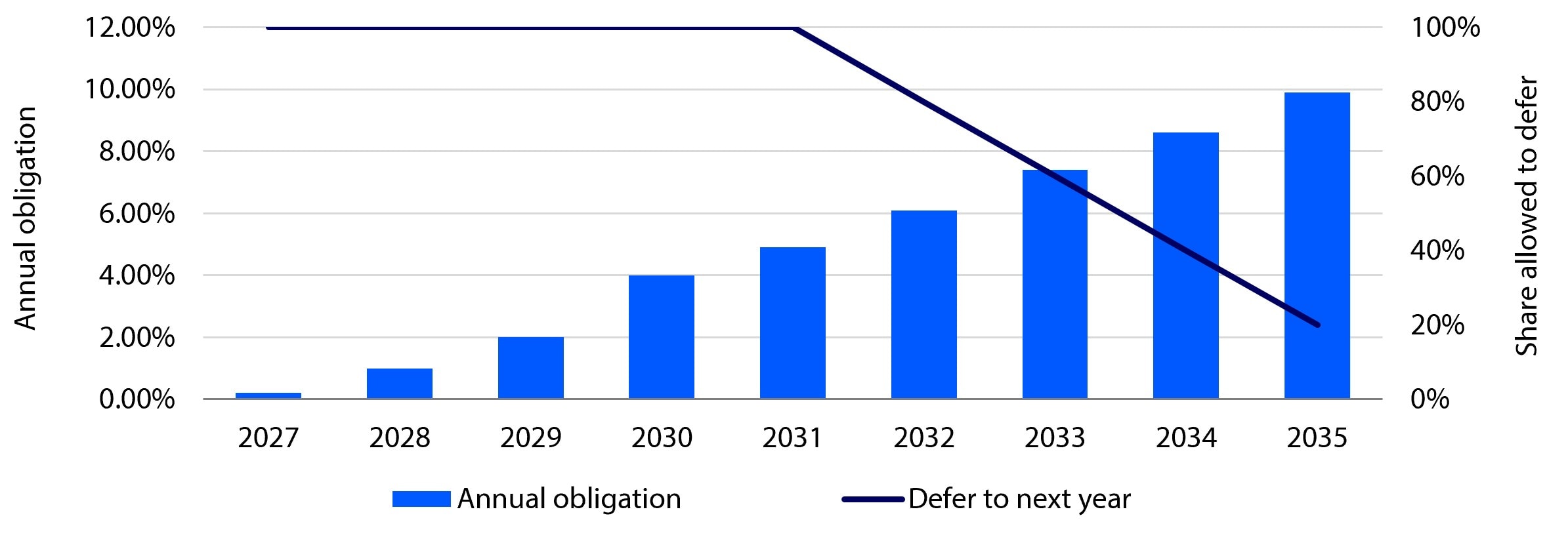
Under the current legislative proposal (in Dutch), the statutory annual obligation will start at 0.2% in 2027. As shown in figure 2, this will increase to 4% by 2030 and to nearly 10% by 2035. Because operators of industrial installations are allowed to defer (part of) their annual obligation to the following year, RaboResearch expects hydrogen uptake to remain limited in 2027. This annual deferral mechanism can continue until 2032, after which the percentage that may be deferred will be gradually reduced. This provides operators of industrial installations with a degree of flexibility.
Additional flexibility has been incorporated into the compliance system. Obligated parties may save credits for future years (“bank” them) or sell excess credits when they exceed their requirement, while the accounting rules are more lenient during the initial years of implementation. An overview of the proposed compliance framework is provided in Appendix 1.
Failure to meet the annual obligation may result in a financial penalty. The penalty is capped at EUR 1.1m and is indexed annually. In certain cases, it may increase to as much as 10% of annual turnover. In addition, any compliance shortfall must be remedied within 12 months by acquiring or generating sufficient compliance credits.
Figure 2: Proposed phase-in scheme of the 4% statutory annual obligation in industry
The Dutch implementation of RED III reveals a 38 percentage-point gap between the statutory annual obligation of 4% for industrial installations and the EU target of 42% at the member-state level. By mandating only 4%, the government expects this gap to be largely bridged through voluntary uptake. The underlying assumption is that industrial operators, supported by subsidy schemes, will procure RFNBOs beyond their legal obligation.
RaboResearch considers this scenario unlikely. The development of the hydrogen market has been exceptionally slow, while many hydrogen projects continue to face rising costs (in Dutch), delays, and cancellations. At the same time, Dutch industry is already grappling with high energy costs and intense international competition.
In addition, RaboResearch expects current subsidy schemes to be insufficient to fully bridge the green premium, that is, the price difference between gray hydrogen and RFNBOs. The Ministry of Climate Policy and Green Growth also acknowledges this challenge in the Explanatory Memorandum (in Dutch) accompanying the legislative proposal.
The modest annual obligation reflects the government’s balancing act between climate ambition, affordability, and preserving the international competitiveness of Dutch industry. In practice, the government appears to recognize that a more ambitious statutory obligation would impose significant costs on industry. This is particularly relevant given that several other EU member states have chosen not to introduce a national obligation for industrial hydrogen users. In those countries, the required scale-up of RFNBO use will depend entirely on voluntary market uptake and supportive policy measures.
What does this translate to in terms of industrial demand?
A public consultation on the proposed ammonia exemptions was conducted during the first half of 2026. Until the details are finalized, estimating the exact level of demand remains challenging. Assuming that the exemptions are implemented and that no other policy changes are introduced, we rely on the estimates by CE Delft (in Dutch) and TNO (in Dutch) that were used by the Ministry of Climate Policy and Green Growth in its explanatory memorandum.
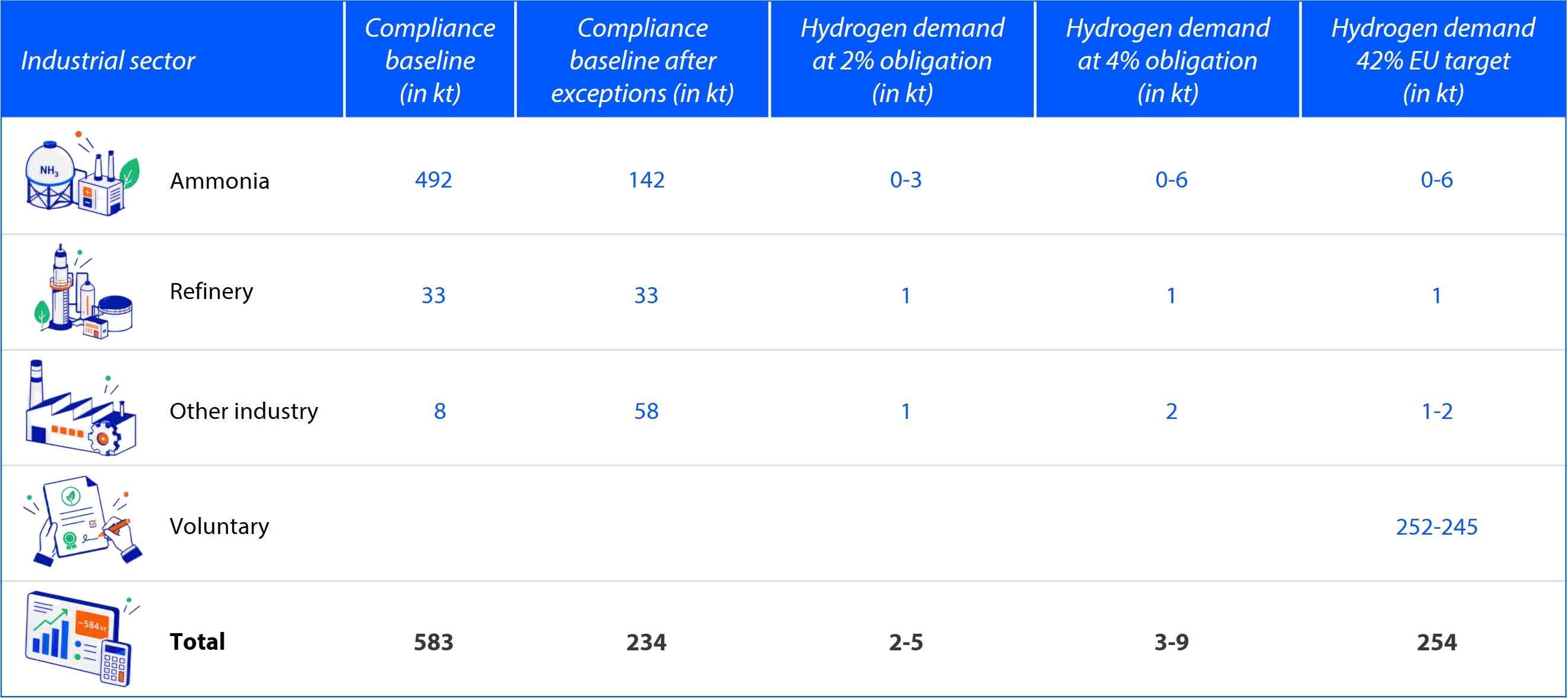
If the Netherlands is to meet the EU's 42% target, hydrogen demand could reach up to 254 kilotons (kt) by 2030. Of this volume, an estimated 245kt to 252kt would need to come from voluntary uptake, leaving just 9kt of mandatory uptake under the statutory Dutch obligation. However, high energy costs could prompt ammonia producers to increasingly rely on imported ammonia. In that scenario, the remaining ammonia-related compliance baseline could, in theory, disappear altogether. Assuming the statutory annual obligation remains at 4%, total mandatory industrial uptake would then fall to just 3kt (see table 1).
Moreover, if companies defer compliance with the 4% obligation from 2030 to 2031, they would only need to meet the 2% obligation applicable in 2029 during 2030. In that case, hydrogen uptake could decline to between 2kt and 5kt.
Assuming that voluntary uptake of renewable hydrogen remains limited, RaboResearch expects the EU's 42% target to remain well out of reach. This assessment is reinforced by the uncertainty surrounding the consequences of non-compliance. While failure to meet the target may have implications at the member state level, the nature and severity of any consequences will ultimately depend on future political decisions and the extent to which the EU chooses to enforce the target.
Table 1: Transposition of the EU’s 42% hydrogen target into a 4% statutory annual obligation by 2030*
The transport sector will opt for the refinery pathway
While mandatory industrial uptake is expected to remain limited, RED III also creates demand for RFNBOs in the transport sector. The next section examines how these requirements translate into hydrogen uptake. For the transport sector, RED III allows member states to choose between two compliance options:
- A minimum share of 29% renewable energy consumption in transport by 2030; or
- A 14.5% reduction in lifecycle greenhouse gas (GHG) emissions by 2030 compared with fossil fuels.
The Netherlands has chosen the second option (in Dutch). Lifecycle emissions encompass all greenhouse gas emissions generated throughout the fuel value chain, from production to end use. In addition, RED III requires that at least 1% of the energy supplied to the transport sector must consist of RFNBOs. However, because RED III allows RFNBOs to be double counted for compliance purposes, meaning that each unit of RFNBO energy can count twice toward the target, the effective target in practice is equivalent to 0.5% of the transport fuel pool.
The Dutch decision to adopt a GHG emissions reduction target means that the Ministry of Infrastructure and Water Management focuses on reducing GHG emissions rather than increasing renewable fuel volumes. To achieve this, and unlike most other member states, the ministry has established a highly granular compliance framework: the Fuel Transition Obligation (brandstoftransitieverplichting).
Under this system, fuel suppliers are required to reduce the lifecycle emissions associated with all fuels consumed by the transport sector, referred to as the fuel pool, by supplying renewable fuels to the transport sector. This obligation applies to specified fuels supplied to three transport subsectors:
- Land (including road transport, mobile machinery, agricultural machinery, and recreational boating)
- Inland navigation
- Maritime shipping
Aviation falls entirely outside the Fuel Transition Obligation and is subject to a separate regulatory framework.
Fuel suppliers are required to demonstrate compliance with their obligations. They do so by registering Emission Reduction Units (EREs, or emissiereductie-eenheden), which are awarded for supplying renewable energy that reduces GHG-emissions. One ERE corresponds to 1kg of avoided GHG emissions.
A more detailed explanation of this system is provided in the article From HBEs to EREs in the Netherlands – New income opportunities for smaller businesses and households in electric mobility.
For RFNBOs, two types of EREs can be generated:
- ERE-R: RFNBOs that are used directly as transport fuels.
- RAREs (Renewable Aviation and Refinery EREs): Renewable hydrogen used in the refining process for fossil and biofuels supplied to the transport sector. The use of renewable hydrogen in refining is commonly referred to as the refinery pathway.
Separate GHG emissions-reduction targets apply to the direct use of RFNBOs and to the refinery pathway across the various transport subsectors (see table 2).
Table 2: GHG emissions-reduction targets for RFNBOs by transport subsector
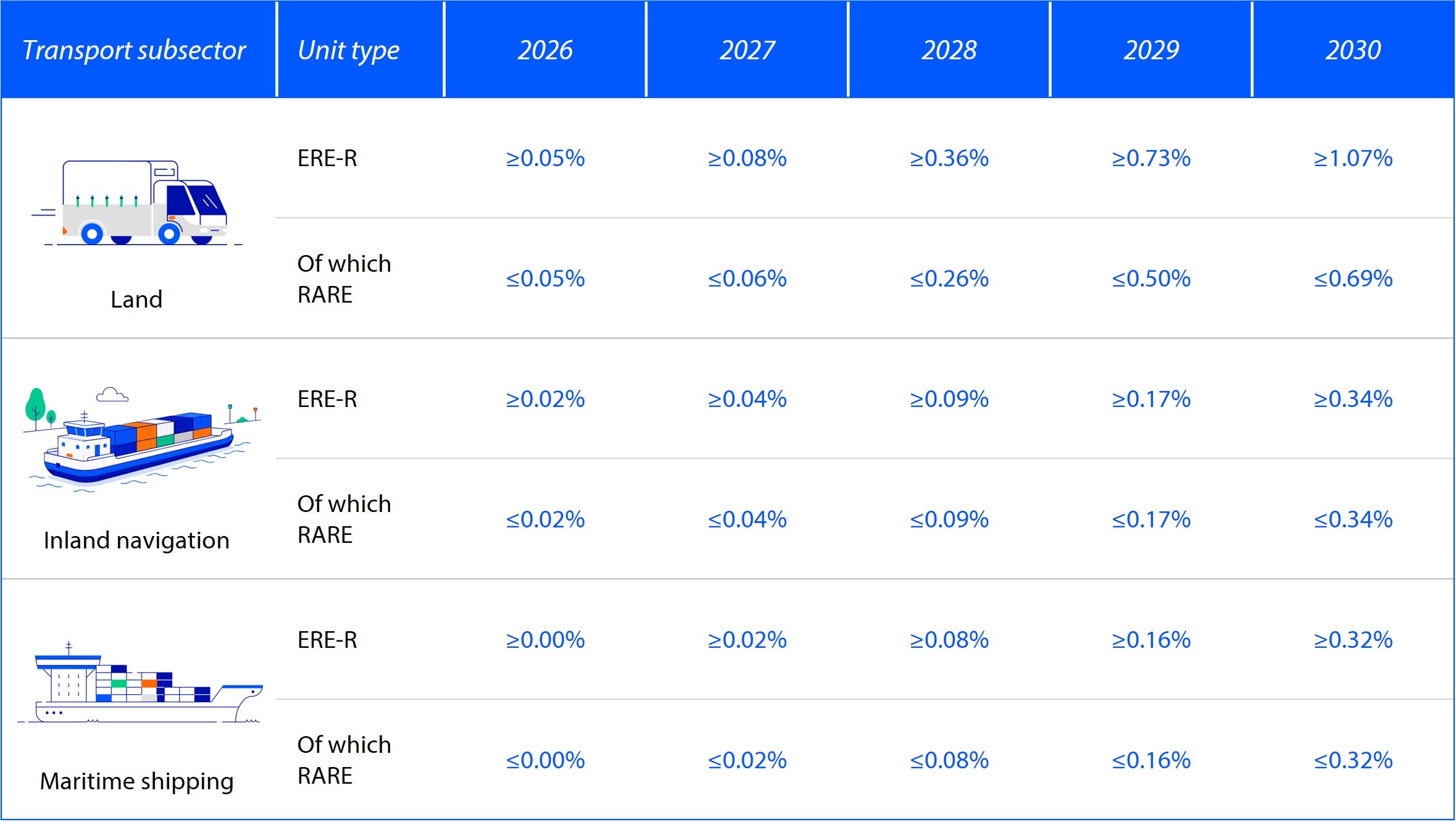
As shown in table 2, a specific level of GHG emissions reduction must be achieved with RFNBOs in each subsector. However, only a limited share of this reduction may be achieved through the refinery pathway. This cap reflects the government's preference for the direct use of RFNBOs over their use in refining. Under the refinery pathway, renewable hydrogen is used in the production of fossil and biofuels that continue to emit GHG emissions when combusted. Given the additional costs and operational complexities associated with producing, distributing, and using RFNBOs as transport fuels, fuel suppliers are expected to show a strong preference for the refinery pathway. The cap on RARE is intended to limit this option.
For inland navigation and maritime shipping, the GHG emissions reduction target to be met with ERE-Rs is exactly equal to the maximum level permitted through RAREs. RaboResearch therefore expects that, in these segments, the requirement will be met almost entirely through the refinery pathway.
The situation differs for the sub-sector land. In this segment, the refinery pathway alone will not be sufficient to meet the required GHG emissions reduction target. As a result, the direct use of RFNBOs will be necessary to achieve compliance.
Unlike the industrial sector, where the government has provided an indication of the trajectory beyond 2030, the Ministry of Infrastructure and Water Management has not published a forward-looking pathway for the years after 2030. Consequently, the future development of the transport sector's GHG emissions reduction targets remains uncertain.
How large will hydrogen uptake from the transport sector be?
Translating GHG emissions reduction targets into hydrogen uptake requires a range of assumptions regarding the size and composition of the transport fuel pool in 2030, as well as the GHG emissions savings delivered by RFNBOs relative to the fossil fuels they replace.
TNO has developed an estimate (in Dutch) of the energy volumes associated with the emissions reduction targets for each transport subsector. Table 3 breaks down RFNBO demand by subsector. According to these estimates, the overall emissions reduction target corresponds to 7.5 petajoules (PJ) of RFNBO consumption.
Table 3: Use of RFNBOs to achieve GHG emissions reduction targets by transport subsector
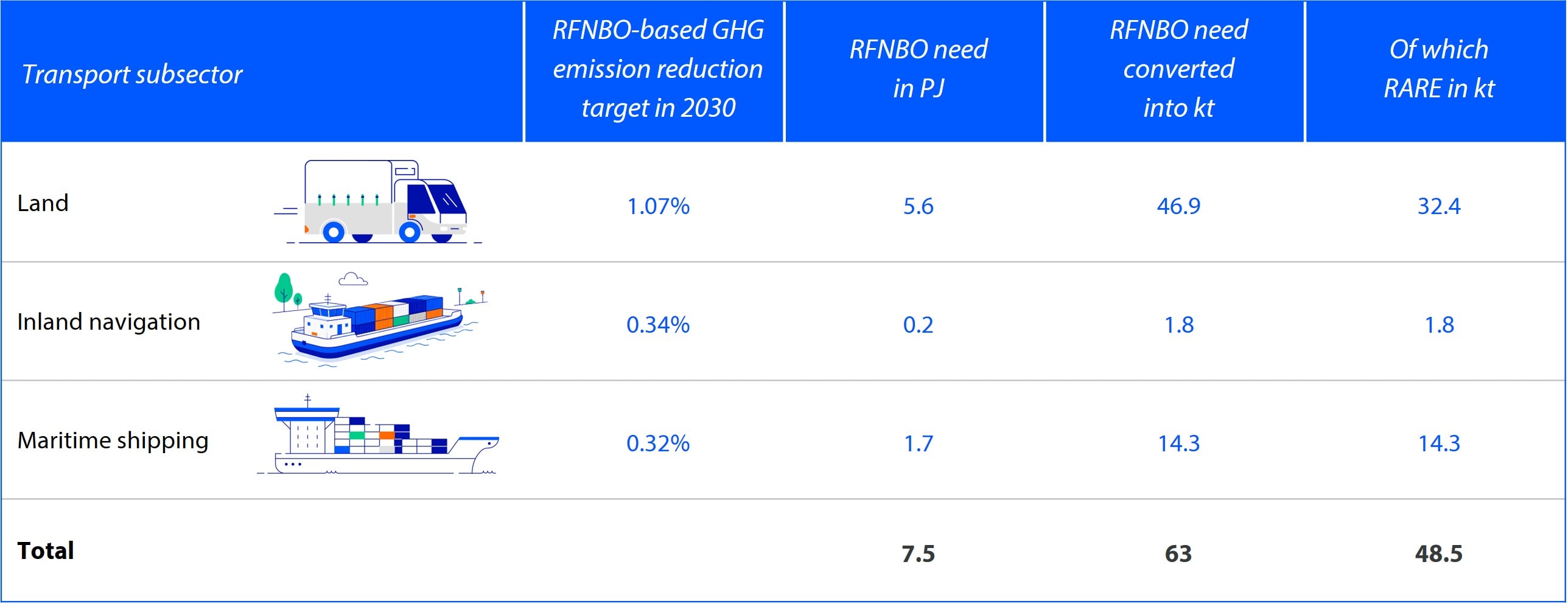
Like TNO, RaboResearch expects the transport sector to meet 48.5kt of its obligation through the refining route. This implies that hydrogen will be used to achieve the required GHG emissions reduction. Among the transport subsectors, only the land transport subsector has a remaining GHG emissions reduction requirement of 0.31% that must be met through the direct use of RFNBOs. However, TNO also assumes that this requirement will be fulfilled by fuel cell vehicles requiring pure hydrogen. As a result, compliance with the RFNBO requirement in the transport sector is expected to be met entirely through hydrogen. In total, the hydrogen uptake across the three transport subsectors is expected to amount to 63kt.
Should the targets be tightened after 2030, significant additional hydrogen capacity remains available through the refining pathway. In theory, all gray hydrogen currently used in refining could be replaced by renewable hydrogen. In 2024, the Dutch refining sector used 434kt of hydrogen.
Aviation takes a different approach
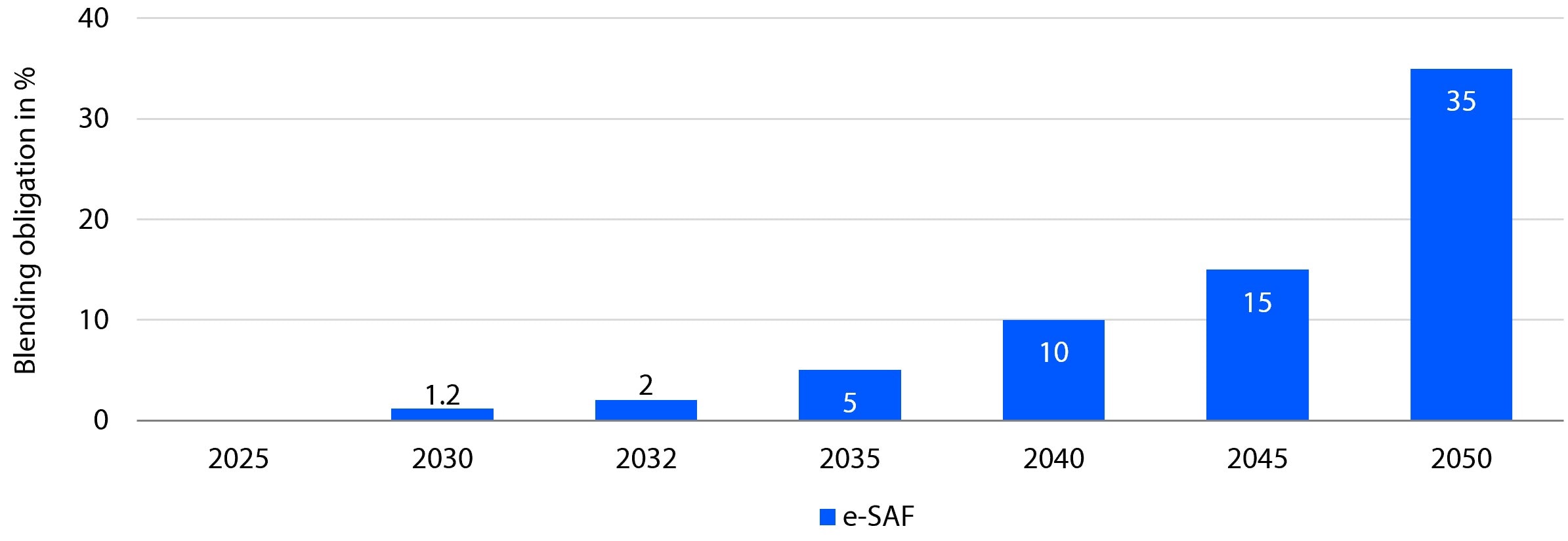
Aviation is governed by ReFuelEU Aviation, which is an EU-regulation, leaving little room for national flexibility. It imposes an e-SAF blending mandate on aviation fuel suppliers. As shown in figure 3, the e-SAF blending requirement starts at 1.2% in 2030 and rises to 5% by 2035. ReFuelEU Aviation allows compliance to be averaged across 2030 and 2031, enabling part of the obligation to be carried forward to 2031. Full deferral is not permitted, however, as a minimum e-SAF share of 0.8% must be met in 2030.
The penalty for non-compliance with the blending mandate consists of twice the price differential between conventional jet fuel and e-SAF, in addition to the obligation to make up the shortfall in the following year.
Figure 3: Phase-in of the e-SAF blending mandate under ReFuelEU Aviation
To estimate hydrogen demand from aviation, an estimate of jet-fuel consumption in 2030 is necessary. As a proxy, this analysis uses 2024 consumption. In 2024, the Netherlands consumed 150PJ of jet fuel, equivalent to approximately 3,500kt. By 2030, at least 0.8% of the volume consumed must consist of e-SAF. This implies a requirement for 28kt of e-SAF. The hydrogen content of e-SAF is approximately 20%, including system losses. Consequently, producing 28kt of e-SAF would require at least 5.6kt of hydrogen. Given the currently very limited availability of e-SAF, RaboResearch expects market participants to comply with the minimum requirement rather than exceed it.
Total mandatory RFNBO uptake is expected to be between 73kt and 78kt in 2030
Altogether, we expect mandatory renewable hydrogen uptake to amount to 73kt to 78kt in 2030. This estimate assumes that the ammonia sector continues domestic production rather than shifting toward imported ammonia. With an estimated 68kt of hydrogen uptake, the transport sector accounts for the vast majority of mandatory uptake (see figure 4). Compliance with the transport obligations is expected to be achieved largely through the relatively cost-effective refinery pathway. As a result, approximately 48kt of total mandatory hydrogen uptake is expected to arise from this pathway alone. Against this backdrop, mandatory uptake from industry remains comparatively limited, despite the sector's prominent role in EU renewable hydrogen policy.
Figure 4: Mandatory hydrogen uptake by subsector, in kt
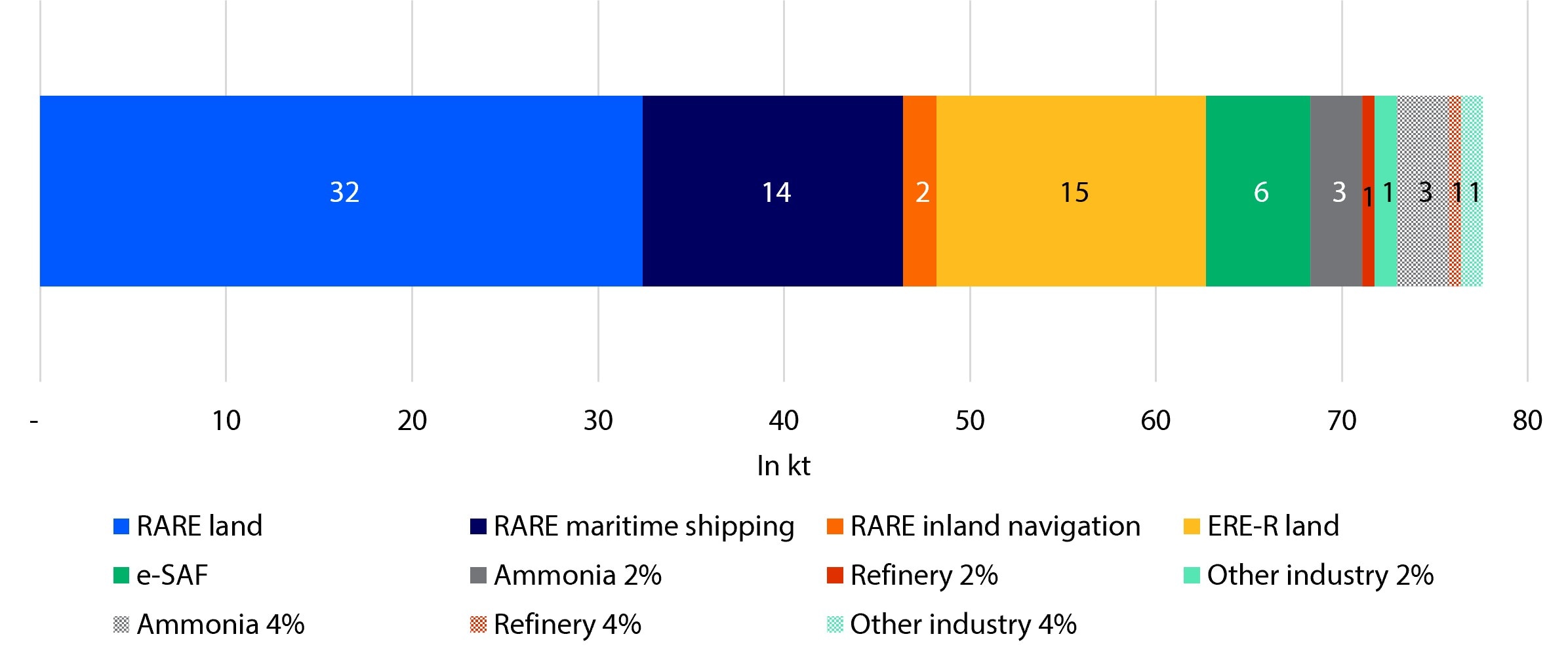
Figure 5: Refinery pathway versus other subsectors, in kt*

Figure 6: Mandatory versus voluntary hydrogen uptake, in kt*

How much electrolyzer capacity would be required to produce 73kt of hydrogen? Based on an electricity consumption of 58kWh (in Dutch) per kilogram of renewable hydrogen and 4,500 full-load hours per year, approximately 1GW of installed electrolyzer capacity would be needed to produce 73kt of renewable hydrogen annually. Like the Dutch government (in Dutch), RaboResearch does not expect the Netherlands to develop all of this required electrolyzer capacity domestically. As a result, a substantial share of RFNBO uptake is likely to be met through imports. We therefore expect imported RFNBOs to play a critical role in supplying the volumes required to meet regulatory obligations.
Will renewable hydrogen ever gain traction in the Netherlands?
Toward 2030, the Dutch market for RFNBOs, and therefore for renewable hydrogen, is expected to remain limited. Uptake is driven primarily by statutory obligations. Most demand will be concentrated in refining and e-SAF production. Voluntary industrial uptake is expected to remain subdued as long as the cost gap between gray hydrogen and renewable hydrogen is not bridged.
A broad acceleration is also unlikely beyond 2035. Higher EU targets do not automatically translate into higher actual uptake. For that to occur, sufficient volumes of supply must become available at costs that end users can absorb. If EU production criteria remain largely unchanged and member states seek to meet RED III targets mainly through voluntary contributions, RaboResearch expects RFNBOs to remain scarce and costly. This would constrain voluntary uptake while keeping compliance costs elevated for obligated parties.
The Netherlands is not alone in facing these challenges. Other EU members are grappling with similar issues. At the heart of this lies a broader policy dilemma. The EU aims to lead the energy transition, while simultaneously confronting growing concerns about affordability and international competitiveness. This comes at a time when geopolitical uncertainty and relatively high energy prices are already weighing on the EU investment climate.
For individual member states, this creates a difficult trade-off. Rapid and stringent transposition of RED III into national legislation would increase costs for domestic industry. If other member states adopt less stringent obligations or delay implementation, this could result in competitive disadvantages within the European single market. Countries with large energy-intensive industrial sectors, such as the Netherlands, will therefore proceed cautiously in order to avoid measures that could unduly undermine industrial competitiveness.
From the perspective of individual member states, this cautious approach is understandable. At the EU level, however, it risks creating a collective-action problem. As a result, the market for RFNBOs is likely to develop only gradually. Until 2035, renewable hydrogen is therefore expected to remain a policy-driven niche market. Even beyond that point, a broad-based market breakthrough appears unlikely.