Research
No frills: Where North American CCUS is getting built and what’s holding it back

North American carbon capture, utilization, and storage (CCUS) deployment is concentrating in regions that connect emissions sources with CO2 transportation infrastructure, permitted geologic storage, utilization, supportive policy, and community acceptance. The Gulf Coast and Alberta remain leading hubs, while other regions advance around specialized opportunities. Although policy incentives have improved project economics, the next phase of growth will depend on the ability to expand transportation and storage networks, secure permits, and maintain community support.

Summary
CCUS is built where the full project chain lines up
CCUS projects in North America are concentrating in certain regional hubs where five factors align: large industrial emissions sources, access to CO2 transport and storage infrastructure, utilization of captured CO2, supportive policy frameworks, and sufficient local support to move projects through permitting. Regions that combine all five factors, such as the US Gulf Coast and Alberta, Canada, continue to attract investment and project approvals, while jurisdictions missing one or more of these elements have generally seen slower deployment (see figure 1).
Figure 1: Map of CCUS activity in North America, 2026
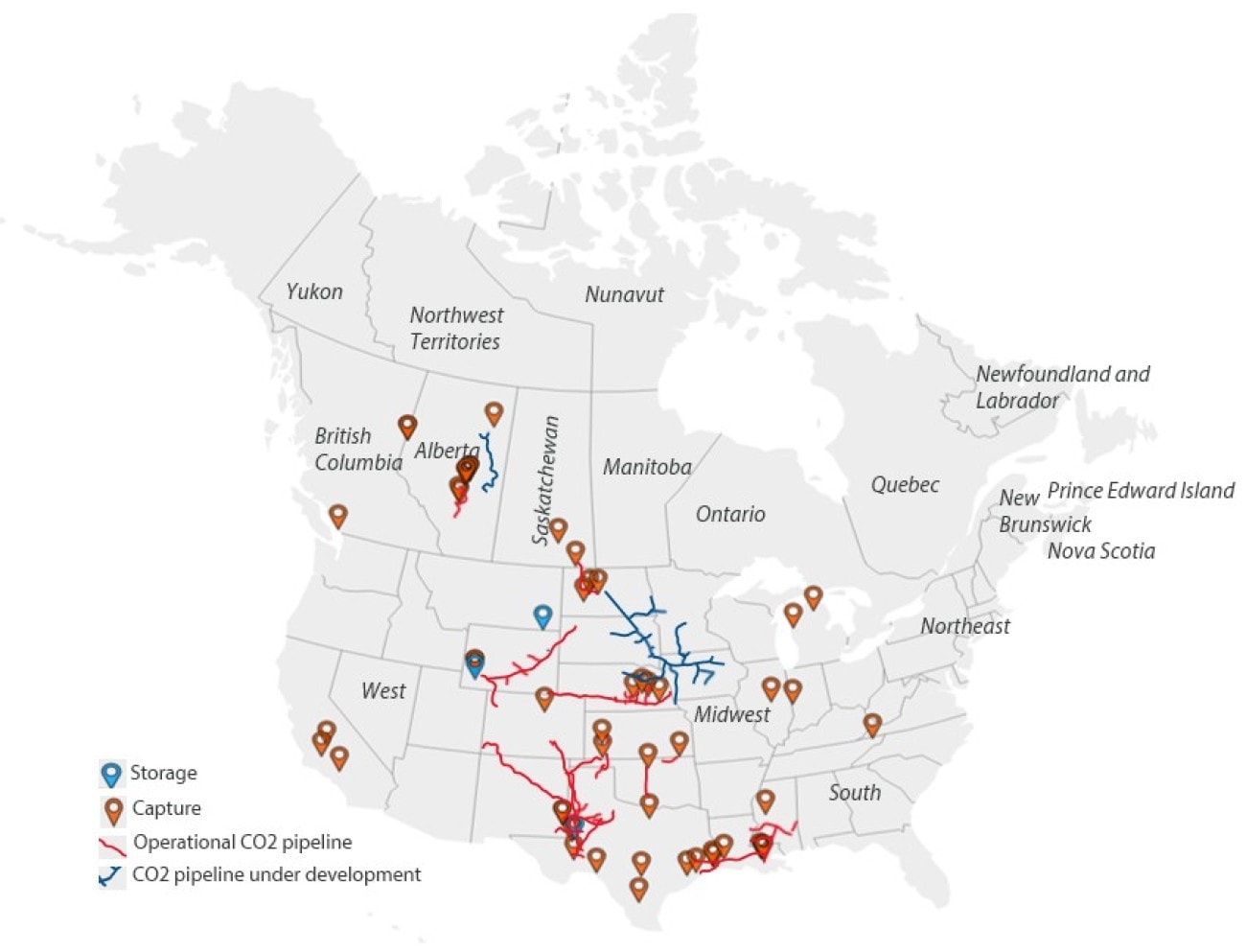
Note: Map is not drawn to scale. This map only displays capture and storage projects that are operational or under construction and projects in which a final investment decision has been reached. The operational pipelines may also include some segments still under development.
Source: Datawrapper, CarbonStorage.io, American Carbon Alliance, BloombergNEF, RaboResearch 2026
CCUS development clusters in the center of the US
The US accounts for the majority of late-stage CCUS capacity in North America, with development concentrated along the Gulf Coast and smaller clusters emerging across the Midwest. Existing CO2 infrastructure, storage resources, and federal incentives such as the 45Q tax credit have helped drive deployment, but future growth will depend on more than project economics. Access to storage, pipeline infrastructure, permitting, and stakeholder acceptance are increasingly determining where projects move forward and where they stall.
Gulf Coast: Most experienced but strained by permitting
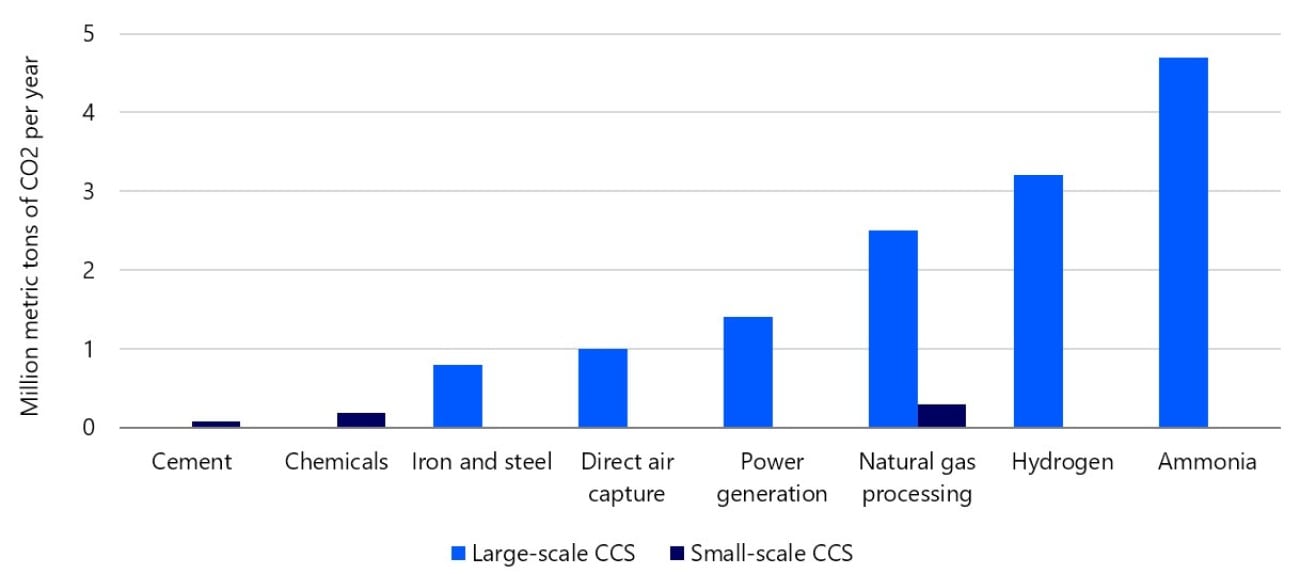
The US Gulf Coast, particularly Texas and Louisiana, remains the most developed market in North America. The maturity is credited to large industrial processes, established CO2 transportation infrastructure, and experienced developers such as ExxonMobil, Occidental Petroleum Corporation, Linde, and CF Industries. Decades of oil and gas activity and enhanced oil recovery (EOR) established the expertise and infrastructure needed to support large-scale carbon management, including CO2 pipeline networks developed by companies like Denbury and Kinder Morgan, while the federal 45Q tax credit has strengthened project economics. As a result, the region’s CCUS activities have expanded beyond its traditional oil and gas applications into hydrogen, ammonia, chemicals, cement and steel (see figure 2).
Figure 2: Louisiana and Texas CCUS projects are largely linked to industrial facilities
Policy support has reinforced the Gulf Coast's structural advantages. Both Louisiana and Texas have received Class VI primacy from the Environmental Protection Agency (EPA), giving state regulators authority over CO2 storage permitting. This is important because access to permitted geologic storage is a prerequisite not just to obtain financing but also to qualify for 45Q. However, recent project developments demonstrate how permitting, infrastructure, and stakeholder challenges can increase project execution risk.
While Class VI primacy is intended to streamline permitting for CO2 storage and to provide developers with greater regulatory certainty, approval timelines remain lengthy. In October 2025, Louisiana issued an indefinite pause on new carbon sequestration applications to give regulators time to work through permitting and oversight challenges. The development highlights permitting capacity as an emerging constraint on further deployment. Even in North America’s most mature CCUS hub, securing storage approvals remains a critical bottleneck, and there is not enough storage capacity to service all capture projects.
Moreover, many CCUS projects depend on pipelines to transport captured CO2 to sequestration sites when utilization opportunities are not available nearby, making transportation infrastructure a critical component of project development. But efforts to expand these networks have faced resistance from local communities. In Louisiana, residents have challenged the use of eminent domain for carbon capture infrastructure, prompting legislative efforts (Senate Bill 244) to restrict these powers. Although the most restrictive proposals did not pass, the debate highlights how social acceptance and land-use concerns are becoming important factors in project development.
In June 2026, Air Products cancelled its Louisiana Clean Energy Complex project, citing that expected returns did not meet investment criteria. While economics were the stated reason, the project had also faced local opposition related to its pipeline and storage infrastructure. The cancellation highlights that, even in North America's most established CCUS market, project economics do not exist apart from permitting, infrastructure, and community engagement considerations.
The Gulf Coast remains North America's leading CCUS hub because it combines emissions, infrastructure, storage resources, and experienced developers. However, for future growth developers may need to overcome permitting delays, obstacles to infrastructure approvals, and community opposition.
Midwest: Alternative fuels and pipeline infrastructure
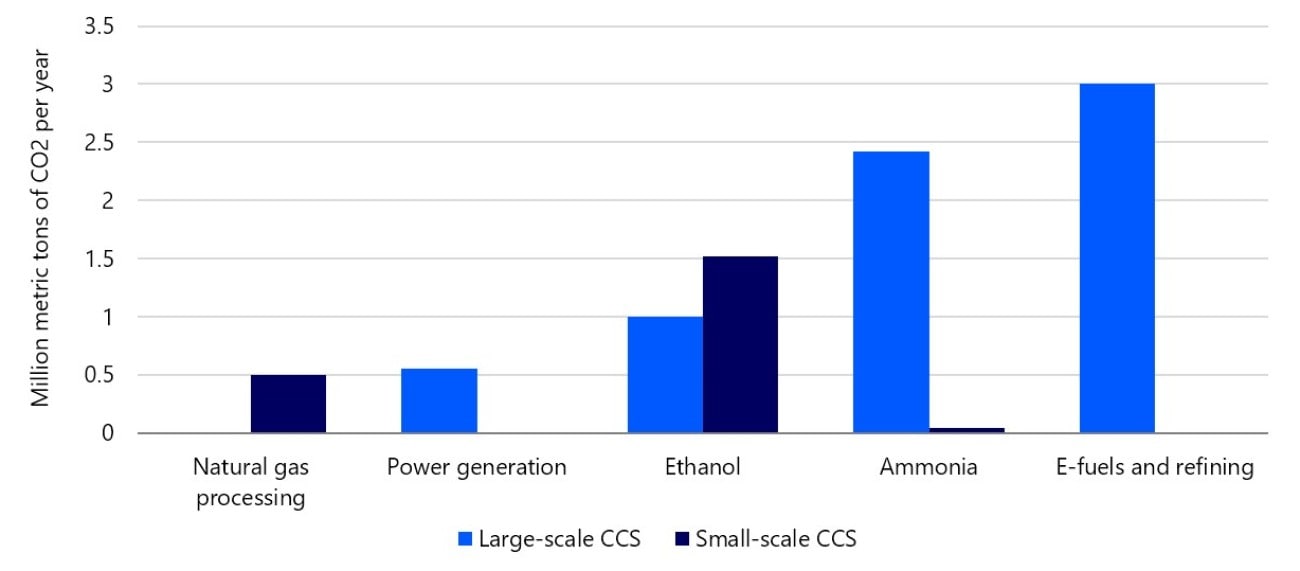
The Midwest, including Nebraska, Kansas, Illinois, Indiana, Michigan, Colorado, and North Dakota, has emerged as a key market for CCUS projects tied to alternative fuels, bioethanol, and fertilizer production (see figure 3 ). Unlike the Gulf Coast, where development is largely driven by heavy industry, the Midwest's opportunity is closely linked to its agricultural economy. This has created a strong use case as producers seek to reduce emissions and access low-carbon fuel markets.
Figure 3: Midwest CCS projects are largely linked to alternative fuels and agricultural activities
The region has attracted a distinct group of developers focused on transportation and storage infrastructure alongside capture projects. Companies such as Summit Carbon Solutions, Tallgrass, and ADM are pursuing projects that connect low-carbon fuel producers to permanent storage and utilization sites. The emphasis on transportation and storage networks rather than capture alone is a defining feature of the Midwest market, which is developing the infrastructure needed to move and use or permanently store CO2.
Currently, storage access is a hurdle. North Dakota and Wyoming are the only states with Class VI primacy in or near the region, meaning many projects either depend on long-distance transportation to reach approved storage sites or must navigate the multiyear federal permitting process. As a result, progress in the Midwest depends not only on capture projects moving forward but also on the successful buildout of transportation and storage infrastructure.
The dependence on transportation networks has made pipeline development in the area a critical bottleneck. Large-scale projects often require extensive pipeline networks to connect capture facilities with storage sites, but, as in the Gulf Coast, developers are facing resistance from local communities in these states. For example, the proposed Summit Carbon Solutions pipeline, which would span several Midwestern states, has experienced delays due to permitting challenges and community concerns related to property rights, public safety, and environmental impacts.
Policy uncertainty presents an additional challenge. Illinois enacted the SAFE CCS Act, requiring developers to obtain approval for geological sequestration from the Illinois EPA in addition to a Class VI permit. However, guidance on how this act will be implemented remains unclear. While intended to strengthen oversight and community protections, the legislation raises additional regulatory hurdles for developers and may slow future project deployment in the state.
The Midwest has a compelling use case for CCUS, particularly for alternative fuels and fertilizer production. However, unlike the Gulf Coast, where much of the supporting infrastructure already exists, future growth in the region will likely depend on whether developers can successfully build the pipelines and storage networks needed to connect emissions sources with permanent sequestration and utilization sites.Alberta dominates the Canadian CCUS market
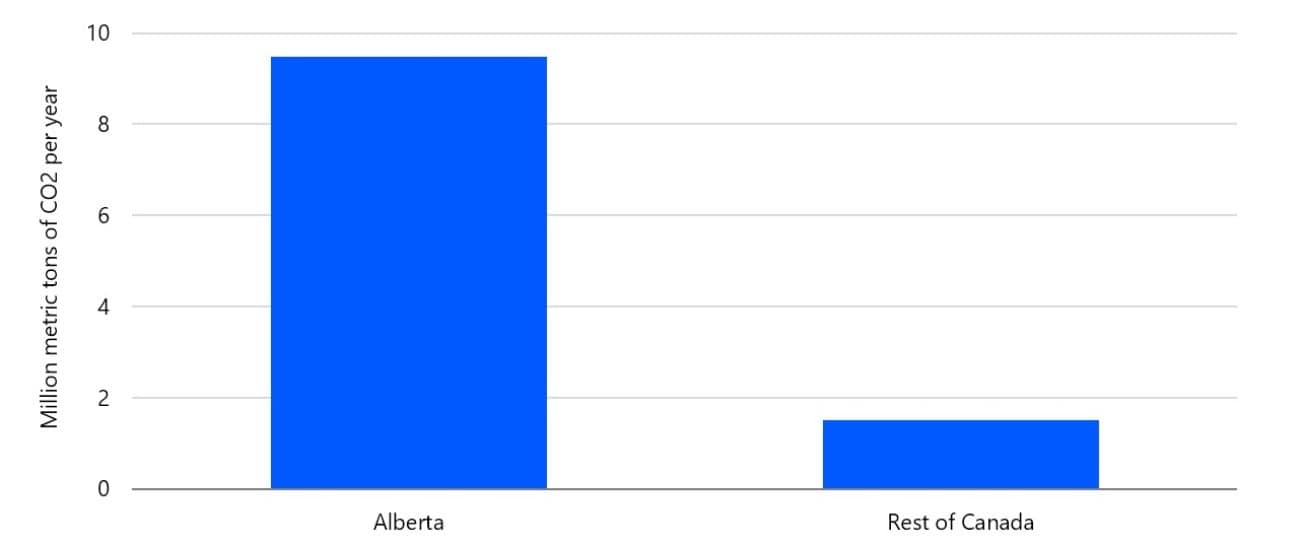
As with the US, project development in Canada is concentrated where emissions, storage resources, infrastructure, utilization, and policy support align, although each province faces distinct constraints that will shape future growth. Alberta dominates Canada's CCUS market, hosting most of the country's infrastructure and accounting for more than 85% of its late-stage and operational capacity (see figure 4). However, future growth will depend on building positive stakeholder engagement as well as large-scale infrastructure. Saskatchewan remains an established albeit smaller market built around power generation and select industrial applications, but it lacks many of the advantages of its more dominant neighbor.
Alberta: Center for CCUS development in Canada
Alberta combines a large industrial emissions base with extensive CO2 transportation infrastructure, favorable geology, supportive policy, and experienced developers. Its long history in the oil sands industry and EOR helped establish expertise in CO2 handling, transportation, and storage, creating many of the advantages that continue to attract investment today. Major market participants include the members of the Oil Sands Alliance,[1] Shell, Enhance Energy, Dow, and Air Products.
[1] A consortium representing major oil sands producers, including Canadian Natural Resources Limited, Cenovus Energy, ConocoPhillips Canada, Imperial Oil, and Suncor Energy.
Figure 4: Alberta is the epicenter of CCUS projects in Canada
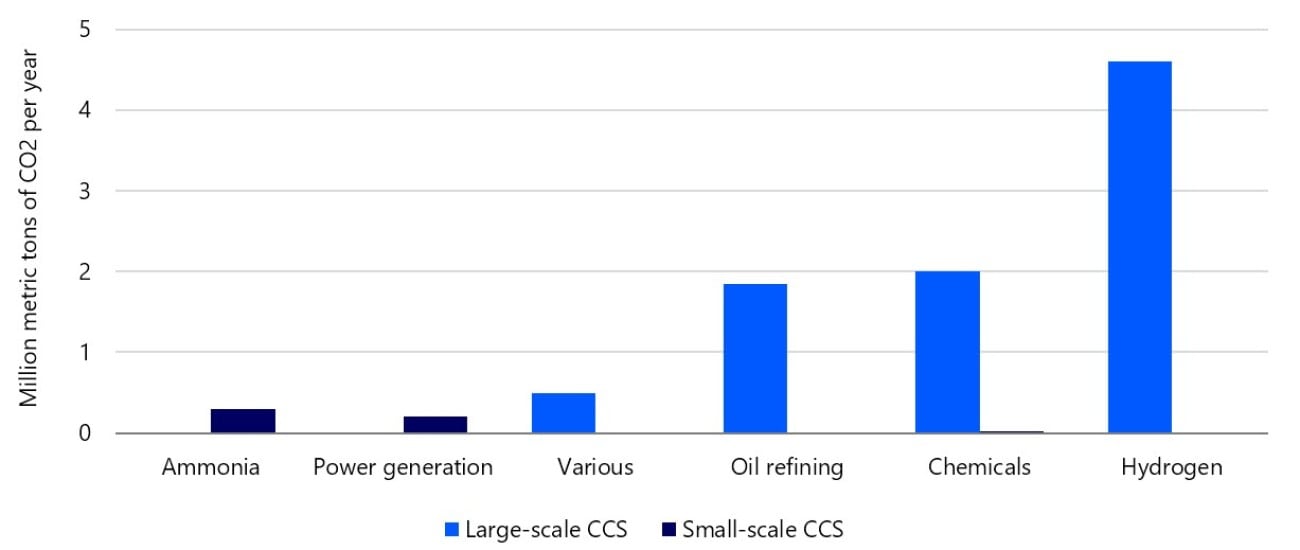
As with the Gulf Coast, policy support has reinforced Alberta’s structural advantages. In addition to the federal CCUS Investment Tax Credit, Alberta offers support through programs such as the Alberta Carbon Capture Incentive Program (ACCIP) and the Technology Innovation and Emissions Reduction (TIER) system, which creates an ongoing compliance market for emissions reductions. Alberta has also updated its CCUS protocol to create carbon removal credits for direct air capture projects. Together, these policies have helped expand CCUS beyond oil and gas into hydrogen, chemicals, ammonia, and power generation (see figure 5). RaboResearch will examine Alberta's carbon market and TIER framework in greater detail in a future report.
Figure 5: For CCUS projects in Alberta, hydrogen has dethroned oil refining
Large-scale projects require extensive transportation and storage networks that can affect local and Indigenous communities. The proposed Pathways CCS Project illustrates this challenge. While the project could transport and store approximately six million metric tons of CO2 annually from oil sands facilities, several First Nations have raised concerns regarding consultation and project development. Because Indigenous rights are constitutionally protected in Canada, meaningful consultation is a fundamental part of project development and can influence timelines, alongside technical, economic, and regulatory considerations. For endeavors such as Pathways Project, the ability to build large-scale transportation and storage infrastructure will depend not only on financing and permitting but also on engagement with Indigenous communities and other stakeholders.
Alberta remains Canada's clear CCUS leader because it combines a large industrial emissions base, established CO2 infrastructure, supportive policy, abundant storage resources, and experienced developers. However, the next phase of growth may hinge on the industry's ability to build new infrastructure while maintaining strong engagement with Indigenous communities and other stakeholders.
Saskatchewan: CCUS for power
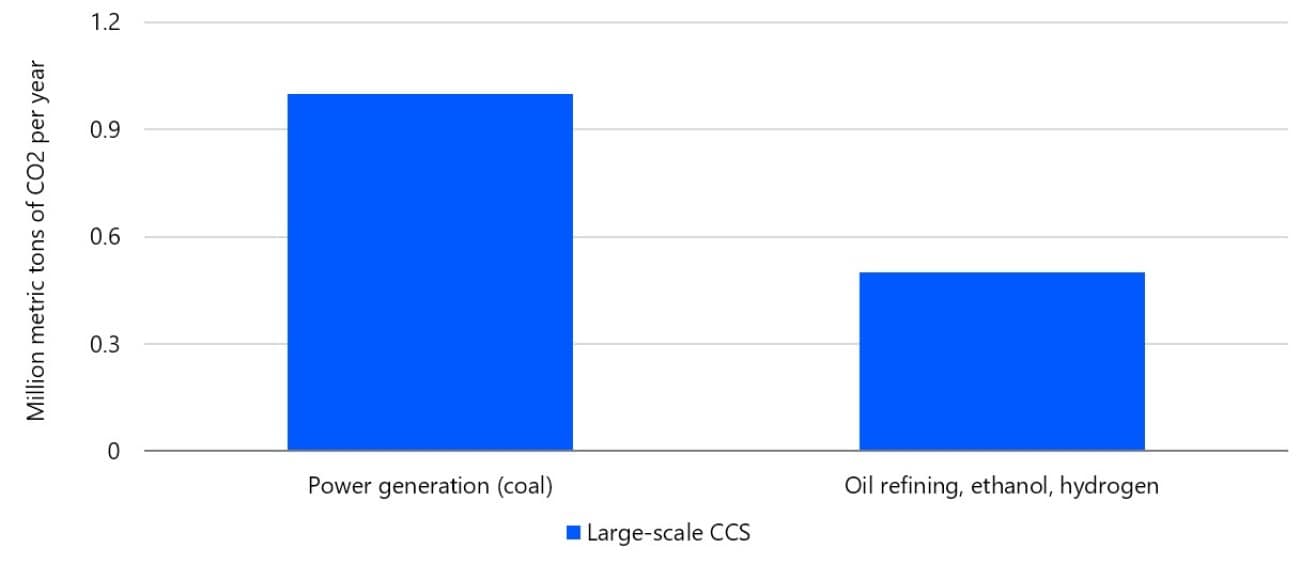
Saskatchewan is Canada's second-largest, but substantially smaller, CCUS market. The province is best known for the Boundary Dam project, which became the first commercial-scale coal-fired power plant equipped with CCS in 2014 (see figure 6). Saskatchewan has historically relied more heavily on fossil fuel generation, making CCS a more prominent part of its strategy to decarbonize the power sector. Combined with opportunities in oil and gas and EOR, this deployment helped establish Saskatchewan as an early leader in commercial-scale CCUS deployment in Canada.
Figure 6: Saskatchewan uses CCUS with coal-fired power
However, Saskatchewan lacks several of the advantages that have accelerated CCUS development in Alberta. While the province has established regulations governing ownership of pore space[2] and carbon storage, and even though it benefits from federal incentives and carbon pricing, it offers fewer dedicated provincial support programs than Alberta. Saskatchewan also has a smaller industrial emissions base, fewer large-scale projects under development, and less extensive CO2 transportation infrastructure. As a result, developers rely more heavily on federal programs, EOR opportunities, and carbon market revenues to support project economics.
Although Saskatchewan was an early actor in commercial-scale CCUS deployment, early project success does not necessarily lead to the development of a large CCUS hub. Saskatchewan is likely to remain a more specialized market focused on power generation, EOR, and select industrial applications rather than the large-scale carbon management hubs emerging elsewhere in North America.
[2] Pore space refers to the porous space between the mineral grains of deep rock formations.
Conclusion
North American CCUS deployment is concentrating in regions that can connect emissions sources with CO2 transportation infrastructure, permitted geologic storage, utilization, supportive policy, and community acceptance. The Gulf Coast and Alberta remain the leading hubs because they have assembled most of these components at scale, while other regions are advancing around more specialized opportunities. Although policy incentives have improved project economics, the next phase of growth will depend on the ability to expand transportation and storage networks, secure permits, and maintain community support. Regions that can bring these elements together are likely to attract the next wave of CCUS investment, while those that cannot may face slower project development.