Research
EU ETS and Waste-to-Energy: Can carbon pricing unlock CCUS deployment?

Europe's waste-to-energy sector sits at the intersection of waste management, energy security, and climate policy. As the EU considers bringing waste incineration into the Emissions Trading System, operators face growing pressure to reduce emissions. This article examines whether carbon capture can improve the business case for decarbonization and the role of carbon removals, infrastructure, and policy support.
Summary
Waste-to-energy faces its carbon moment
Waste-to-energy (WtE) sits at the intersection of waste management, energy production, and carbon policy. Even with stronger waste prevention and recycling, Europe will continue to generate residual waste that cannot be economically or technically recycled. WtE plants provide a controlled treatment route for this residual waste, while producing electricity and, in many cases, heat for district heating networks.
With that in mind, WtE is also a sizeable source of emissions. Municipal waste incineration generates around 40m metric tons of fossil carbon dioxide equivalent (CO2e) emissions annually in the EU, but these emissions are currently not subject to dedicated decarbonization policies in most member states. The proposed revision of the EU Emissions Trading System (ETS) would change this by gradually requiring non-hazardous waste incinerators to pay for their emissions from 2031, reaching full coverage for verified emissions from 2034.
This would turn the fossil-carbon content of residual waste into a direct financial liability. For WtE operators, the challenge is no longer only how to treat waste reliably and recover energy from it. It is also how to remain aligned with increasingly stringent climate objectives while managing growing carbon-cost exposure.
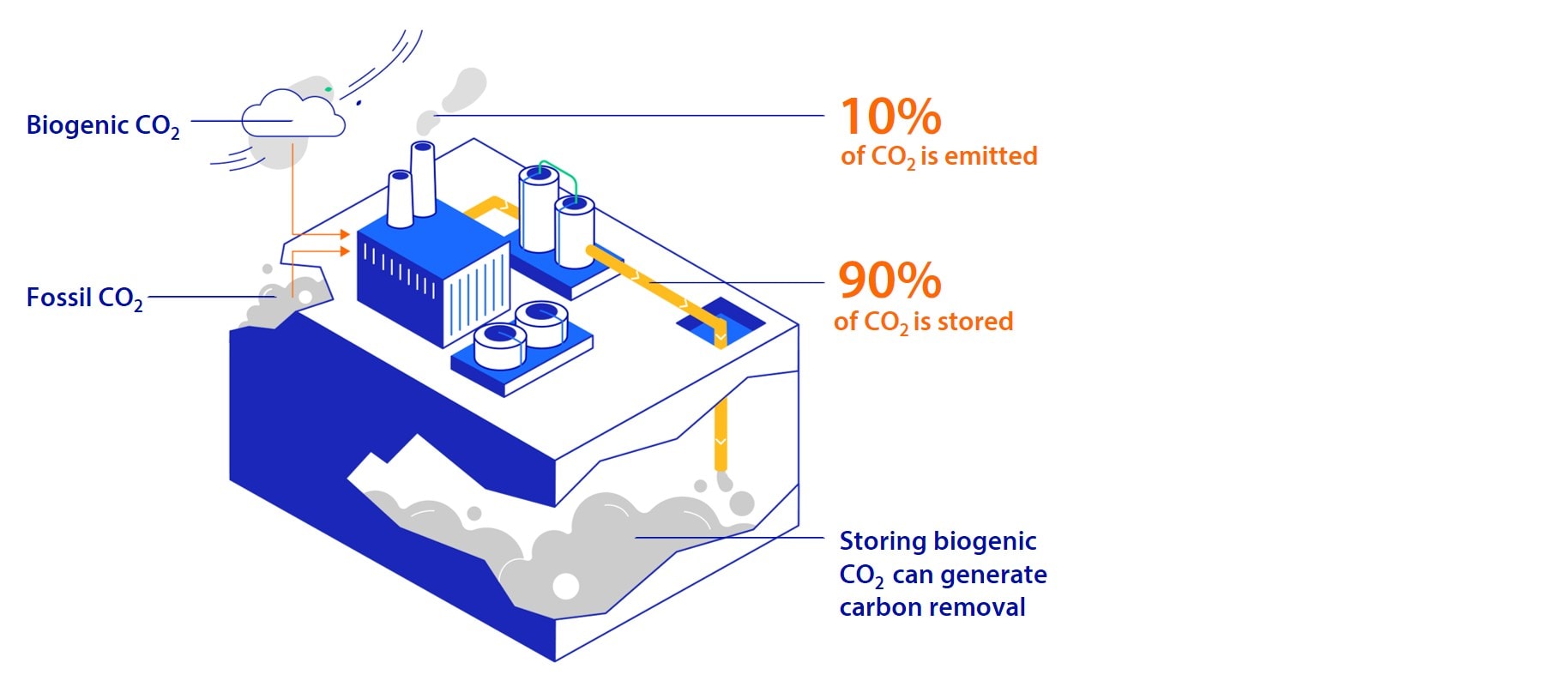
Carbon capture, utilization, and storage (CCUS) could provide a solution to this challenge. Capturing and permanently storing fossil CO2 can reduce the volume of emissions for which allowances must be surrendered. At the same time, capturing the biogenic share of WtE emissions could result in carbon removals, giving the sector the opportunity to generate additional revenues.
WtE remains an essential part of Europe’s waste-management system
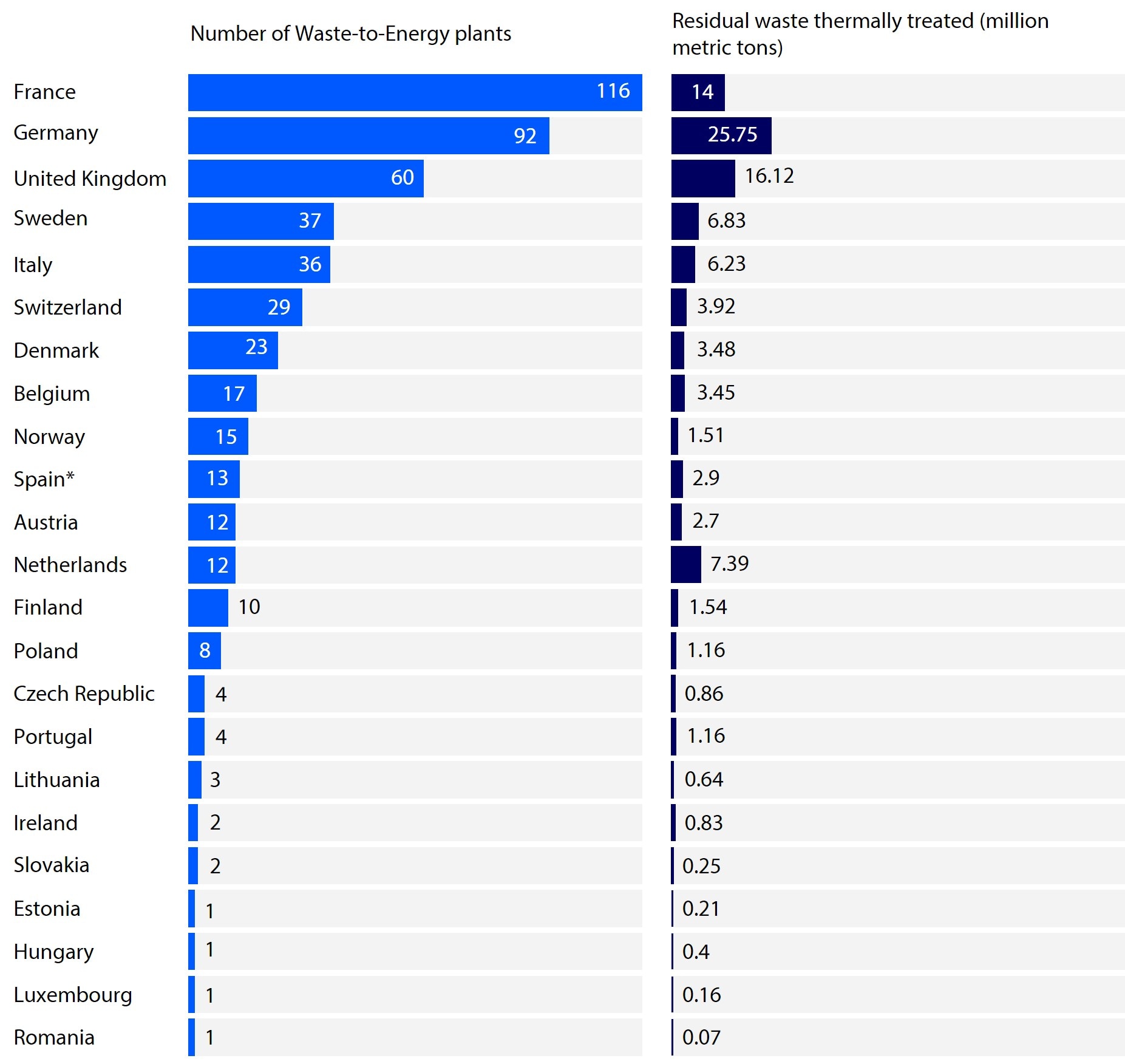
WtE is an established part of Europe's waste-management system. According to CEWEP, around 499 WtE plants currently operate across Europe, thermally treating more than 101m metric tons of residual waste annually while generating electricity and heat for households and industry (see figure 1). The sector is most established in northwestern Europe, where landfill restrictions, high population density, and well-developed district heating networks have supported investment in thermal treatment capacity.
Germany, France, and the UK together account for more than half of Europe's WtE facilities and nearly 56m metric tons of annual treatment capacity. Germany stands out for its large average plant size, treating almost 26m metric tons of residual waste annually through 92 facilities. France operates the largest number of plants, while the Netherlands has one of the most concentrated systems in Europe, with only 12 facilities processing around 7.4m metric tons of waste annually, equivalent to more than 600,000 metric tons per plant.
In contrast, central and eastern European countries such as Poland, Czechia, Slovakia, Hungary, and Romania operate relatively small WtE fleets and continue to rely more heavily on landfill disposal. This geographical imbalance may indicate potential for additional WtE capacity in those countries. However, such growth is far from guaranteed: WtE is generally more costly than landfilling and requires sufficiently predictable waste streams to support high plant utilization. Hence, additional capacity will ultimately depend on the dynamics between waste generation, recycling targets, landfill availability and costs, and the regulatory conditions of both landfill and WtE.
Despite decades of progress in recycling and circularity, significant volumes of municipal waste are still sent to landfill across Europe. According to Eurostat data, approximately 50m metric tons of municipal waste continue to be landfilled annually. As landfill restrictions tighten and methane-emission reduction targets become more stringent, part of this waste stream could gradually shift toward material recovery and thermal treatment. As a result, while WtE capacity growth in mature markets is expected to focus primarily on plant modernization and efficiency improvements, opportunities for new-build facilities remain particularly relevant in parts of southern and eastern Europe.
From a carbon-policy perspective, this matters because WtE is no longer a niche waste-treatment technology. It has become a sizeable industrial sector that sits at the intersection of waste management, energy security, and climate policy. Any decision to include waste incineration within the EU ETS would therefore affect a substantial and strategically important part of Europe's waste infrastructure.
Figure 1: Overview of Waste-to-Energy plants in Europe
How CCUS could support WtE’s emissions reduction
A WtE plant burns residual waste that cannot be reused or recycled. WtE provides a controlled disposal route while recovering energy in the form of electricity and, in many cases, heat for district heating networks. As a result, WtE plants are often seen as strategic energy providers as well.
A typical WtE plant receives and stores mixed residual waste before feeding it into a combustion chamber. The waste is burned at high temperatures, generating heat that is used to produce steam in a boiler. That steam drives a turbine to generate electricity, and its residual heat can also be supplied to district heating networks. Before the resulting flue gas is released, it passes through a series of cleaning systems that remove pollutants and particles.
During combustion, the carbon contained in the waste is released as CO2 in the flue gas. This makes a WtE plant a concentrated source of CO2 emissions where carbon capture can be integrated into the existing process. Unlike many industrial facilities that experience cyclical production patterns, WtE plants typically operate throughout the year to provide an essential waste-management service, resulting in a relatively continuous stream of CO2 emissions.
For many WtE operators, carbon capture is also one of the few available decarbonization pathways. Unlike sectors that can reduce emissions by switching fuels or electrifying processes, WtE emissions are inherently linked to the carbon content of the residual waste being treated. As long as Europe continues to generate residual waste, incineration will continue to produce CO2. Carbon capture therefore offers a route to reduce emissions without compromising the sector's core function of treating waste and recovering energy.
The integration of carbon capture is not a stand-alone modification. Capture systems require heat and electricity, reducing part of the energy available for sale. They must also be integrated with the plant's steam cycle, flue-gas cleaning equipment, district-heating obligations, available space, and operating procedures. These requirements are generally more complex and costly when capture is added to an existing plant than when a facility is designed with capture from the outset. Nevertheless, several CCUS projects are already operational across Europe (e.g., in the Netherlands, Norway, and the UK) while close to 20 CCUS projects in the WtE sector are being planned according to BloombergNEF’s CCUS database.
Why WtE's mixed emissions create both challenges and opportunities for CCUS
WtE sector differs from many industrial sectors because its emissions originate from a mix of fossil and biogenic materials. Plastics and other fossil-based waste generate fossil CO2, while food waste, paper, wood, and other organic materials generate biogenic CO2. Although the exact split varies between facilities and waste streams, WtE is one of the few large point-source sectors where carbon capture can simultaneously address both fossil and biogenic carbon emissions. However, this mixed composition also complicates the near-term business case for CO2 capture. A capture system removes CO2 from the entire flue-gas stream, but under the EU ETS only fossil CO2 generates direct compliance-cost savings. Compared with a fully fossil point source, a lower fossil share therefore means that a smaller proportion of the captured CO2 generates a direct carbon-cost saving, potentially requiring a higher European Union Allowance (EUA) price to justify the same capture cost.
The biogenic fraction becomes an advantage for the business case only if its permanent storage is recognized as a carbon removal and financially rewarded. This distinction is becoming increasingly important as Europe pursues its net-zero ambitions. Permanently storing biogenic CO2 could allow a WtE facility to achieve net-negative emissions, but the associated revenues remain dependent on credible certification and demand for carbon removals and are less certain than the potential cost savings from avoiding EUA purchases.
Carbon capture therefore offers more than a way to reduce emissions. Although the mixed fossil-biogenic composition can weaken the near-term economics relative to fully fossil point sources, CCUS remains one of the few pathways through which the sector can both reduce emissions and potentially generate carbon removals in the future. It therefore provides a route for the sector to remain aligned with increasingly stringent climate objectives while continuing to fulfill its role in waste management and energy recovery.
The pace of CCUS deployment in the WtE sector will ultimately depend on policy, infrastructure, and economics. While the strategic rationale for carbon capture may be strong, investment decisions will be significantly influenced by whether the economics are attractive. The introduction of carbon pricing through the EU ETS could materially alter the balance between the cost of emissions and the cost of capturing them.
Figure 2: Emissions of a WtE plant with CCUS
When does carbon capture become economically rational?
The potential inclusion of WtE in the EU ETS introduces a new economic choice for operators: Continue purchasing allowances for fossil emissions or invest in capturing and permanently storing those emissions. The relevant comparison is not the cost of capturing a metric ton of CO2 in isolation, but the balance between the cost of CCUS and the value created through avoided compliance costs. Understanding where that balance lies is critical to assessing whether ETS exposure could accelerate CCUS deployment across the sector.
To explore when CCUS could become an economically rational response, we have created a simplified model comparing three scenarios: operating without CCUS and purchasing allowances for the fossil emissions, operating with CCUS and thus capturing and storing at least 82% of the emissions, and operating with CCUS including carbon dioxide removal revenues from the permanent storage of the biogenic fraction of the emissions. The model is intentionally simple and assumption-based, reflecting the limited availability and comparability of plant-level data as well as the uncertainties about the ETS regulation and future prices of EUAs. Its purpose is not to predict the profitability of individual projects, but to show how the business case may change under different assumptions for EUA prices, full-chain CCUS costs, fossil-shares, capture-rates, and ETS-coverage.
The detailed assumptions of the scenario analysis can be found in Annex 1.
ETS improves economics but high carbon prices remain necessary
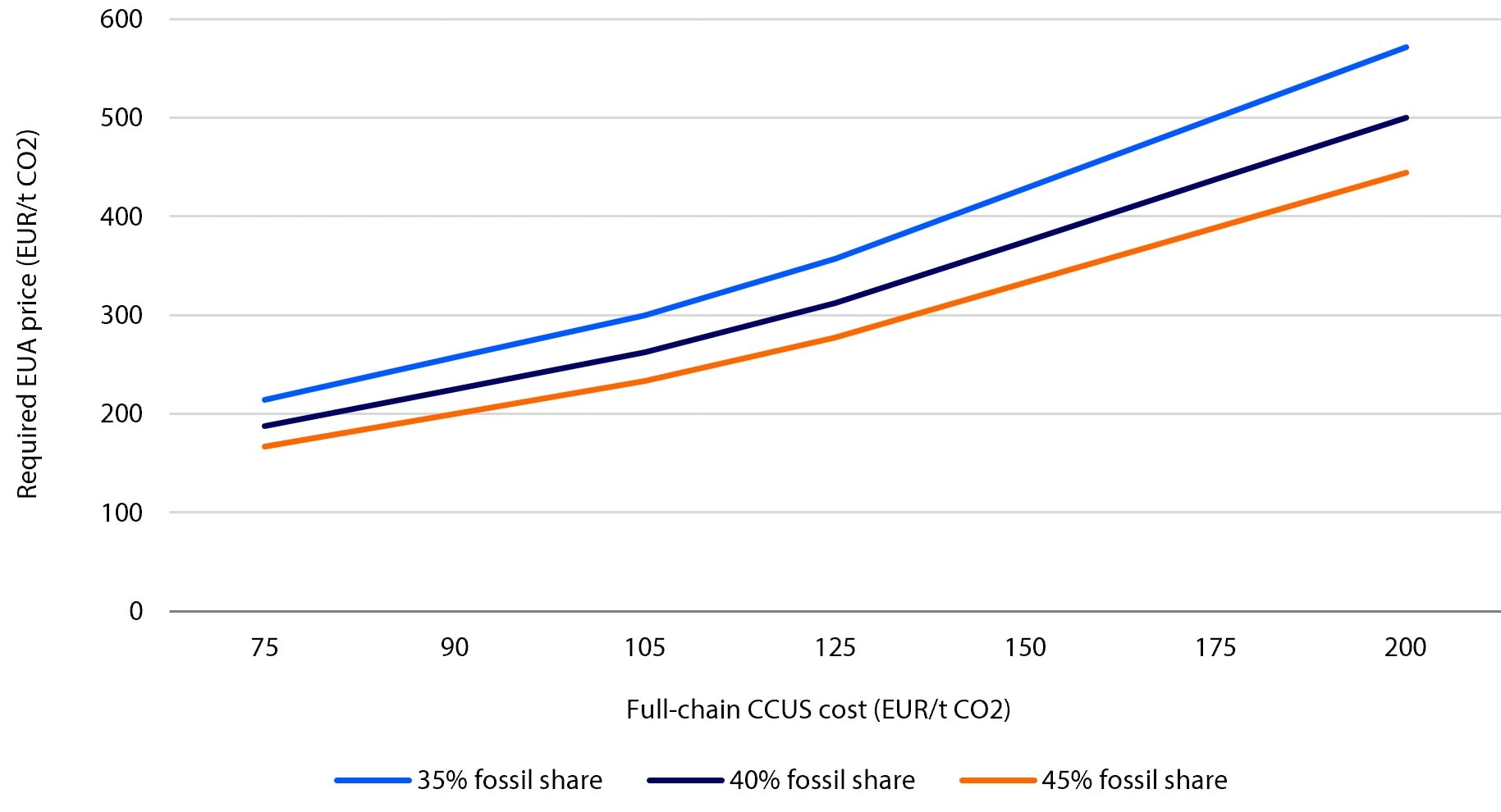
The break-even EUA price of figure 3 indicates the carbon price at which the avoided cost of allowances on captured fossil CO2 is sufficient to offset the assumed full-chain CCUS cost. The results are shown for alternative cost assumptions while holding the plant’s fossil-emission share, capture performance, and ETS coverage constant.
Figure 3 shows that the carbon price required to justify CCUS remains substantially higher than the full chain capture cost itself. The capture installation processes the entire mixed fossil and biogenic CO2 stream, while only the fossil portion generates savings through avoided ETS compliance. With fossil CO2 accounting for 45% of total emissions and full ETS coverage, a WtE plant would require an EUA price of around EUR 422 per metric ton carbon dioxide (t CO2) to justify a full-chain CCUS cost of EUR 190/t CO2. If capture, transport, and storage costs fall to EUR 125/t CO2, the required EUA price declines to approximately EUR 278/t CO2.
The results highlight that the economics of WtE-CCUS are influenced not only by capture costs, but also by the composition of the emissions stream. While moving from a relatively high-cost retrofit to a plant with favorable integration and infrastructure conditions substantially lowers the EUA price required for ETS-only parity, the break-even carbon prices remain elevated under all scenarios. This reflects a structural characteristic of WtE: Capture systems process the entire CO2 stream, while ETS savings are generated only by the fossil fraction. As a result, ETS exposure improves the economics of carbon capture but does not, by itself, fully close the gap between the cost of capturing emissions and the cost of purchasing allowances. The resulting break-even carbon prices place WtE-CCUS in a similar range to other hard-to-abate industrial applications where CCUS is being considered, suggesting that deployment is likely to depend not only on carbon prices but also on policy support, infrastructure availability, and, potentially, additional revenues from carbon removals.
Figure 3: The impact of fossil-share assumptions on break-even EUA prices
How ETS changes the costs of carbon in a WtE plant
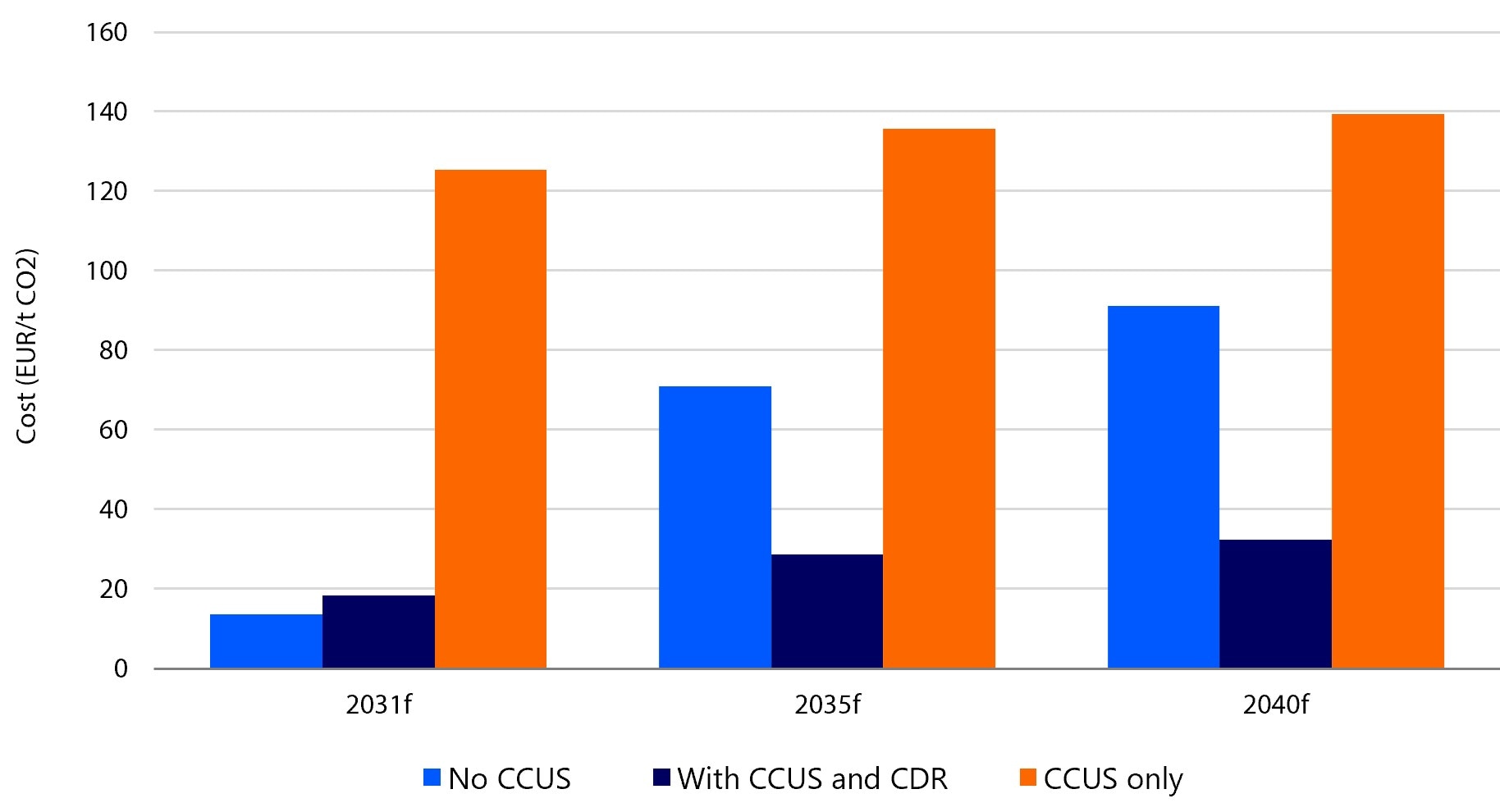
Figure 4 compares the cost per metric ton of total CO2 generated under three scenarios: operating without CCUS and purchasing EU allowances for fossil emissions, operating with CCUS and continuing to pay for residual fossil emissions, and operating with CCUS plus potential carbon dioxide removal (CDR) revenues (see details in Annex 1) from the permanent storage of captured biogenic CO2. The cost of the no-CCUS scenario rises by design as the assumed EUA price increases across the scenarios. Conversely, the cost of CCUS falls as the assumed full-chain capture, transport and storage cost declines.
The CDR scenario comes with high uncertainties. We calculate modeled revenue by multiplying captured biogenic CO2 by the share that is certified and sold as a carbon removal and by the assumed CDR price. Unlike EUAs, permanent removals are not traded in a liquid, standardized market. Prices are generally negotiated through bilateral offtake agreements and vary depending on permanence, certification, delivery year, contract volume, project maturity, and delivery risk. Published benchmarks often represent supplier offers rather than completed transactions, where buyer and supplier price expectations may differ materially.
Certification introduces further uncertainty and cost. The EU has established a carbon removals certification methodology, but eligibility requires net quantification, lifecycle-emission deductions, additionality, permanent storage, liability, sustainability, and independent verification. Not every captured biogenic metric ton will therefore produce a saleable removal unit. CDR revenue should be treated as conditional upside rather than being considered as certain as the cost savings from avoided EUA purchases.
Under the selected assumptions, ETS exposure narrows the cost disadvantage of CCUS but does not capture the lowest-cost option on its own. CDR revenue could reduce the remaining gap, but only if sufficient volumes qualify, buyers are willing to enter long-term agreements, and the realized price remains high enough after certification and transaction costs. The key implication is therefore not that CDR will automatically complete the business case, but that credible removal offtake agreements could form one part of a broader revenue and support package.
EU ETS exposure may thus be necessary without being sufficient to trigger by itself the addition of a CCUS module to a plant. Plant-specific CCUS costs, infrastructure access, and credible CDR offtake will determine whether the business case becomes economically viable. Public support may help close the remaining gap: capital grants, shared transport and storage infrastructure, guarantees, and carbon contracts for difference can reduce upfront, infrastructure, or carbon-price risk. These instruments shall complement, rather than be conflated with CDR revenues. In practice, a viable project is likely to require some combination of avoided EUA costs, lower CCUS costs, revenue from credible removal offtake agreements, and appropriate risk sharing.
The results also matter from a system perspective. If neither CCUS nor alternative waste-sector abatement responds to the carbon-price signal, ETS costs may primarily raise waste-treatment costs and be passed through to municipalities, producers, or households. Unlike many industrial sectors, WtE operators provide an essential public service and often operate under contractual arrangements with municipalities and waste producers. As a result, at least part of these additional costs is likely to be reflected in waste-treatment fees and ultimately passed through the value chain. The extent of this pass-through will depend on local market conditions, competition from alternative treatment routes, and the availability of policy support, but the broader direction is clear: Decarbonizing residual waste treatment is unlikely to be cost-neutral.
Figure 4: Carbon costs with and without CCUS
Economics alone will not determine deployment
Even if carbon pricing improves the economics of carbon capture, the scale of deployment across the European WtE sector will depend on more than the cost of emissions alone. Access to transport and storage infrastructure remains one of the most important constraints. As a result, the feasibility of CCUS may depend as much on geography as on plant-level economics. The development of carbon-removal markets will also significantly influence CCUS deployment in the WtE sector. For WtE operators, the ability to monetize carbon removals from the storage of biogenic CO2 could be a key differentiator. However, these markets remain at an early stage and depend on evolving certification, accounting, and demand frameworks.
A further uncertainty is the quantity of residual waste in the long term. Circularity policies, recycling targets, and waste prevention measures are designed to reduce the amount of waste requiring treatment. At first glance, this could appear to limit the future role of WtE. Yet a broader European perspective suggests a more nuanced picture. Large volumes of municipal waste continue to be landfilled across parts of southern and eastern Europe, while some countries already import residual waste to utilize existing idle treatment capacity. As waste management gradually evolves from a predominantly national system toward a more integrated European market, residual waste suitable for thermal treatment is likely to remain available even under more ambitious circularity scenarios.
The scale and speed of WtE-CCUS deployment will therefore be shaped by a combination of carbon-market developments, infrastructure availability, policy frameworks, and the evolution of Europe's waste-management system.
ETS creates incentive, but not the entire business case
The proposed inclusion of WtE in the EU ETS could mark a turning point for the sector. For the first time, fossil CO2 emissions from residual waste treatment would become a direct financial liability, increasing the pressure on operators to reduce emissions rather than simply manage them.
At the same time, WtE occupies a unique position among industrial sectors. Because its emissions contain both fossil and biogenic carbon, carbon capture can simultaneously reduce ETS exposure and potentially generate carbon removals through the permanent storage of biogenic CO2. This gives the sector a pathway not only to decarbonize, but also to contribute to Europe's longer-term net-zero ambitions.
Our analysis suggests that ETS inclusion could significantly improve the business case for CCUS, but it may not be sufficient on its own to make carbon capture the lowest-cost option in every case. The economics remain highly dependent on carbon prices, capture costs, access to transport and storage infrastructure, and the future value of carbon removals. As a result, the pace of deployment is likely to vary considerably across facilities and regions.
The significance of CCUS for the WtE sector therefore extends beyond short-term economics. ETS coverage strengthens the incentive to reduce emissions, but the long-term role of carbon capture will increasingly depend on how Europe chooses to reconcile residual waste treatment with its climate ambitions. CO2 transport and storage infrastructure, carbon-removal frameworks, and policy support will be as important as carbon prices in determining whether CCUS becomes a niche compliance option or a widely deployed part of Europe's waste-management system.
Annex 1
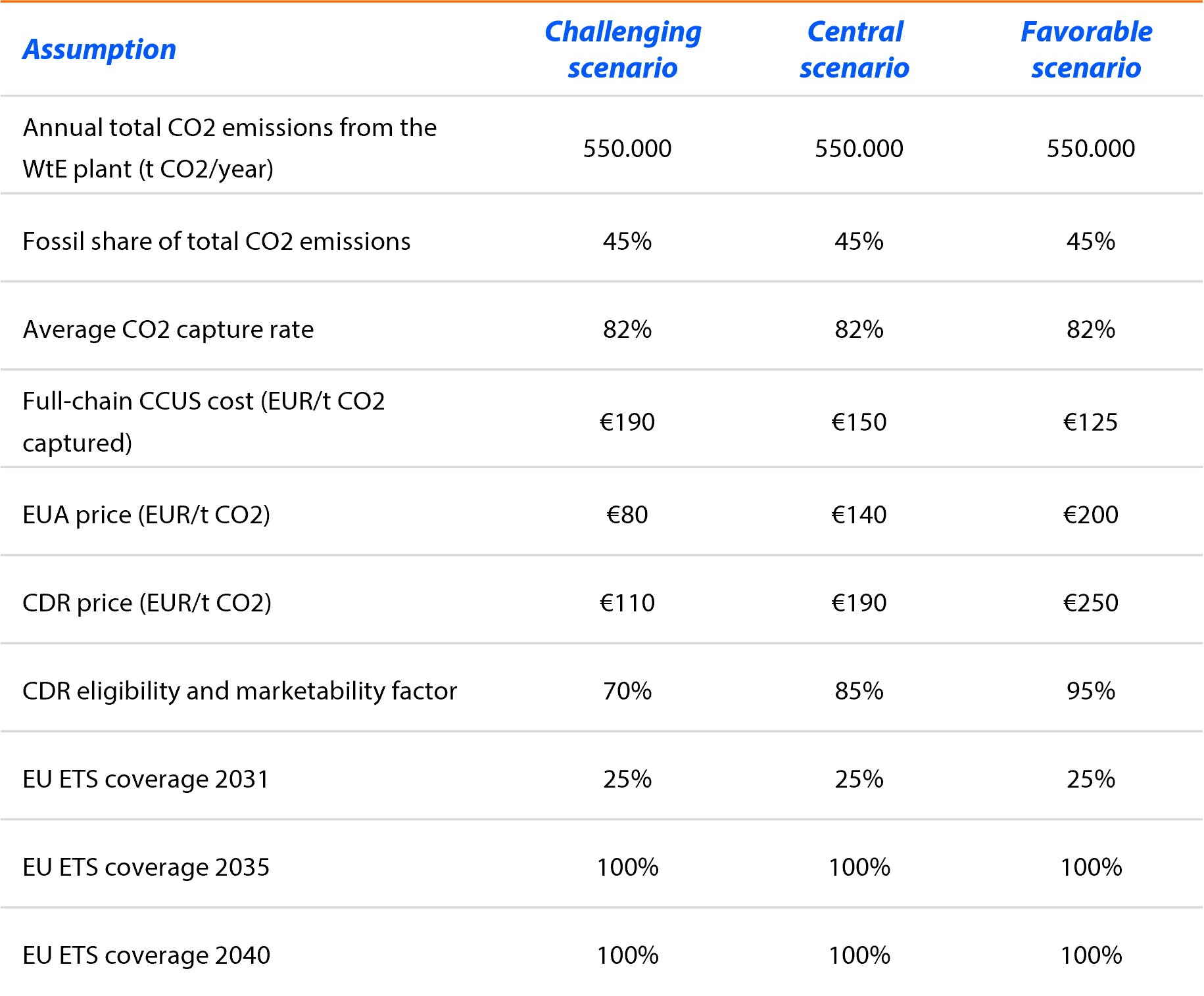
Table 1 includes the main assumptions used in the scenario analysis.
To illustrate how EU ETS inclusion could change the economics of WtE-CCUS, the model compares three scenarios for a representative plant. Annual emissions, the ratio of fossil to biogenic emissions, physical capture performance, and full ETS exposure are held constant, while the two principal economic drivers, the EUA price and the full-chain CCUS cost, vary across the scenarios. Potential revenue from permanently stored biogenic CO2 is included as a separate value component using a constant CDR price. Holding the CDR price constant helps isolate the effect of changing carbon prices and CCUS costs. The assumptions are intended as transparent scenario inputs rather than forecasts for an individual plant.
All monetary values are expressed in euros per metric ton of CO2. Full-chain CCUS costs are assumed to include capture, energy requirements, conditioning, transport, permanent storage, and monitoring. CDR revenue is calculated as captured biogenic CO2 multiplied by the assumed eligibility and saleability factor, and the CDR price. Revenue therefore depends on two conditions: The captured biogenic CO2 must meet applicable certification requirements, and the resulting carbon-removal units must be sold at the assumed price. Scenario values should not be interpreted as project cost estimates or guaranteed market revenues.
Table 1: Main assumptions used in the scenario analysis