Research
Can carbon dioxide removal scale in North America?

Can carbon dioxide removal (CDR) scale in North America? Our latest research finds that while CDR technologies can scale, long-term growth will depend on the development of predictable demand.

Summary
What is carbon dioxide removal?
Carbon dioxide removal (CDR) technologies remove carbon dioxide (CO2) directly from the atmosphere rather than preventing emissions at their source. RaboResearch broadly groups CDR pathways into nature-based, hybrid, and engineered solutions (see table 1), although no universal classification applies.
CDR technologies could address residual emissions from hard-to-abate sectors where emissions cannot be fully eliminated using decarbonization technologies and point-source carbon capture may not be feasible. The UN’s Limiting Overshoot report also identifies CDR as one possible tool for returning global temperatures under the 1.5 degrees Celsius limit, while also acknowledging shortcomings in the present market.
Each CDR pathway has a different scalability profile based on cost, durability, monitoring, reporting, and verification (MRV), financing needs, and revenue certainty.
Table 1: Types of carbon removal technologies
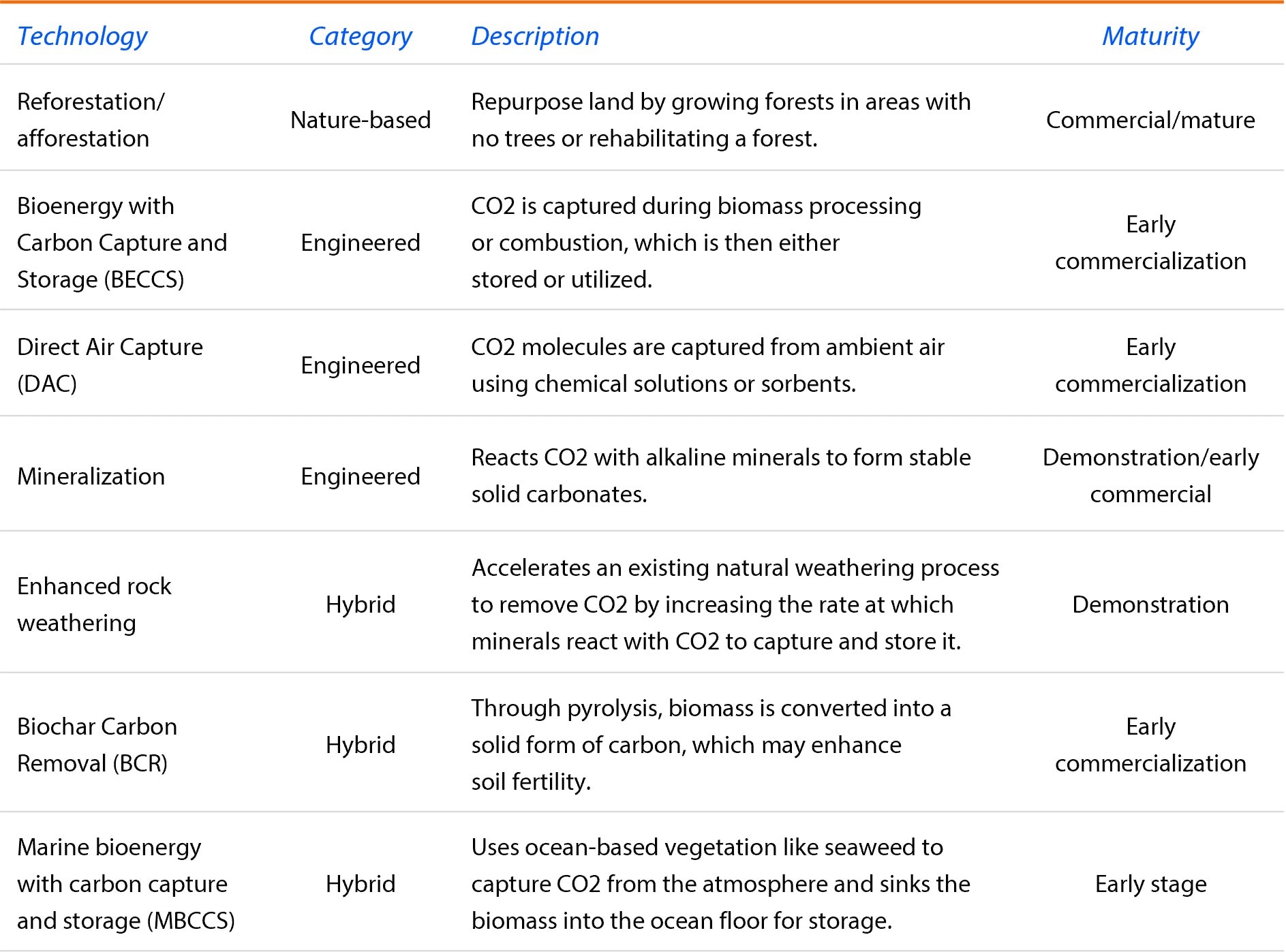
CDR technologies are at different stages of commercialization. Nature-based removals are already widely used in carbon markets, while most hybrid and engineered pathways are progressing from demonstration projects and early commercial agreements.
In North America, voluntary carbon markets currently provide the main source of demand for CDR credits. More than 300 buyers from the technology, banking, consumer goods, industry, aviation, and aerospace sectors have purchased credits to address residual emissions and support corporate climate strategies. Compliance markets do not yet create large-scale demand for CDR across most of North America but could eventually provide a more predictable source of revenue.
Why CDR needs a market
Voluntary carbon markets allow organizations to purchase and retire credits without a regulatory obligation. As indicated by the IEA, they are particularly relevant to hard-to-abate sectors such as aviation and heavy industry, where some emissions may be difficult to capture.
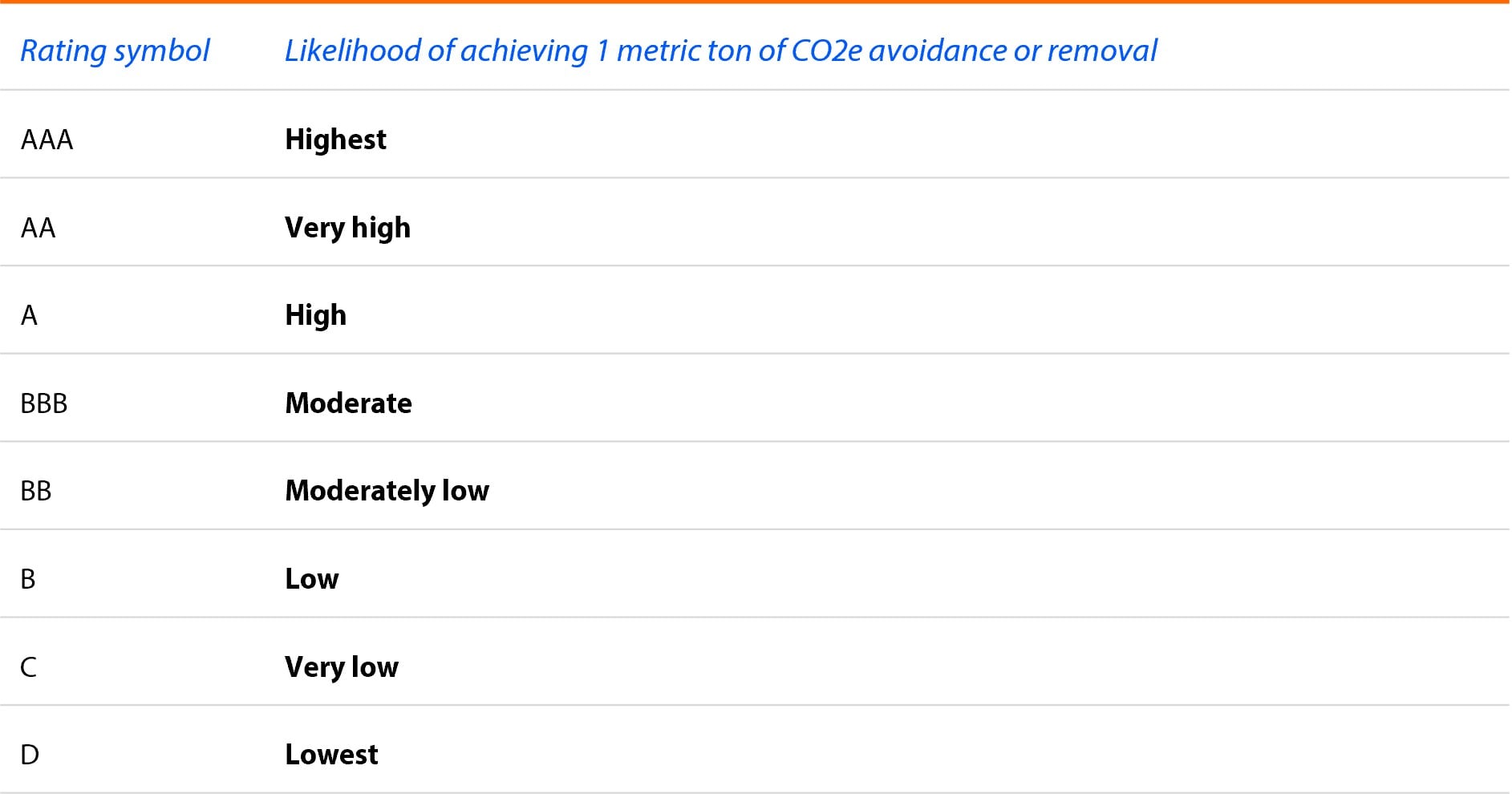
CDR projects follow approved methodologies and undergo validation and verification before credits are issued. Registries including Verra's Verified Carbon Standard (VCS), Gold Standard, the American Carbon Registry (ACR), and the Climate Action Reserve (CAR) administer methodologies, while rating agencies like BeZero Carbon provide risk-based ratings to carbon credits (see table 2).
Table 2: BeZero Carbon rating scale and definitions
Voluntary markets have supported early CDR commercialization by generating demand and revenue. However, the market remains fragmented. Developers can choose from multiple methodologies depending on technology, location, and buyer requirements, making credit quality, durability, and MRV important considerations for purchasers. As a result, perceptions of credit quality and environmental integrity can influence purchasing decisions as much as project cost. Since purchases are discretionary, shifts in corporate climate strategies, budgets, or confidence can quickly affect market activity.
Who buys North American carbon removals?
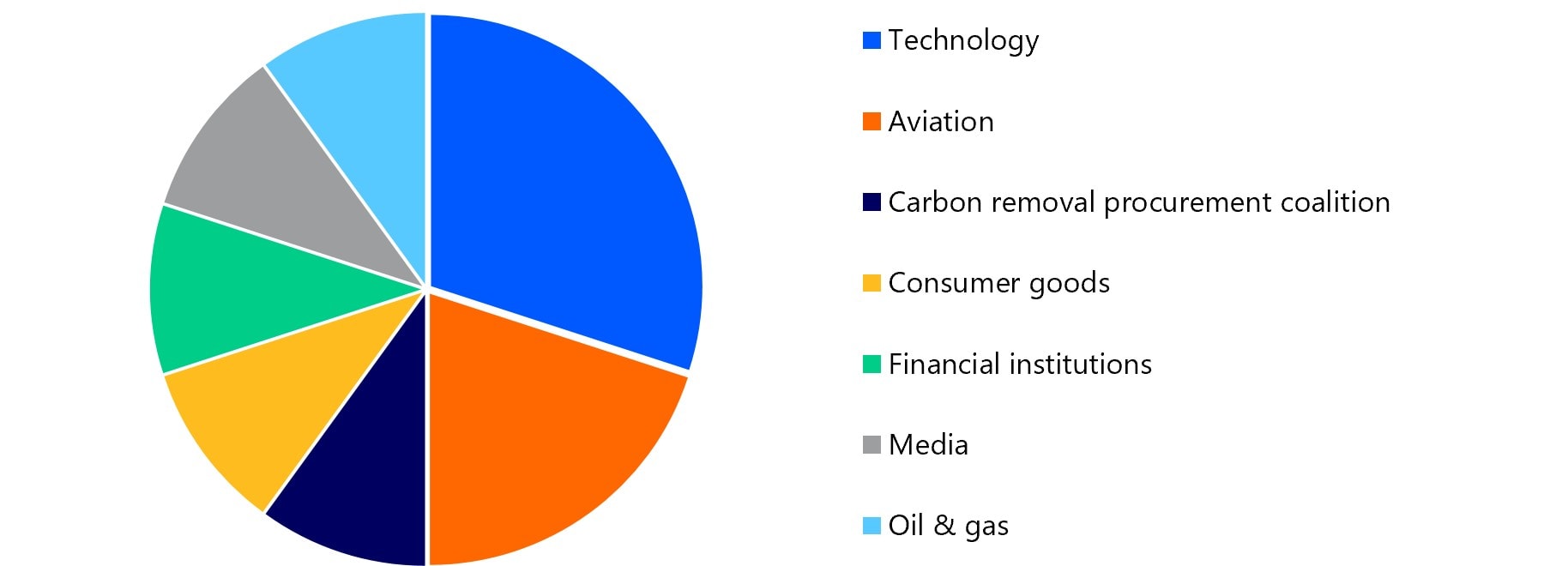
More than 300 unique buyers from a broad range of sectors purchase North American carbon credits. The ten largest buyers by volume of contracted US and Canadian CDR credits span six sectors: technology, aviation, consumer goods, financial institution, media, and oil and gas (see figure 1).
Figure 1: Sector distribution of the ten largest North American CDR buyers by contracted volume
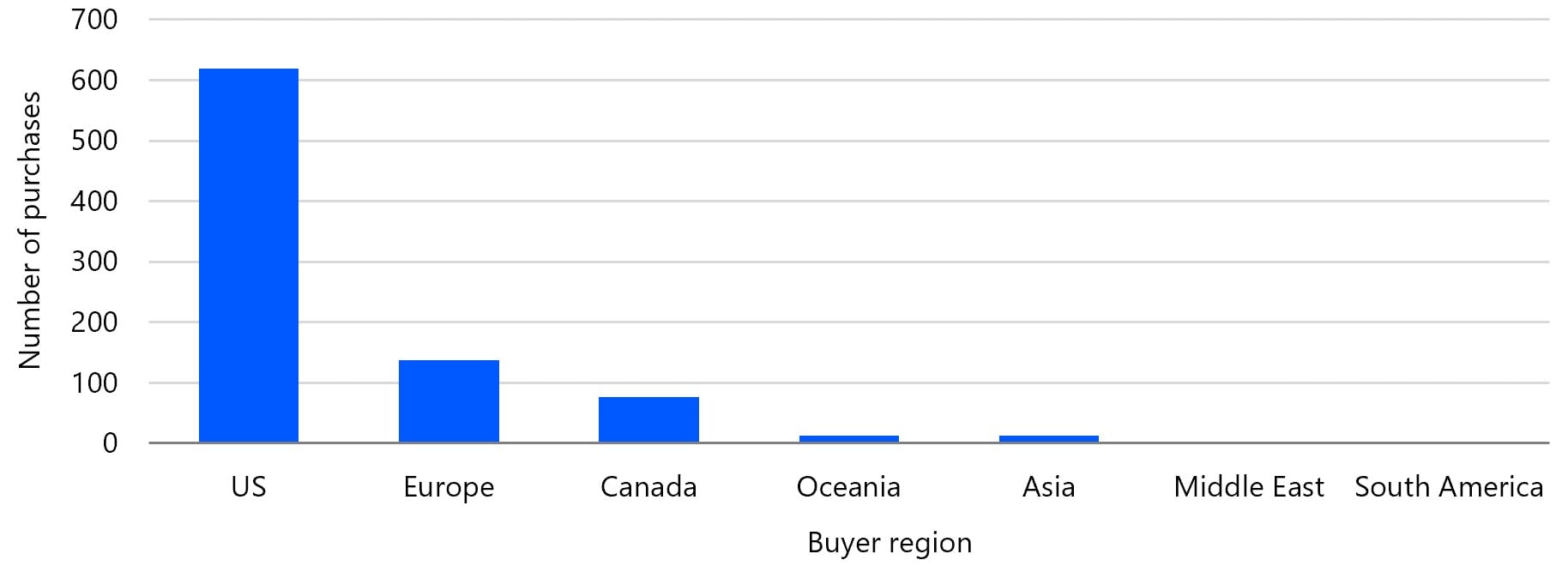
The buyers originate from more than 20 countries. US-based buyers account for the majority of transactions, while buyers based in European countries form the largest group outside the US and Canada (see figure 2). This indicates international demand for carbon credits from projects based in the US and Canada.
Figure 2: Voluntary carbon credit transactions for projects in North America by buyer region
What is being purchased in North America?
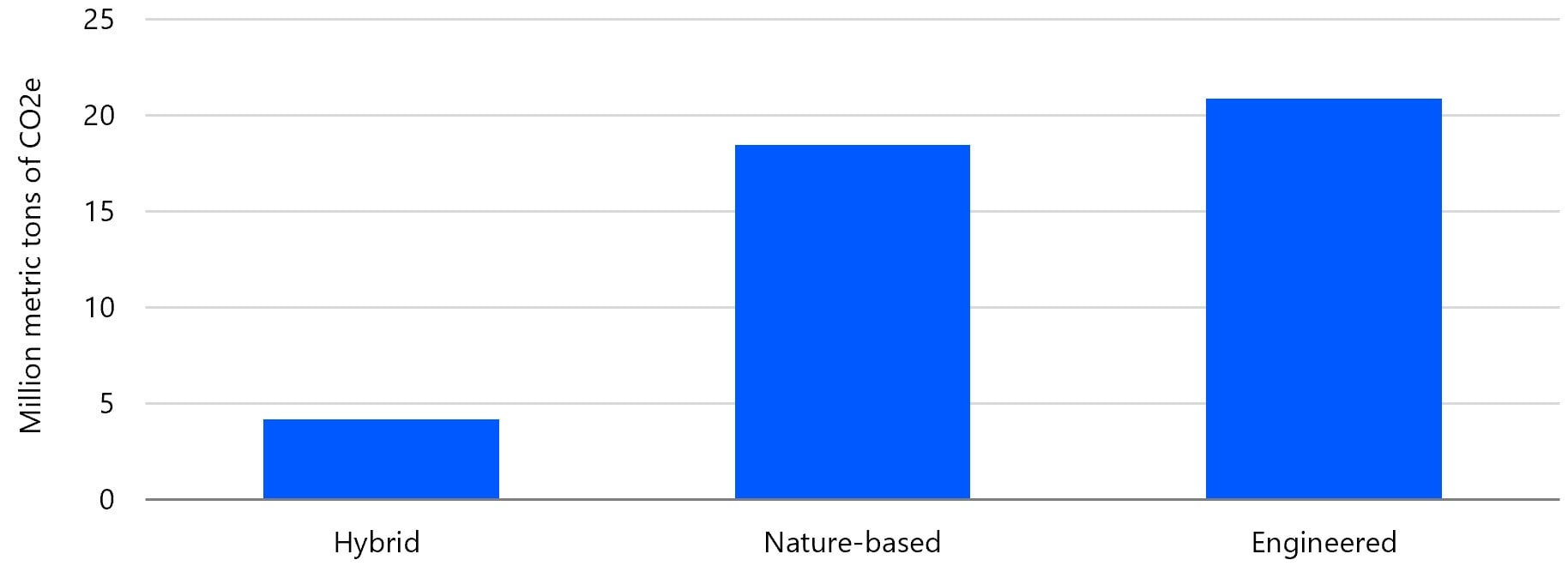
Engineered removals lead North American contracted CDR credit volume, followed by nature-based and hybrid pathways (see figure 3). Each pathway offers a different trade-off: engineered removals provide greater durability and measurability but face higher costs and infrastructure requirements, nature-based removals offer lower-cost, more mature solutions but carry measurement and reversal risks, and hybrid pathways may bridge the cost-durability divide but remain less commercially developed.
Figure 3: Volume of CDR credits contracted by technology pathway
Engineered removals face higher commercialization costs
Engineered CDR is the largest category by contracted volume. It relies on infrastructure to remove and store atmospheric CO2. Two well-known pathways are Direct Air Capture (DAC) and Bioenergy Carbon Capture and Storage (BECCS). Both appeal to buyers because geological storage can offer long-duration carbon retention and captured CO2 streams can be measured more directly than biological sequestration.
More than 25 engineered-removal project developers operate across the US and Canada, with a larger presence in the US. It’s a concentrated market, with the five largest developers accounting for more than 80% of contracted engineered-removal credit volume. Fidelis leads contracted volumes largely because of one BECCS agreement, while Vaulted Deep leads by transaction count with more than 30, but a lower aggregate credit volume (see figures 4 and 5). The differing rankings suggest that a few large agreements can shape contracted volume more than broad transaction activity would.
Figure 4: Top 5 CDR developers by volume

Figure 5: Top 5 CDR developers by number of transactions

Engineered removals generally provide greater permanence and stronger MRV than nature-based or hybrid alternatives. Carbon stored in geological formations can remain underground for thousands of years, but this durability comes at a premium. Projects require capital-intensive facilities, low-carbon energy, CO2 transport, and long-term storage, limiting deployment without policy support or premium buyers. In a previous report, we detail the infrastructure and regulatory challenges associated with CO2 transport and storage.
DAC must separate CO2 from ambient air, where CO2 only accounts for about 0.04%, or 420 parts per million. Processing such a dilute stream makes the technology energy-intensive and costly compared with capture from more concentrated industrial emissions using point-source methods. BECCS faces a different challenge; it is carbon-negative only if biomass sourcing, land-use change, transport, processing, capture efficiency, and CO2 storage are considered across the full lifecycle and collectively result in net negative emissions.
Engineered removals are constrained by cost and revenue certainty. Their scalability will depend on falling costs and more predictable demand.
Nature-based removals provide lower-cost near-term volume
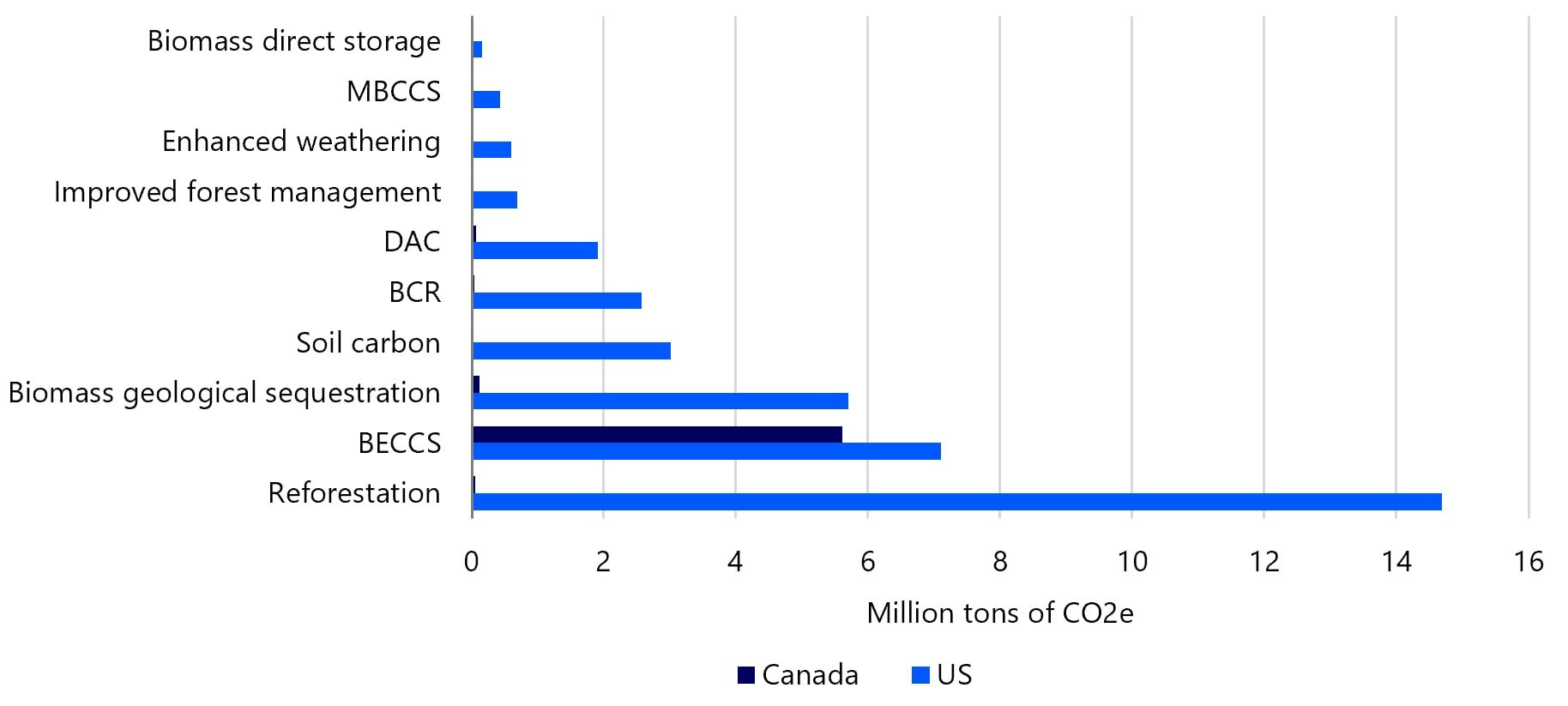
Nature-based CDR enhances forests, soils, wetlands, and other biological carbon sinks. It is the most mature removal category in North America. Reforestation accounts for approximately 40% of US total CDR credit supply (see figure 6).
Figure 6: Top ten CDR pathways by contracted credit volume in North America
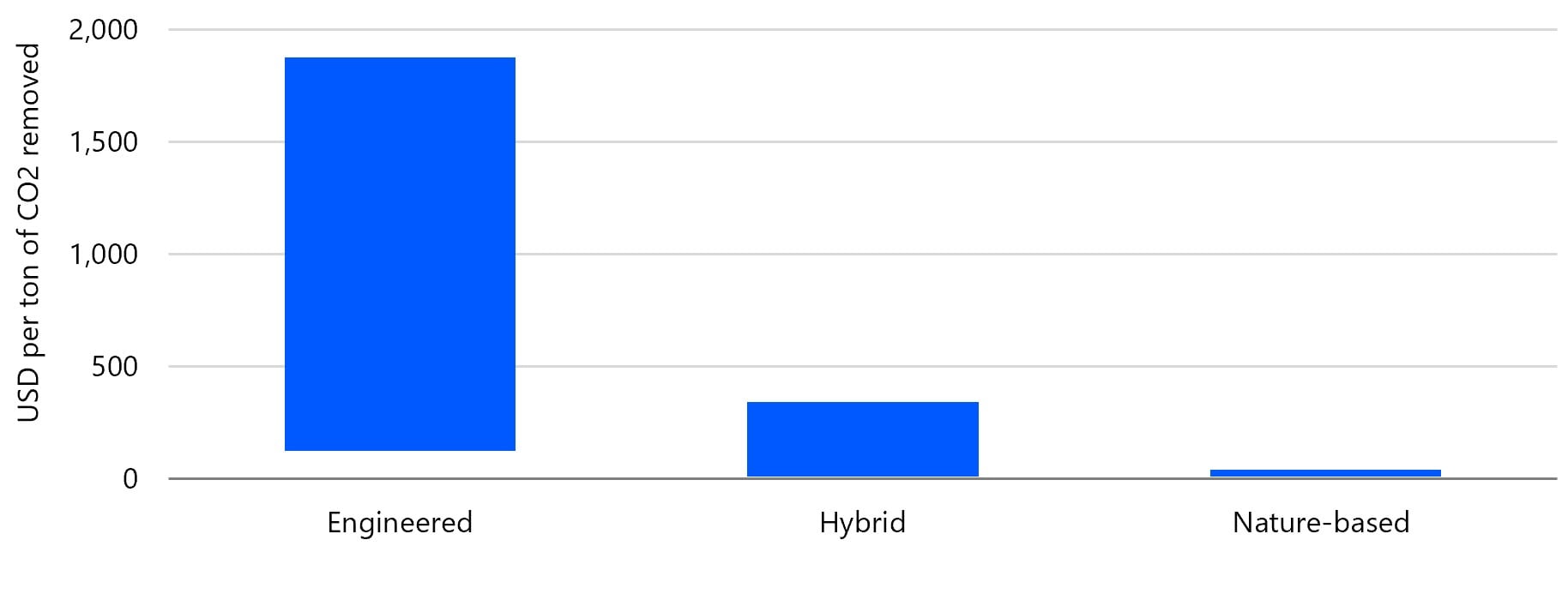
Cost remains the primary commercial advantage of nature-based removals. Removal costs are generally estimated at USD 10 to USD 40 per metric ton of CO2, compared with several hundred dollars per metric ton for many engineered pathways (see figure 7). This lower cost broadens the pool of potential buyers and supports larger contracted volumes.
Figure 7: Cost ranges vary significantly across CDR pathways
More than 30 nature-based CDR developers operate across North America, but activity is predominantly US-based, with Canadian projects accounting for less than 1% of regional contracted credit volume. The developer base is also highly concentrated with the five largest developers accounting for over 90% of contracted nature-based credit volume. Chestnut Carbon leads by volume while GreenTrees LLC and Anew Carbon Development LLC rank highest by transaction count (see figures 8 and 9). This combination of geographic and developer concentration leaves regional supply dependent on a narrow group of US projects and developers. As a result, market growth may be sensitive to the performance, credit quality, and capacity of a relatively small number of developers.
Figure 8: Top 5 CDR developers by volume

Figure 9: Top 5 CDR developers by number of transactions

Nature-based projects often rely on modelling, sampling, and assumptions to estimate carbon sequestration, making additionality,[1] permanence, and over-crediting[2] central to assessments of credit quality. Stronger MRV can improve buyer confidence but also increase development and monitoring costs.
Nature-based removals are well positioned to provide lower-cost near-term volume. Their main constraint is credibility, particularly the monitoring and management of reversal risk. In addition, carbon stored in forests remains exposed to wildfire, drought, disease, and land-use change. NASA reports that extreme wildfire activity has more than doubled globally, with some of the largest increases in the western US and the boreal forests of northern North America and Russia. Global CO2 emissions from forest fires also increased by 60% between 2001 and 2023, highlighting the vulnerability of biological carbon stocks. These risks create uncertainty around the permanence of stored carbon and can raise concerns among buyers, investors, and crediting programs regarding long-term climate benefits.
Hybrid removals could bridge the gap between cost and durability
Hybrid CDR combines natural carbon cycles with technological intervention. Biochar and enhanced rock weathering can be integrated into agricultural value chains and may provide more durable storage than forest-based removals at lower cost than some engineered technologies.
However, both technologies remain relatively early in commercialization. Biochar depends on sustainable feedstocks, consistent product quality, scalable production, and credible lifecycle accounting. Enhanced rock weathering faces mineral-transport costs, uncertain long-term monitoring requirements, and complex MRV under variable field conditions.
More than 30 hybrid CDR project developers operate in North America, although activity is concentrated in the US. The five largest developers by contracted volume account for almost three quarters of the region’s contracted hybrid credit volumes. However, the developers leading by contracted volumes differ entirely from those with the highest transaction counts. This suggests that a small number of large agreements are driving aggregate volume, while repeat transactions are spread across a broader set of developers (see figures 10 and 11). Scaling will require lower costs, credible MRV, reliable supply chains, repeatable delivery, and a broader project pipeline.
[1] Means the carbon credits are used for a project that would otherwise not be developed.
[2] Issues more credits than actual emissions removed.
Figure 10: Top 5 CDR developers by volume

Figure 11: Top 5 CDR developers by number of transactions

Can CDR scale if voluntary demand weakens?
Voluntary carbon markets currently provide the primary source of demand for CDR projects in North America. To assess whether the market can continue scaling, this section considers two forward-looking demand cases: a contraction in voluntary purchasing and the development of more predictable demand for carbon-removal credits driven by regulatory requirements.
Scenario 1: Voluntary demand contracts
This scenario tests how shrinking voluntary purchasing would affect the technology mix. A sharp contraction in voluntary demand would not affect all CDR pathways equally. Capital-intensive projects rely on long-term carbon credit offtakes to demonstrate future revenue, meaning weaker demand could delay financing and construction.
Recent market activity illustrates the vulnerability. Microsoft, historically one of the largest purchasers of voluntary carbon removals, reportedly paused/slowed down future carbon-credit purchases in April 2026, and its North American orders declined by approximately 75% between full-year 2025 and January to August 2026. More broadly, over one third of the companies purchasing removals from North American projects reduced their purchases during the same period.[3] The available data does not identify a single cause for the decline. However, the apparent pullback by several buyers highlights the market’s exposure to changes in the purchasing strategies of large companies.
Engineered and nature-based volumes were lower through August 2026 than in full-year 2025 (see figure 12). Because the 2026 dataset only covers January through August, the periods are not directly comparable and the chart should be read as evidence of order volatility, not as a definitive full-year contraction.
[3] This includes buyers that may have retired their credits or had one-time participation.
Figure 12: CDR credit volumes by order year
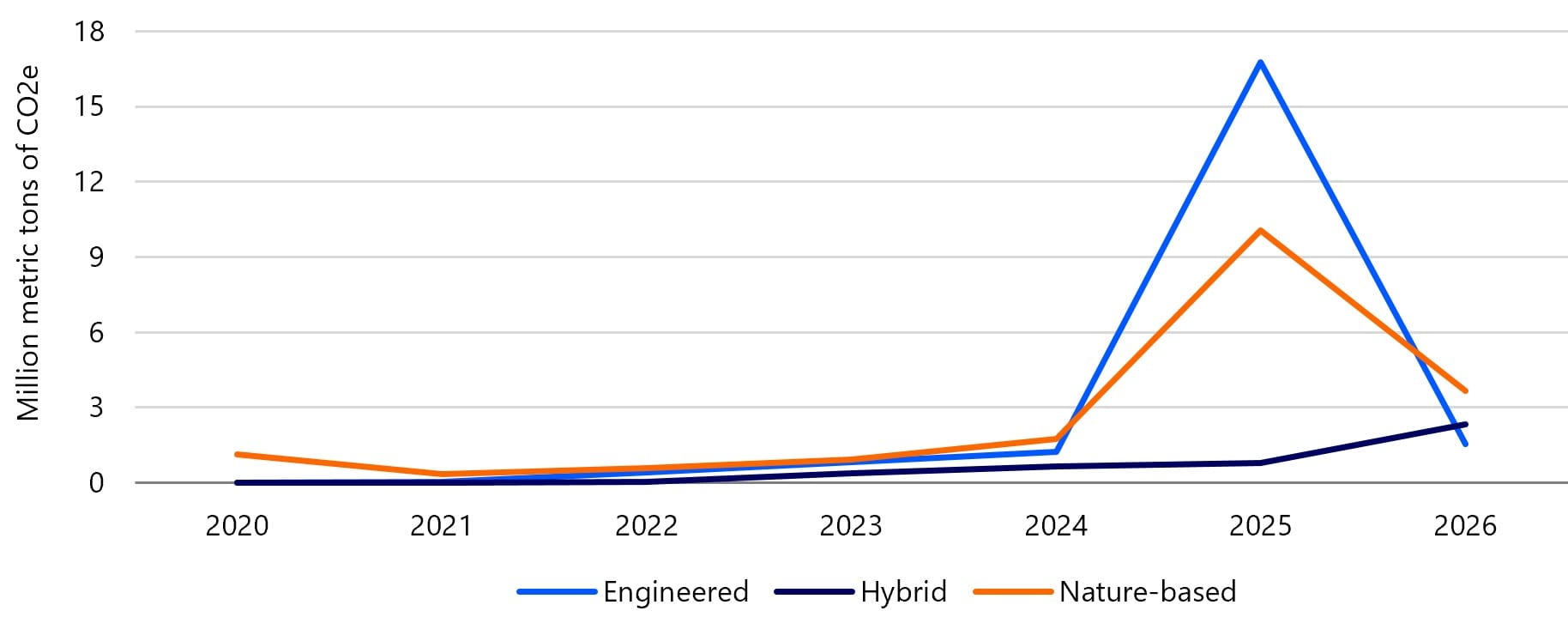
The buyer base is broadening as more than 35 new purchasers entered in 2026, but together they purchased less than half a million CDR credits – well below the several million credits needed to cushion the retreat of a large player like Microsoft. Many 2026 entrants purchased nature-based credits. This suggests that additional buyers can diversify demand but may not replace a pullback by one or more large purchasers.
Based on our analysis, a voluntary-market contraction would be unlikely to eliminate North American CDR. Instead, it would alter the technology mix, favoring lower-cost pathways while delaying expensive engineered projects until costs fall or alternative revenue support emerges.
Scenario 2: Compliance markets could provide more stable demand
This scenario tests whether compliance markets could provide a more stable alternative to discretionary voluntary demand. A decline in voluntary purchasing could potentially be partly offset by policies that create predictable demand for verified CDR.
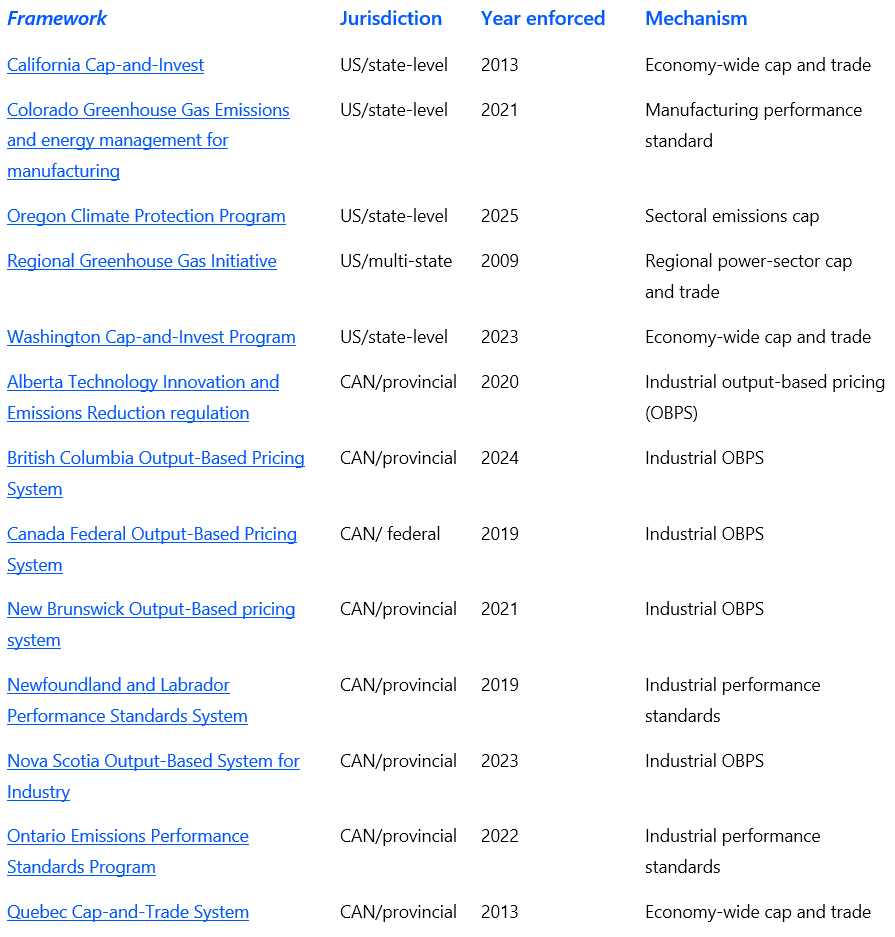
Compliance markets are established through regulation and require covered entities to meet emissions limits, carbon-pricing obligations, or performance standards. Unlike voluntary markets, participation is mandatory, which can create a more predictable source of demand. Canada primarily uses federal and provincial output-based pricing systems, while the US relies on state and regional cap-and-trade, cap-and-invest, and sector-specific programs (see table 3, including links to the relevant programs). However, most of these systems were designed to reduce or price new emissions rather than create demand for credits that remove CO2 already in the atmosphere.
Table 3: US and Canada compliance markets
Incorporating CDR into compliance systems would require rules governing eligible pathways, durability, MRV, reversal liability, and credit use. Because removal pathways have different costs and risk profiles, regulators would also need to determine whether they should be subject to different eligibility criteria.
Canada currently has a federal offset protocol for DAC projects, but most North American compliance systems do not yet create large-scale demand for atmospheric removals. Policy coordination does not necessarily have to begin at the federal level. California and Québec already illustrate how jurisdictions across national borders can operate a linked carbon market, while Washington’s movement toward linkage with California’s market shows how this regional model could expand. A broader coalition of state and provincial markets could eventually establish common rules for eligible removals, MRV, durability, and reversal risk.
If compliance markets recognized verified removals, they could support long-term contracts and reduce financing risk, particularly for capital-intensive pathways such as DAC and BECCS. Compliance markets would still need to ensure that companies reduce emissions where feasible and use removals for residual emissions. Well-designed linked markets could therefore make CDR more investable, even without comprehensive federal policy.
The verdict on CDR in North America
CDR can scale in North America, but not uniformly across technologies. Nature-based removals offer lower-cost near-term volume but face permanence and MRV challenges. Hybrid pathways could combine lower costs with durable storage but must demonstrate that they can deliver consistent results. Engineered removals provide the greatest durability, but depend on buyers willing to pay higher prices and on predictable revenue. Although voluntary markets support early commercialization, long-term growth will require broader and more stable demand. The markets driven by regulatory requirements could help provide that foundation by recognizing the different costs, risks, and benefits of removal pathways.