Table of contents
This article is part of:



Research
The great electrification: Natural gas is the bridge Europe can’t burn


The EU’s energy transition is being shaped by the “great electrification”: the shift to electricity as the foundation of a cleaner, more competitive, and more secure energy system. While electrification is essential, the expansion of renewable generation, grid infrastructure, and system flexibility will take time. As a result, natural gas is likely to remain a critical bridge fuel, supporting affordability, security, and industrial competitiveness during the transition.

Summary
Europe still has a molecule-based energy system
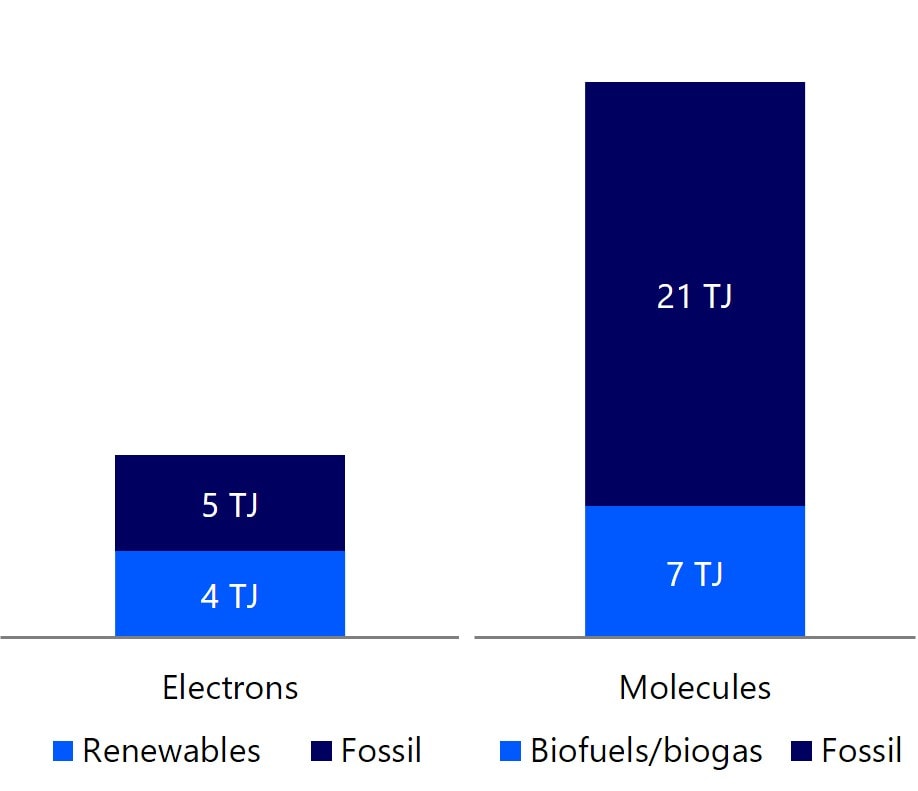
The energy transition in Europe is often perceived as being more advanced than underlying statistics suggest. The visibility of wind farms, solar panels, electric vehicles, and heat pumps creates the impression that the EU is already largely powered by renewable electricity. In reality, almost 80% of final energy consumption still depends on molecules rather than electrons,[1] and most of those molecules remain fossil-based. The “great electrification” is therefore not simply a shift from fossil-based to renewable electricity. It is the far more profound transformation of a predominantly molecule-based energy system into one where electricity becomes the backbone of energy supply.
[1] In this report, “molecules” refers to energy carriers and feedstocks such as natural gas, oil products, coal, biofuels, hydrogen, etc., in contrast to electricity (“electrons”).
Figure 1: Most EU final energy consumption still relies on molecules
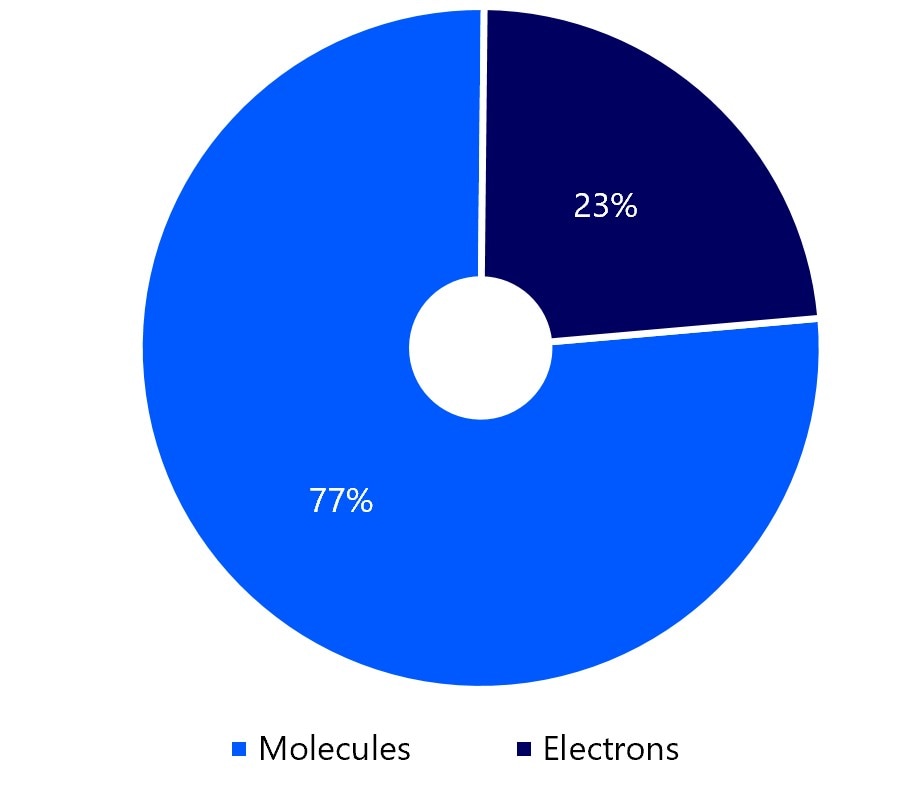
Figure 2: Fossil-based fuels still dominate the energy mix
Importantly, this transition is no longer driven by climate objectives alone. It has also become a response to the EU’s competitiveness challenge, its continued exposure to imported fossil fuels, and the geopolitical vulnerabilities exposed by the 2022 energy crisis and recent supply disruptions around the Strait of Hormuz. Electrifying demand, expanding renewable generation, strengthening grids, and increasing system flexibility have moved to the center of the EU’s economic, industrial, and energy security agenda.
Yet progress will be constrained by the pace at which renewables, grid infrastructure, storage, industrial technologies, building retrofits, and demand-response capabilities can scale. This creates a critical transition challenge: The EU must electrify fast enough to reduce fossil-fuel dependence while keeping the energy system secure, affordable, and industrially competitive.
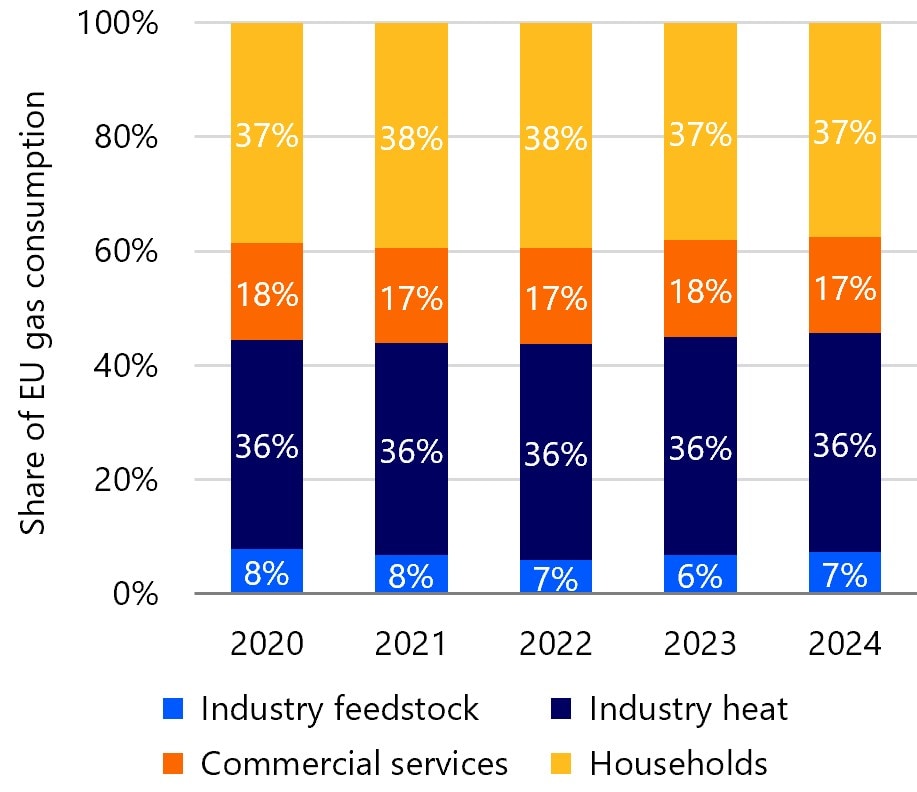
Natural gas sits at the center of this tension. It remains deeply embedded in the EU’s energy system, particularly in households and industry. While total consumption has declined significantly since its 2021 peak, the relative stability of sectoral demand shares suggests a gradual, broad-based reduction in demand rather than a rapid substitution of natural gas in any single sector. Natural gas is no longer a growth fuel, but neither is it disappearing quickly.
Figure 3: EU gas consumption is gradually declining
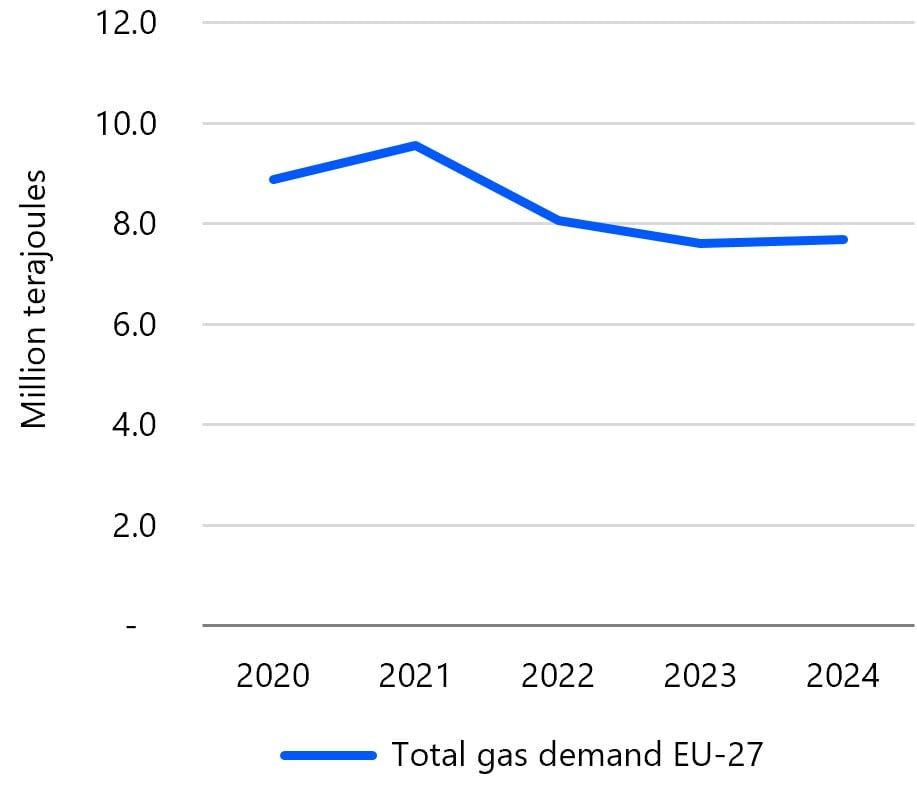
Figure 4: Households and industry are the largest gas consumers
Not everything can be electrified
While electricity will increasingly form the backbone of the EU’s energy system, the transition is not simply a matter of replacing molecules with electrons. Many applications can be electrified efficiently, but others face technical, economic, or system-level constraints. The exact share of energy demand that can ultimately be electrified will depend on technological progress, infrastructure development, and policy choices, but electrification alone cannot meet every energy requirement.
This is particularly relevant for sectors that require high energy density, high-temperature heat, or long-duration flexibility. High-temperature processes in steel and cement production, as well as long-distance aviation and maritime transport, remain difficult to electrify because batteries and direct-electric technologies cannot always provide the required energy density, operational flexibility, or economics.
In other cases, molecules are not simply energy carriers but part of the production process itself. For example, fertilizer production, refining, primary steelmaking, and certain chemical processes require carbon or hydrogen molecules as feedstock. This is one of the key reasons why industrial gas demand remains difficult to abate, as we discussed in our article Europe’s Gas Recalibration. Natural gas is still widely used in several of these applications, not because it is the preferred long-term solution, but because alternatives are not yet available at sufficient scale, cost, or reliability.
Michael Liebreich, Chairman and CEO of Liebreich Associates, created the “Electrification Staircase,” which provides a useful framework for understanding which applications can be electrified most easily and which are likely to remain more challenging. The logic is straightforward: Start with applications where electrification is already efficient, cost-competitive, and technologically mature, then progressively move toward more complex use cases.
Figure 5: Michael Liebreich’s Electrification Staircase 2040 v1.0
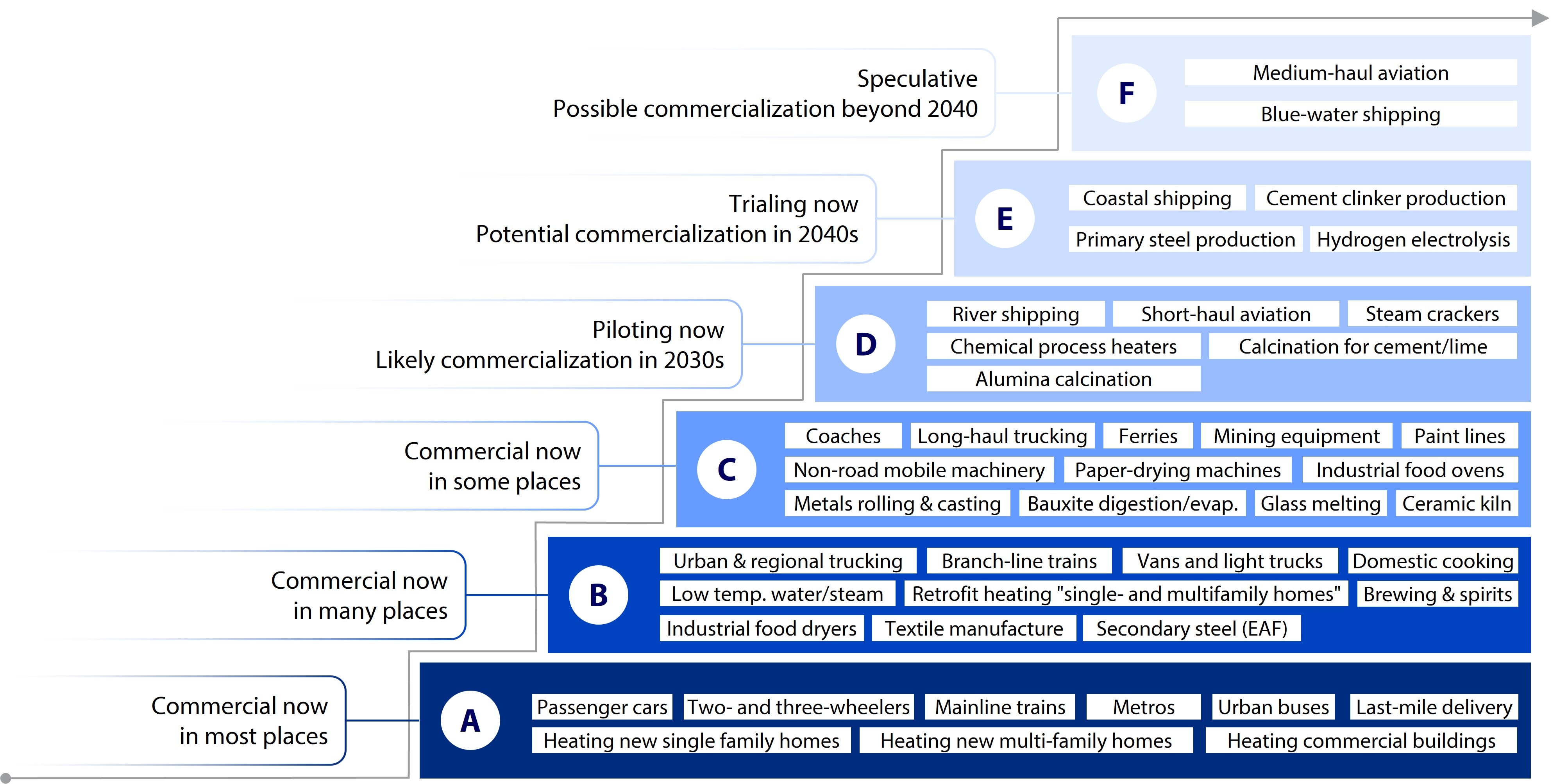
However, the staircase mainly ranks applications from an energy-efficiency perspective. It does not fully capture the wider energy-system constraints that determine whether electrification can actually happen in practice. A fleet of electric buses may be the most efficient solution for urban public transport, for example, but if the local grid is congested and a large charging plaza cannot be realized, that fleet will not drive a single mile. In that sense, the electrification potential of an application depends not only on the technology itself, but also on grid capacity, permitting, charging infrastructure, lead times, local system conditions, and investment coordination.
A second limitation is that the staircase largely assesses the electrifiability of existing applications. Yet, the energy transition may require more than replacing today’s technologies with electric equivalents. In some cases, it may require redesigning entire systems, products, and processes. The transition is not always about building a faster horse, but about inventing the car. It’s not necessarily about adding more or longer landlines, but about moving to mobile phones. Indeed, the future of industrial heat, mobility, logistics, and material production may depend not only on electrifying existing assets, but on rethinking how those applications are engineered in the first place.
This distinction matters for natural gas. Electrification will undoubtedly reduce gas demand where it is technically and economically feasible, but it will not eliminate the need for molecules across the energy system. Natural gas is therefore likely to retain a role as a transition fuel and feedstock for longer than often assumed.
The challenge is therefore not only identifying what can be electrified, but also determining how quickly it can be electrified at scale. This becomes increasingly important as new sources of electricity demand emerge, most notably artificial intelligence and data centers.
AI and data centers may extend gas capacity value
AI and data centers add another layer of complexity to the EU’s great electrification. The growth of digital infrastructure is increasing electricity demand in a system that is already under pressure from transport and industrial electrification, heat pumps, grid congestion, and renewable integration challenges. Our article The great electrification: Can the EU power its AI ambitions? explains how data center and AI-driven electricity demand could add pressure to the EU’s electricity system, especially in areas where grid connections and clean power availability are already constrained.
This does not necessarily mean that gas-fired generation will grow structurally, but it does increase the value of dispatchable capacity. In our article Europe’s Gas Recalibration, we show that Europe still has substantial idle combined-cycle gas turbine (CCGT) capacity that could help meet rising electricity demand from data centers if renewable deployment, grid expansion, battery storage, or demand-side flexibility fall short.
In this context, existing gas-fired plants may retain strategic value during the 2030s not because they are expected to run continuously, but because they can provide firm capacity when the system is under stress. AI-driven demand therefore strengthens the case for treating natural gas as a declining but still relevant resource to ensure flexibility within the power system.
Natural gas acts as insurance for the electricity system
The role of natural gas extends beyond sectors that are difficult to electrify. It also performs an important system function by providing flexibility and security of supply during the transition. As the EU increases its reliance on wind and solar generation, the ability to balance supply and demand during periods of low renewable output becomes increasingly valuable.
In a fossil-heavy electricity market, gas-fired plants earn revenue primarily from electricity production. In a renewables-heavy system, these plants may operate fewer hours while still playing a critical role in maintaining system adequacy. Their future value may therefore lie less in the megawatt-hours they produce and more in the megawatts they make available. Capacity mechanisms can remunerate gas-fired assets for their availability rather than their output, effectively turning them into an insurance policy for the electricity system.
Battery energy storage systems (BESS) are another critical part of this future energy system, but they cannot fully bridge the adequacy gap on their own. Batteries are highly effective at providing short-duration flexibility, shifting solar production into evening demand periods, reducing curtailment, and balancing intraday volatility. However, most current systems are designed to cover hours rather than days, weeks, or seasonal shortages. They are therefore less suited to prolonged periods of low renewable output or periods of sustained winter demand.
In the long run, renewable and low-carbon molecules could increasingly take over this flexibility role. Biomethane production is expanding, for example, but remains well below the EU’s target of 35bn cubic meters by 2030. Meanwhile, renewable hydrogen deployment is also lagging behind the EU’s ambition to produce 10m metric tons domestically and import a further 10m metric tons annually by 2030.
As long as renewable and low-carbon flexibility solutions are not available at sufficient scale, cost, and reliability, natural gas is likely to remain part of the EU’s transition toolkit.
Natural gas remains a durable bridge in the EU’s electrification
The EU’s energy transition is fundamentally a story of electrification, but it will not be completed by electrification alone. While renewable electricity will play an ever-larger role, molecules will remain essential in parts of industry, transport, and power systems for years to come. Natural gas is therefore not the destination, but it remains an important bridge until lower-carbon alternatives can deliver the scale, reliability, and affordability required to take its place.