Table of contents
This article is part of:




Research
The great electrification of EU industry: What will it take?


EU industry's electrification challenge is no longer mainly about technology or policy availability. It is about turning fragmented measures – from carbon pricing and affordable power to grid access, financing, and demand support – into a coherent investment framework. Industrial electrification will scale only when projects offer predictable returns and allow firms to remain competitive.
Summary
EU industry, much more than energy use
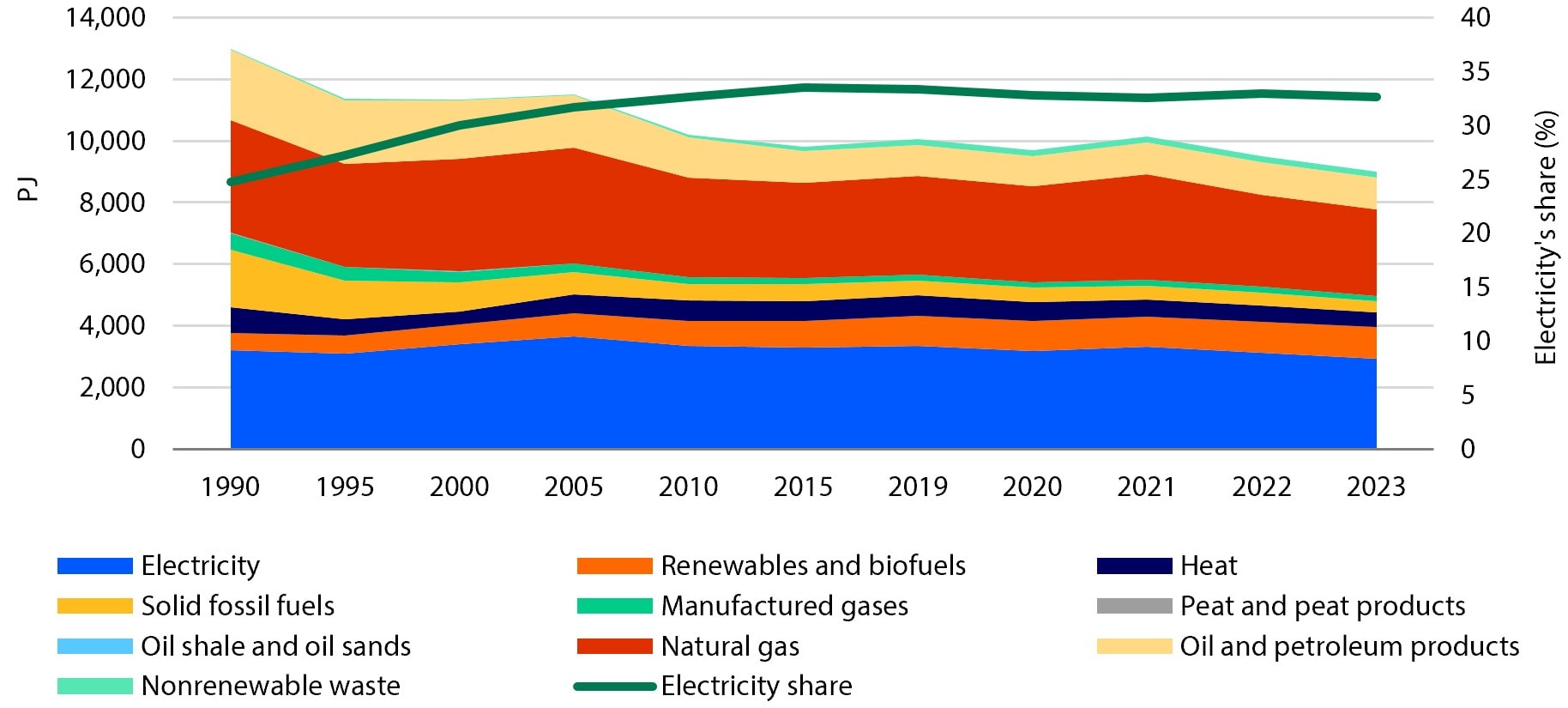
Industry is a major contributor to energy demand in the EU, accounting for roughly 25% of total final energy consumption. Electrification in EU industry progressed significantly during the 1990s, with electricity’s share of industrial energy use rising to approximately 30%. This increase was supported in part by energy efficiency improvements, which reduced the share of fossil fuels in the energy mix. Since then, the share of electricity in industrial energy consumption has largely plateaued at around 33%, as shown in figure 1.
Industry is strategically important beyond its direct energy use. As discussed in our previous report on the state of the energy transition in Europe and in Mario Draghi’s 2024 report on European competitiveness, industry is central to restoring the EU’s economic strength because it supports innovation, productivity growth, and strategic autonomy. Draghi, the former head of the European Central Bank, argued that Europe can no longer rely on cheap fossil-based energy, expanding trade, and favorable geopolitical conditions. Recent shocks, from Russia’s war in Ukraine to tensions around the Strait of Hormuz, have weakened competitiveness and exposed the risks associated with imported fossil fuels. In this context, electrification based on domestically generated power has emergedas a key route to strengthening resilience, security, and competitiveness.
Figure 1: EU industry’s final energy consumption by source, 1990-2023
The EU’s industrial energy use
Industrial energy use is more complex than figure 1 suggests. Energy needs vary widely by subsector, process, technology, and energy intensity, resulting in distinct electrification pathways. Understanding electrification potential therefore requires looking beyond final energy statistics to the underlying energy flows, conversion processes, and site-level integration constraints.
Industry encompasses a diverse range of subsectors,[1] including iron and steel, nonferrous metals, chemicals and petrochemicals, non-metallic minerals, food and beverages, pulp and paper, machinery, transport equipment, textiles, construction, and other manufacturing activities. Energy demand is nevertheless concentrated. As shown in figure 2, chemicals and petrochemicals account for about 20% of EU industry’s final energy consumption, while non-metallic minerals, pulp and paper, food and beverages, iron and steel, and machinery each represent more than 10%.
EU legislation has no single binding definition of energy-intensive industries. Instead, different policy instruments use energy-cost thresholds or sector classifications. Yet figure 2 shows that a small group of sectors dominates industrial energy use and therefore has an outsized influence on decarbonization, competitiveness, and even state aid outcomes.
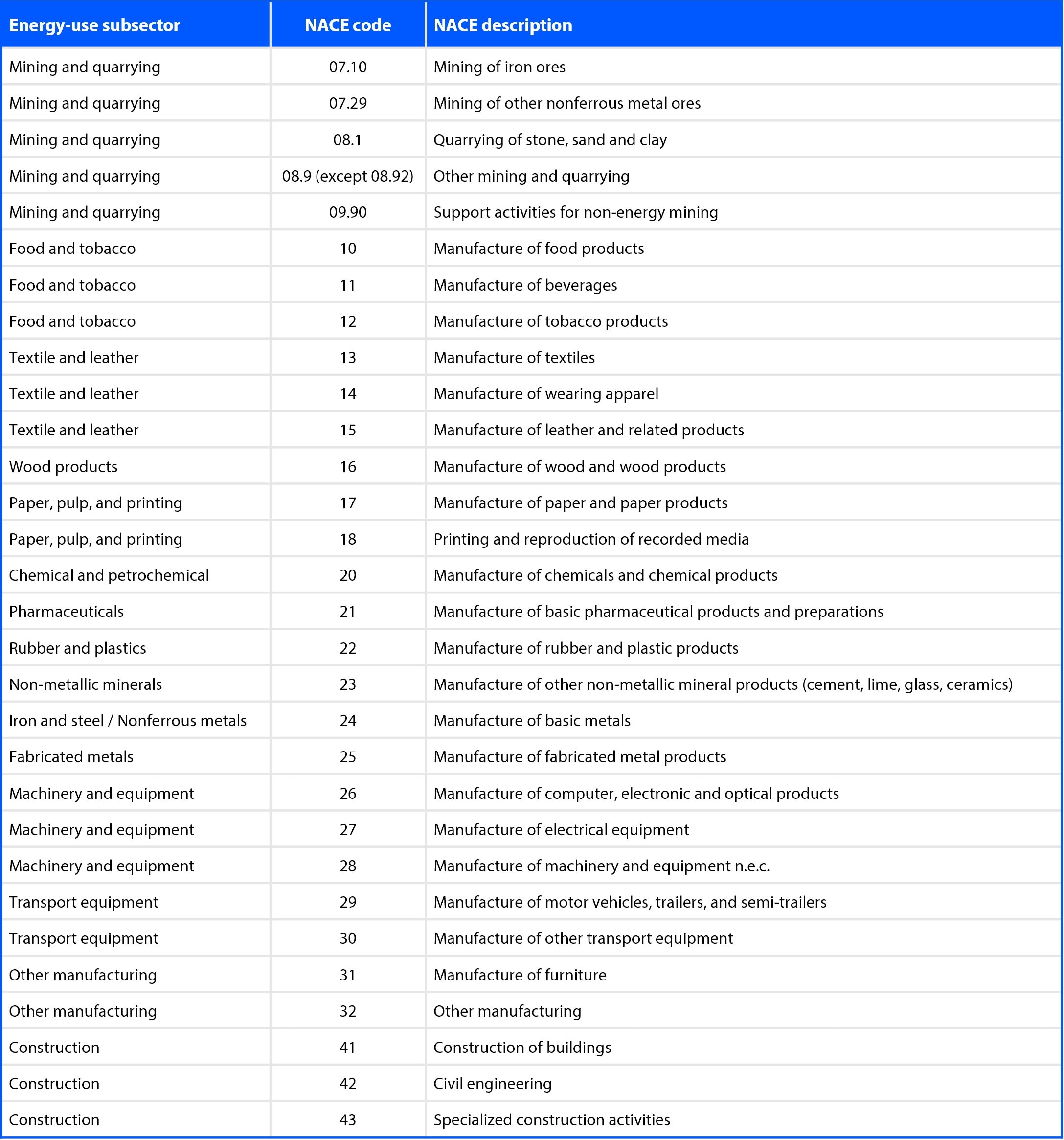
[1] For economic analysis, it is important to note that the subsector categories used in energy statistics do not map directly onto NACE sectors. Energy balances group activities according to energy use, whereas NACE classifies companies by their primary economic activity. Find the correspondence used in this article in the annex.
Figure 2: Share of EU industrial final energy consumption by subsector, percent, 2023
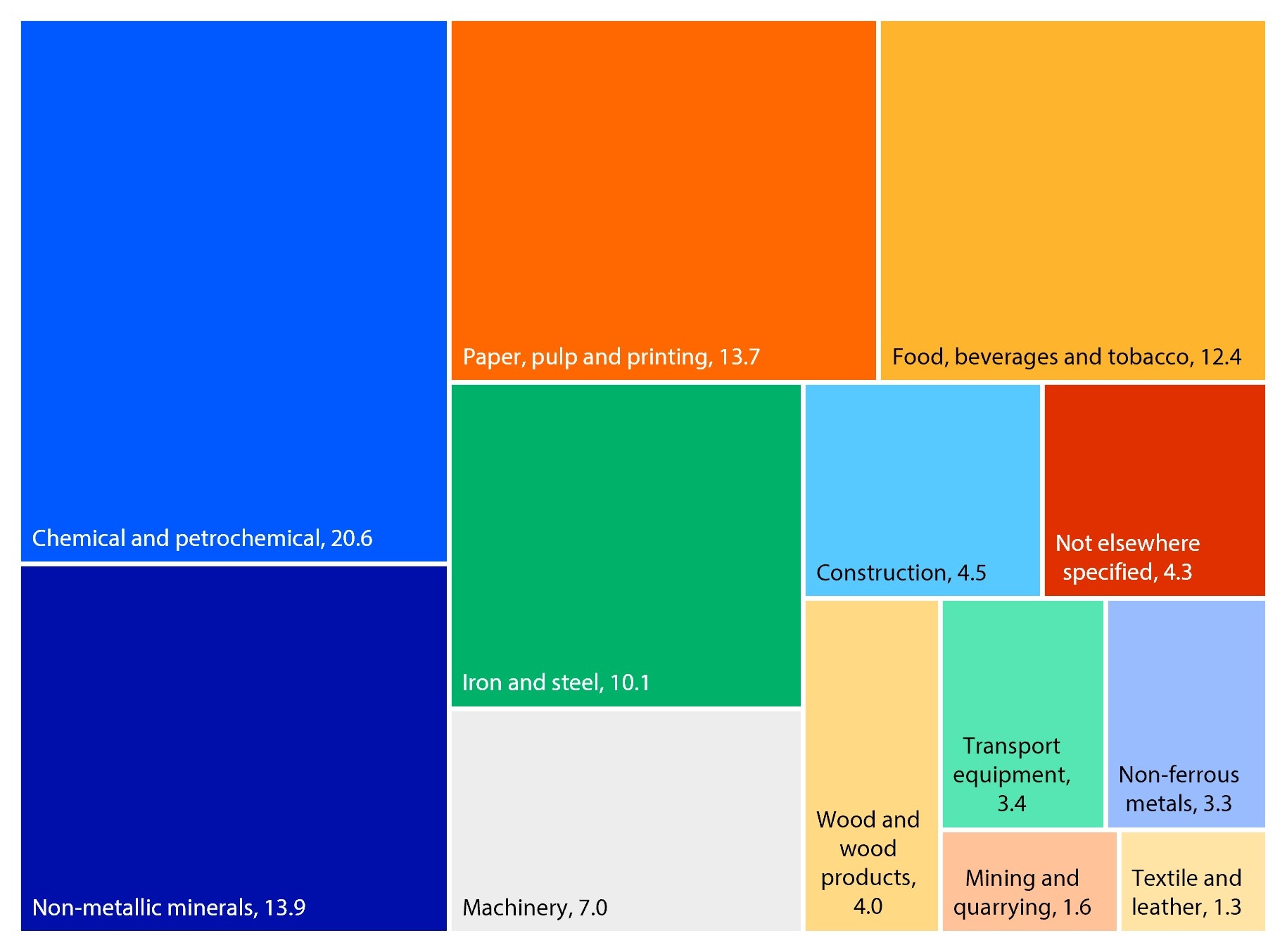
This concentration of demand increases the importance of electrification in energy-intensive industries. However, their electrification pathways differ sharply by process, technology readiness, infrastructure, energy prices, regulation, and asset cycles. Electrification potential must therefore be assessed at the subsector level rather than treating industry as a homogeneous market.
Electrification pathways and technical potential for EU industry
Industrial electrification potential is large. A University of Oxford study estimates that up to 90% of industrial energy demand could ultimately be electrified, while Agora Industry finds that available technologies could cover a similar share of Europe’s remaining non-electric demand by 2035. At the facility level, however, potential varies by temperature requirements, process chemistry, technology maturity, and site integration constraints.
Most additional potential lies in steam generation and process heat across a broad temperature range (see figure 3). McKinsey estimates that available technologies could theoretically electrify heat demand up to 1,000 degrees Celsius, covering about 80% of EU industrial energy demand; a study by the Potsdam Institute arrives at a similar estimate of 78%.
Figure 3: Industrial energy demand by end use and sector, 2023
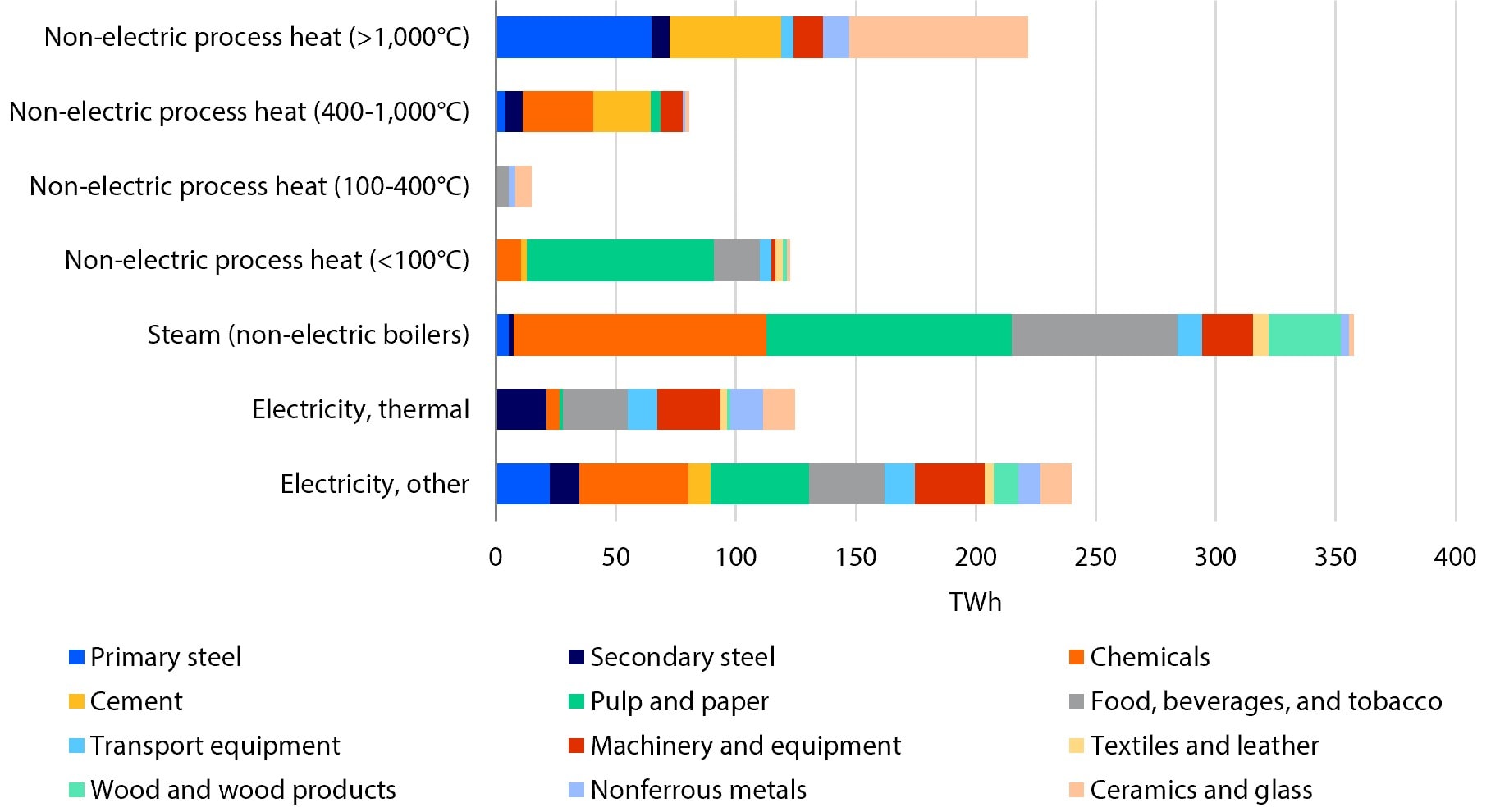
At the plant level, electrification pathways fall into three broad groups: the easy to electrify, low- and medium-temperature applications, energy-intensive industries with demanding and diverse process and feedstock conditions, and activities that must retain molecular inputs.
Easy-to-electrify industries
A significant share of industrial processes that currently rely on fossil fuels can be electrified easily. Processes that use low-temperature heat, typically below 200C, offer the clearest opportunity. The IEA finds industrial heat pumps mature up to 150C and electric boilers capable of producing steam up to 350C and about 70 bar. IRENA estimates heat pumps alone could meet at least 30% of industrial heat demand, close to the Technical University of Denmark’s estimate of 37%.
Steam demand is concentrated in chemicals and pharmaceuticals, pulp and paper, food and beverages, and machinery, as shown in figure 3. According to the IEA, these sectors are priority candidates for electric boilers and heat pumps, although process-level assessments remain necessary. In pulp and paper, one industry report finds almost 70% of steam use is below 5 bar. Commercial systems already operate in pulp and paper, pharmaceuticals, food, and beverages. Agora concludes that most common steam ranges – between 100-400C and 3-40 bar – can already be electrified.
Figure 4: Share of EU industrial energy demand by degree of electrification, 2023
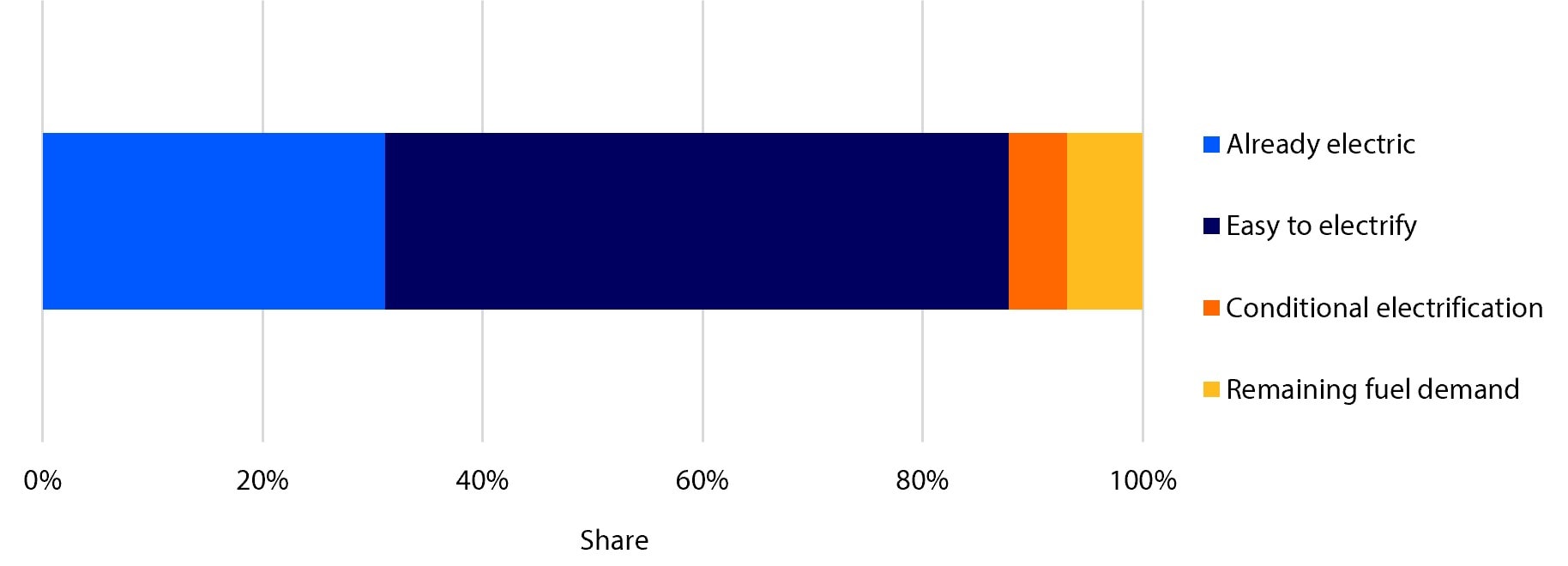
As figure 4 indicates, technology is not the main barrier to electrification. Beyond heat pumps, technologies such as electric boilers, resistance heating, and induction can extend direct electrification to higher-temperature applications, also according to Fraunhofer.
Energy-intensive industries
On the other side of the electrification spectrum, energy-intensive industries often rely on fossil fuels not only for energy, but also as feedstocks in chemical processes. Many also require precise process control and have higher temperature and pressure requirements, as is the case in steel, cement, chemicals, and petrochemicals.
The Joint Research Centre (JRC) has assessed decarbonization pathways for aluminum, steel, ammonia, cement, ceramics, and glass. However, decarbonization is not synonymous with direct electrification. For example, hydrogen-based direct reduced iron (DRI) nearly doubles electricity demand in steelmaking, whereas aluminum is already power-intensive and benefits mainly from cleaner electricity. Combined with the sectoral energy profiles in figure 3, the JRC’s findings provide the basis for the indicative electrification ranges presented in table 1.Table 1: Electrification potential in energy-intensive industries, 2026
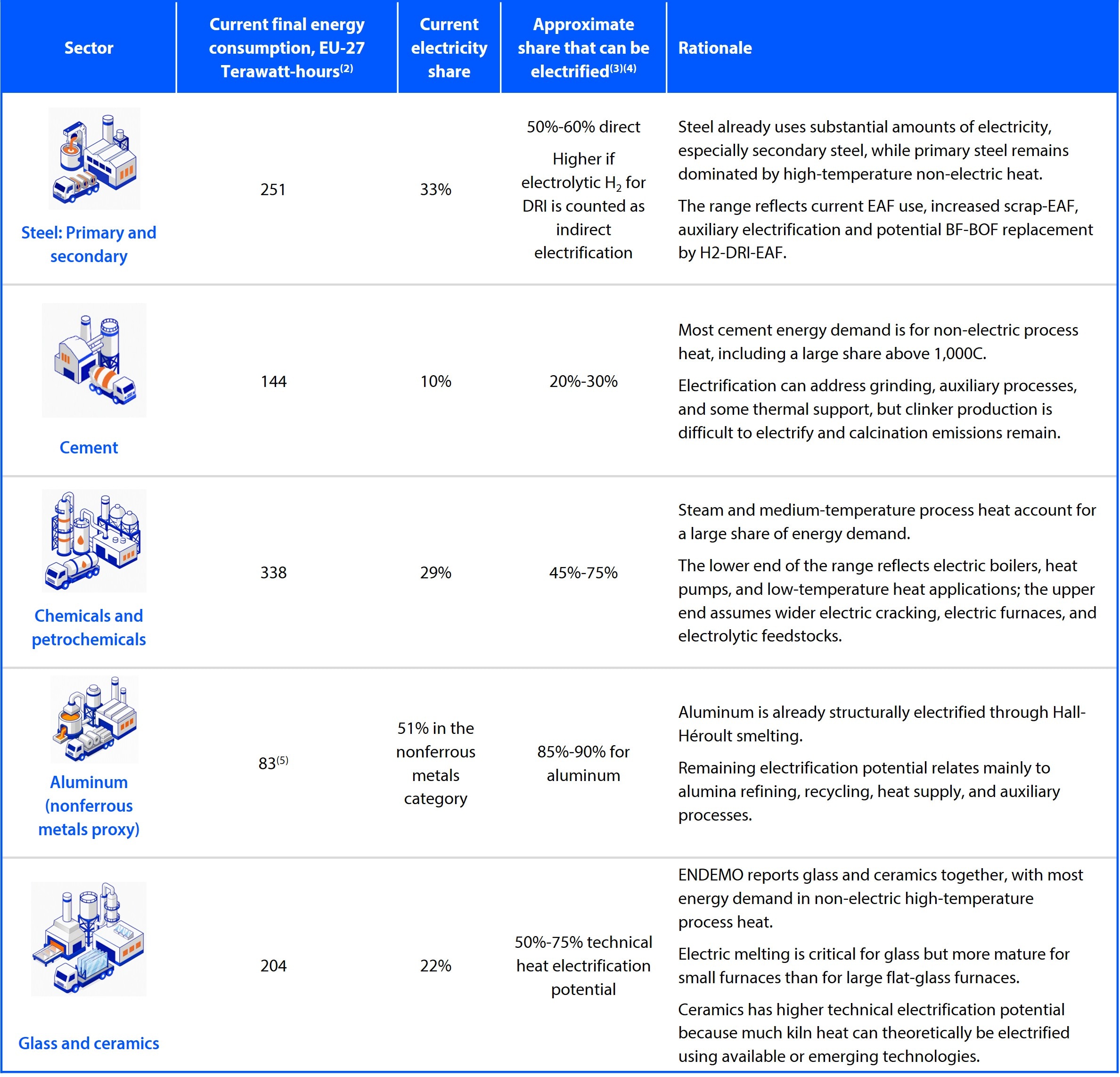
[2] Note: ENDEMO dataset
[3] Electrifiable shares were estimated using engineering judgement informed by technology maturity and sectoral decarbonization pathways described in the JRC industrial decarbonization factsheets. Low-temperature heat (<400C) was assumed to be largely electrifiable using commercially available technologies such as electric boilers and heat pumps. For medium-temperature heat (400-1,000C) and very high-temperature heat (>1,000C), sector-specific electrification factors were applied based on technology readiness, expected deployment potential, and process constraints. Lower-bound values represent near-commercial deployment potential, while upper-bound values represent long-term technical potential assuming successful maturation of emerging electrification technologies.
[4] ENDEMO sectoral energy-balance data was used to estimate the technical electrification potential of process energy demand. For chemicals, the resulting values should be interpreted with caution because the dataset does not explicitly distinguish feedstock use from process energy use. Actual sector electrification potential may therefore be lower than the calculated technical maximum and will depend on the future deployment of electrochemical processes, electrified cracking technologies, and renewable hydrogen pathways.
[5] JRC’s aluminum factsheet separately reports 116TWh of electricity consumption for smelting in Europe in 2023, suggesting a possible difference in sector definitions across sources.
The role of hydrogen and e-fuels for energy intensive industries
Even under ambitious electrification scenarios, hydrogen, sustainable biomass, and renewable carbon molecules will remain necessary as reactants, reducing agents, feedstocks, and sources of very high-temperature heat for the applications that can’t be fully electrified. This is particularly true for primary steel, cement and lime, glass and ceramics, chemicals and petrochemicals, and refineries.
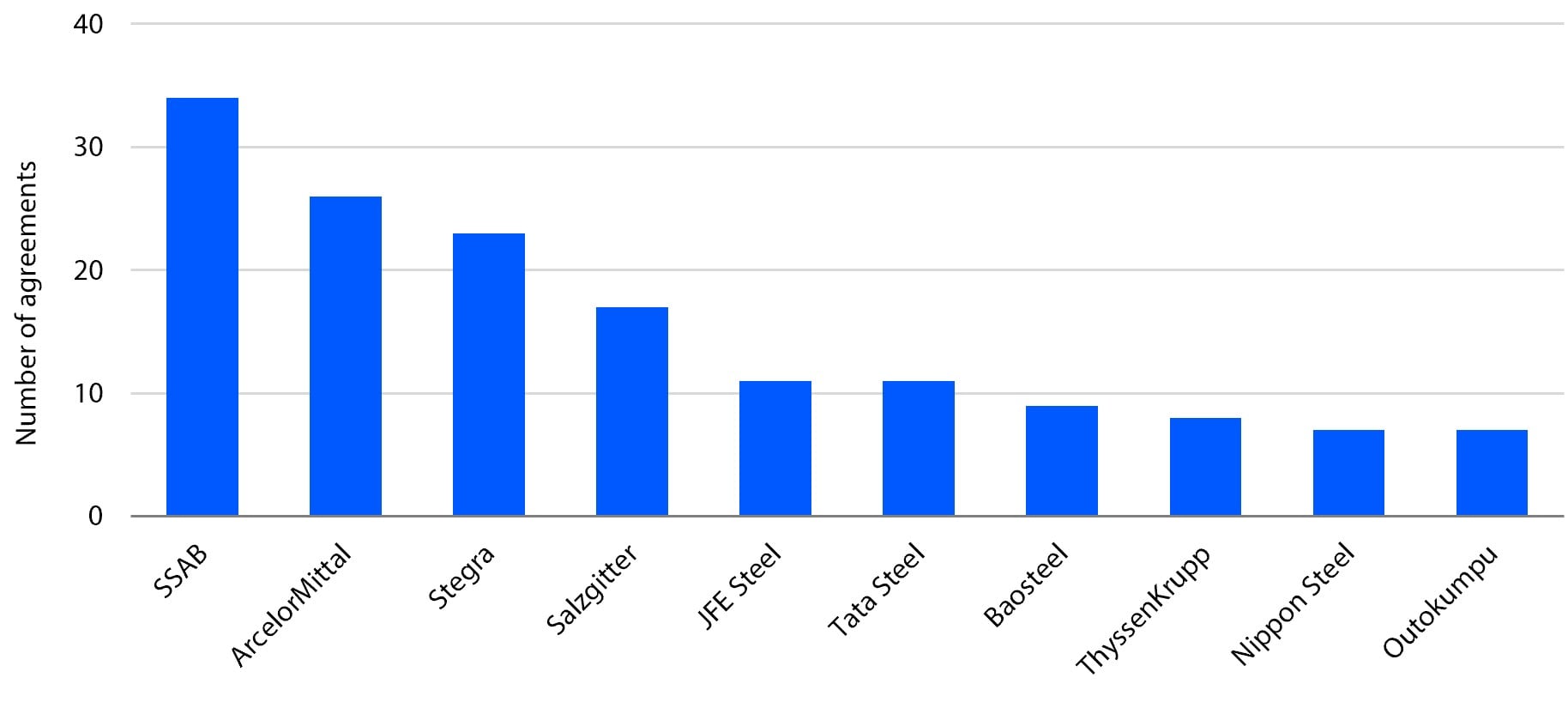
Primary steel production cannot be fully electrified because coking coal supplies heat and reduces iron ore. Scrap-based electric arc furnaces are constrained by scrap availability and quality, while hydrogen-based direct reduction can replace carbon as the reducing agent. Demand for low-carbon steel exists, but most offtake agreements remain non-binding rather than firm purchase contracts.
Figure 5: Top 10 suppliers of low-emission steel by number of agreements, 2026
Cement, lime, glass, and ceramics require 1,000-1,600C heat, precise thermal control, and stable large-scale processes that electric furnaces cannot always provide economically. Green molecules therefore remain part of their decarbonization pathways where full electrification is impractical.
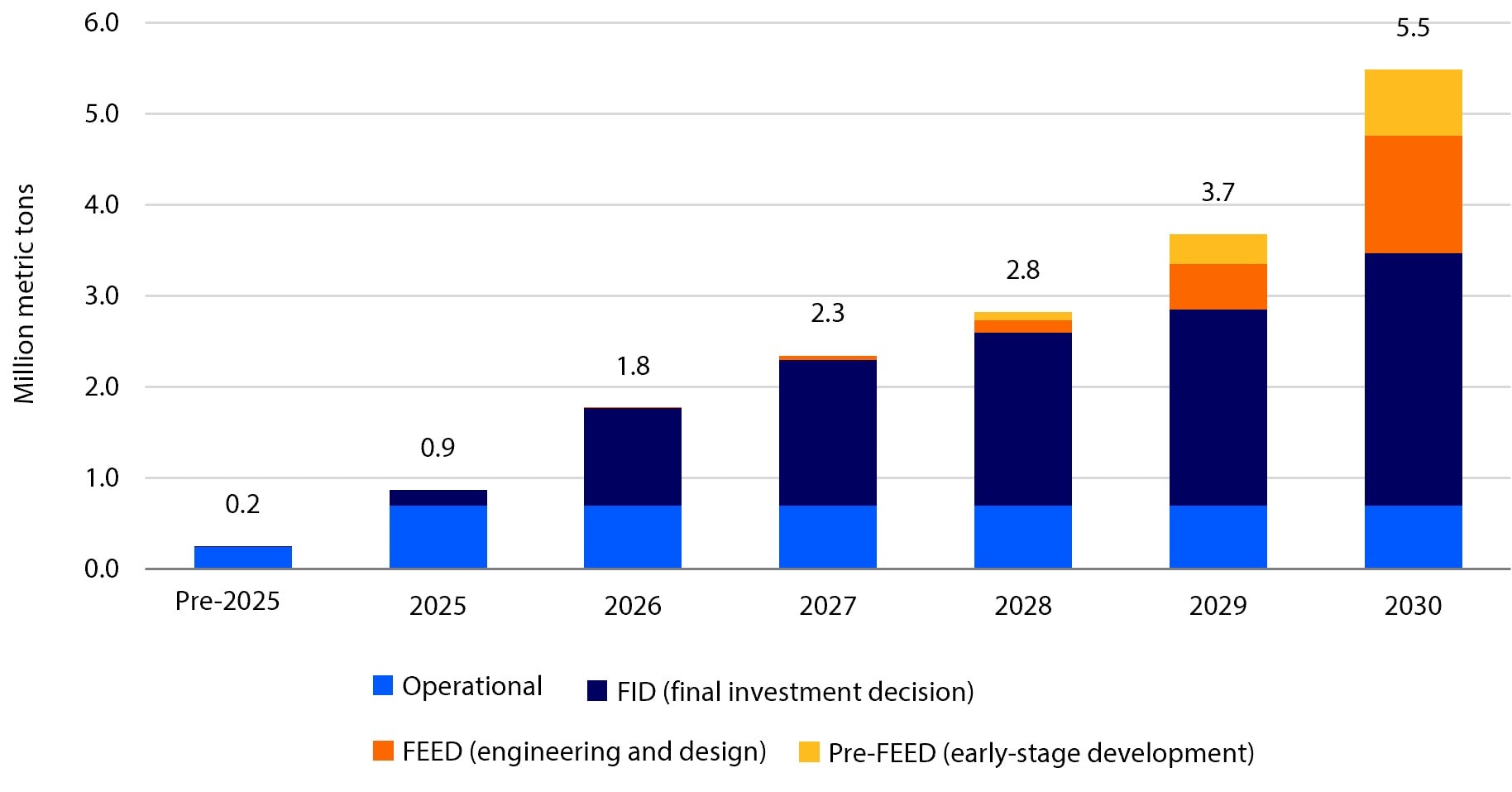
Some chemicals depend structurally on molecules because ammonia, methanol, and polymers require hydrogen and carbon as feedstocks. Electrification can improve efficiency but cannot replace these feedstocks; decarbonization requires low-carbon hydrogen and biogenic or captured CO2. Similarly, refineries require hydrogen for impurity removal, hydrocracking, and hydrotreating. Electrification can replace some heat, while combining low-carbon hydrogen with captured CO2 can produce synthetic fuels. Low-carbon hydrogen is vital for these uses, but the market remains immature: Few projects are operating or have reached final investment decision. Supply therefore remains constrained and costly, while near-term availability falls short of prospective industrial demand. Hydrogen is essential, but scaling up will take time. Figure 6 illustrates the current status of the hydrogen supply chain.
Figure 6: Annual expected global hydrogen supply by project status, pre-2025-2030
How industrial electricity demand could evolve
The technical potential outlined in the preceding sections suggests that electricity could account for a substantially larger share of industry’s final energy consumption. However, estimating the pace of this transition is difficult. Electrification often requires major investment decisions, and actual deployment may diverge significantly from scenario-based projections.
In a previous article in the great electrification series, we reviewed the role of energy-system models to understand the interaction of key dynamics shaping electrification. These models optimize the energy system as a whole, and therefore do not fully replicate strategic company decisions. However, they do illustrate the scale of change implied by EU climate targets.
Figure 7 shows how, according to the EU’s CETO modeling exercise, industrial electricity use rises from 940TWh in 2025 to nearly 1,400TWh by 2045, and increase of around 45%. Efficiency gains keep this increase moderate relative to total EU electricity consumption of almost 2,400TWh in 2024. Most sectors grow by about 30% or less, with larger increases in chemicals and non-metallic minerals.
Figure 7: EU industrial electricity consumption in the CETO scenario, 2025-2050
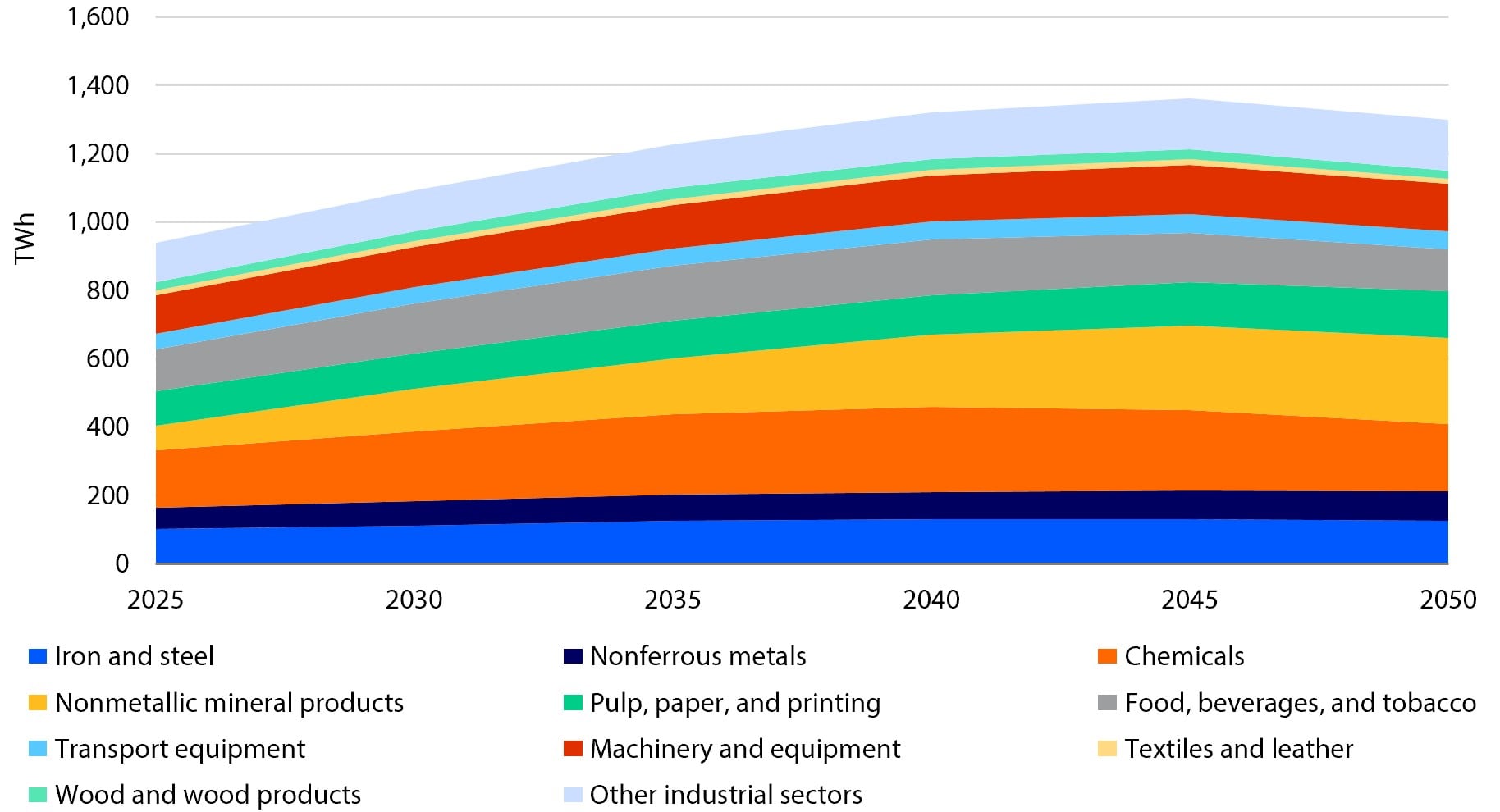
System scenarios identify the least-cost pathway to climate targets based on expected technology costs and macro assumptions. Figure 7 shows this system-optimal electrification pathway, while also accounting for some firm-level factors such as asset age. The following sections examine the policy and business conditions that ultimately shape those decisions and help explain the gap between theoretical potential and market materialization.
The EU policy framework for industrial electrification
As illustrated in figure 8, the European Commission began building a policy framework to support electrification of the energy system before its current term. Following Russia’s invasion of Ukraine and the disruption of natural gas flows through Nord Stream, that agenda accelerated. Since then, the commission has introduced a steady stream of measures to support electrification of the broader energy system and, more specifically, within industry.
From REPowerEU to the EU Electrification Action Plan
The list of political initiatives supporting electrification is remarkable. REPowerEU mobilized more than EUR 300 billion to reduce dependence on Russian energy, and the European Hydrogen Bank has awarded almost EUR 2 billion to 22 projects. The Grids Action Plan targets congestion and connections; the Net-Zero Industry Act accelerates clean-technology manufacturing; and the electricity market reform supports predictable power costs through power purchase agreements (PPAs), contracts for difference (CfDs), and risk-reduction measures.
Figure 8: EU Industrial electrification policy timeline
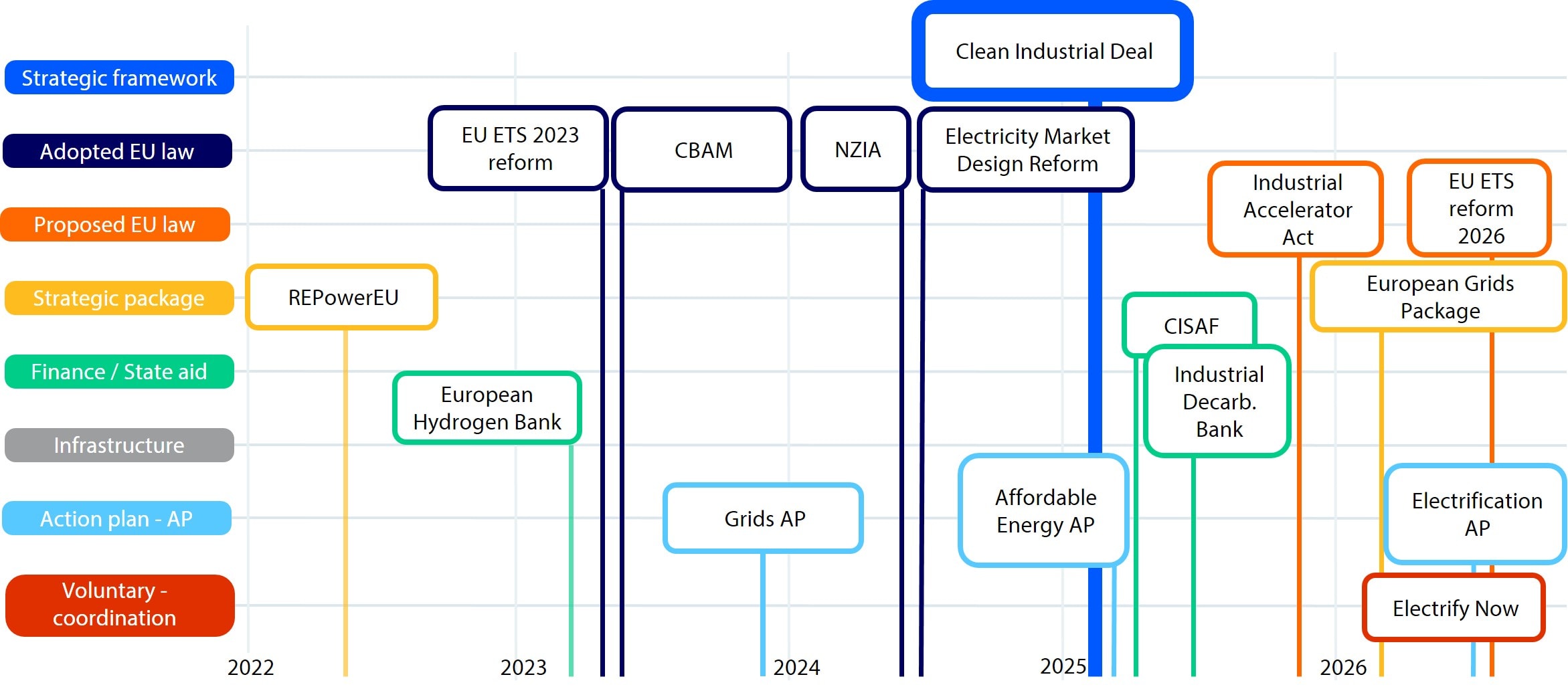
The Clean Industrial Deal frames electrification as a competitiveness strategy in response to Draghi’s diagnosis and targets an economy-wide electrification rate of 32% by 2030. One of its key initiatives is the Affordable Energy Action Plan, which aims to narrow the electricity-fossil-fuel cost gap through lower taxes and network charges, stronger support for PPAs, grid investment, flexibility, and market integration. In parallel, the Clean Industrial Deal State Aid Framework enables stronger national support while protecting the internal market. Approved measures include Spain’s EUR 408 million industrial decarbonization scheme; energy-price relief measures worth EUR 334 million, EUR 3.8 billion, and EUR 90 million for Bulgaria, Germany, and Slovenia, respectively; and cleantech schemes in Germany (EUR 3 billion) and Italy (EUR 1.5 billion). The European Grids Package complements this by addressing queues, access procedures, permitting, and connections.
More recently, the proposed Industrial Accelerator Act addresses the demand side of industrial decarbonization. It proposes using public procurement, public support schemes, “Made in EU” preferences, and low-carbon requirements to create markets for products such as green steel, low-carbon cement, and clean technologies. The Electrification Action Plan targets an electrification rate of 46% by 2040. For industry, it focuses on narrowing the electricity-gas price gap, easing grid connections, and coordinating EU funding for capital expenditure.
The Electrify Now coalition also plays a role by facilitating practical exchanges, showcasing replicable national and regional initiatives, and helping mobilize investment.
Together, these measures address power-price predictability, relative electricity costs, grid access and connections, clean-technology manufacturing, state aid, demand for low-carbon products, and economy-wide electrification.
EU ETS, the variable-cost lever for electrification
Alongside energy policy, the EU’s Emissions Trading System (EU ETS) is a core lever for electrifying power and energy-intensive industries. The system puts a price on carbon emissions by requiring covered companies to surrender emissions allowances, creating a financial incentive to reduce fossil-fuel use. It thus raises the relative cost of fossil fuel production while funding transition investment.
The 2023 EU ETS reform tightened the emissions cap, raised the 2030 reduction target to 62% below 2005 levels, and set the phase-out of free emissions allowances alongside the phase-in of the Carbon Border Adjustment Mechanism (CBAM). Since then, the additional cost pressure created by the EU ETS for some covered industries has become increasingly controversial, with opposition to the system mounting ahead of the Antwerp EU leaders’ summit this February. However, as Ember illustrates, the increase in costs faced by EU industry was driven far more by the fossil fuel supply crisis than by the EU ETS. The chemical industry has come under particular pressure. Yet, according to Cefic, the European Chemical Industry Council, high energy and feedstock costs are the main competitive disadvantage for European producers, rather than current carbon price levels.
Although carbon pricing can be perceived as an additional cost, it is also the price signal underpinning a broader policy architecture designed to enable EU industry to shift away from fossil fuels. This distinction matters for competitiveness: Recurring fossil fuel supply crises and price spikes, rather than carbon pricing, have been the underlying and most significant drivers of the recent deterioration in the competitiveness of EU industry.
The proposed 2026 EU ETS update seeks to reconcile decarbonization and competitiveness through three channels: a predictable carbon price with safeguards against spikes; stronger conditionality on free allocation; and greater use of ETS revenues for electric boilers, heat pumps, hydrogen, and other capital-intensive investments.
EU industrial electrification financial toolbox
Consistent with this policy framework, EU financing is shifting from demonstration projects toward industrial-scale deployment.
The Innovation Fund is a major EU decarbonization program and includes the EUR 1 billion Heat Auction pilot for industrial heat pumps, electric boilers, and electrified processes. The ETS-funded Modernisation Fund supports clean energy, grids, efficiency, and industrial transformation in lower-income member states. The proposed Industrial Decarbonisation Bank would provide about EUR 100 billion between 2030 and 2040, while the ETS Investment Booster could front-load roughly EUR 30 billion before 2030 to accelerate final investment decisions. Finally, the proposed European Competitiveness Fund, still under development, is expected to consolidate and strategically steer EU competitiveness and clean-transition financing, complementing sector-specific instruments and supporting industrial transformation at scale.
Financial tools at the EU level are deployed to support a significant investment cycle in industrial electrification and decarbonization. The central question is therefore not whether industrial heat can be electrified, but why this substantial technical potential is not translating into deployment. Explaining this gap requires moving from technical potential to the economics and practical conditions that shape industrial investment decisions.
Investment barriers and the business case for electrification
Policy alone has yet to translate consistently into company investment decisions. For companies, a viable project must preserve competitiveness and deliver adequate returns. The business case for electrification thus depends on electricity and fuel prices, capital costs, asset lives, operational risk, volatility, grid access, carbon costs, and policy support.
ADE notes that companies often cannot obtain timely, credible grid-connection cost estimates. Siemens’ Infrastructure Transition Monitor finds nearly two-thirds of respondents see policy uncertainty as a growing threat, although the share of firms with detailed decarbonization plans rose from 43% in 2023 to 60% in 2025. Grid investment remains the strongest perceived accelerator of industrial electrification.
The main barriers concern policy uncertainty, capital and operating costs, infrastructure, market demand, and opportunity costs, as summarized in figure 9.
Figure 9: The main barriers to industrial electrification
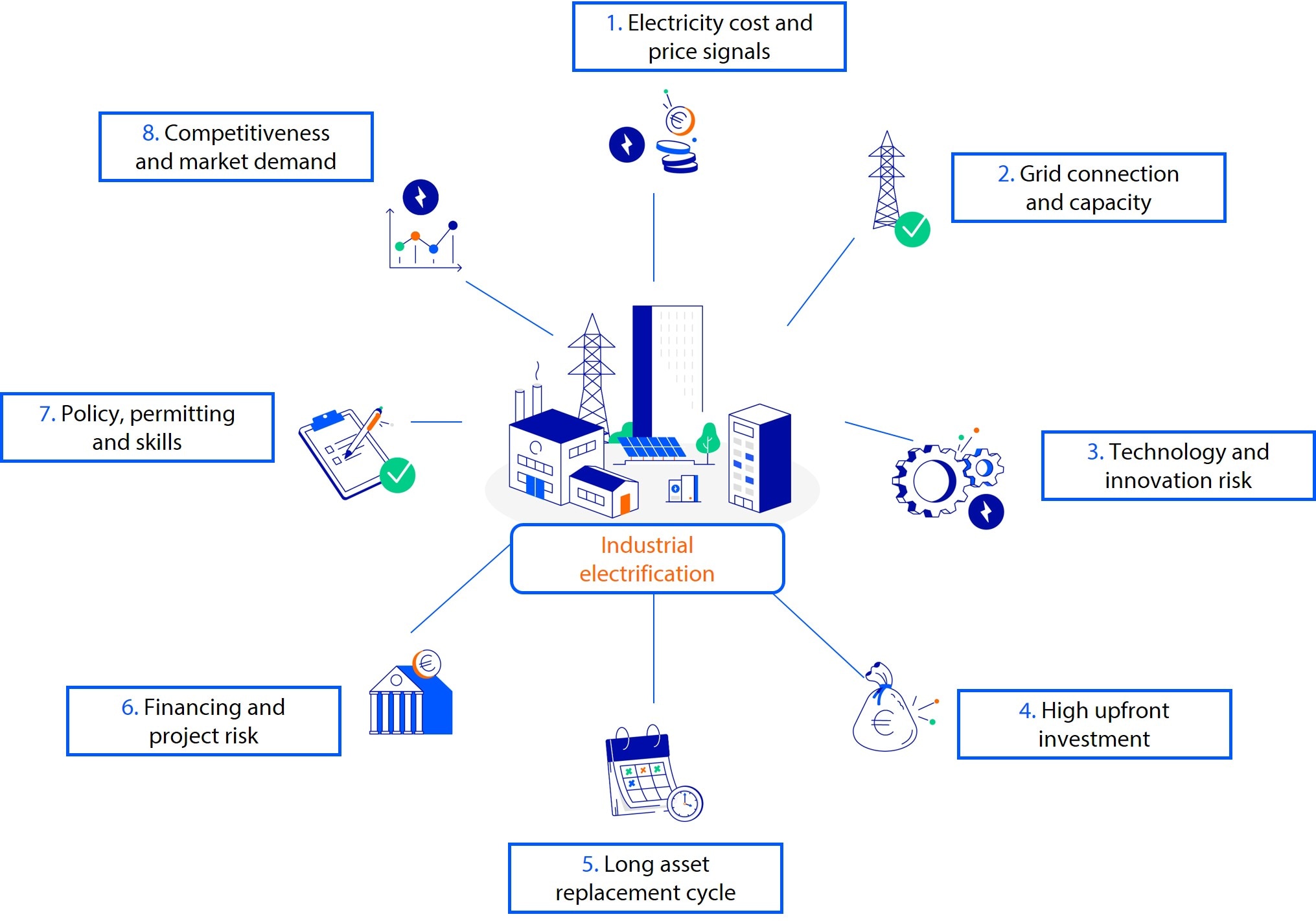
An ECORYS study supporting the 2026 Electrification Action Plan identifies five recurring barriers: high electricity costs, grid access, large upfront investment, competitiveness concerns, and uneven policy ambition and implementation across member states. The JRC reached similar conclusions in its analysis of 12 industrial electrification projects, pointing to regulatory complexity, infrastructure dependencies, financing risks for first-of-a-kind projects, and weak demand for low-carbon products. A University of Oxford study, citing BASF’s Ludwigshafen project, shows that mature technology alone is insufficient to drive deployment. Power-price signals, grids, integration risk, financing before asset retirement, and implementation capacity still constrain industrial electrification.
Most of the identified constraints are already being addressed through EU and national policy initiatives, as outlined above. The remaining challenge is coordination. Industrial electrification depends on aligned action to address power costs, grid access, financing, policy certainty, and demand for low-carbon products. It is therefore not simply a technology problem, nor can it be delivered through policy mandates or market forces alone.
With a broadly shared diagnosis, common objectives, and a clear set of policy measures, stronger coordination between public authorities, industry, infrastructure providers, and financiers may be the key condition for industrial electrification to scale in line with its technical potential and policy urgency.
Conclusion: The role of electricity in EU industry
The scale of the EU’s exposure to fossil fuels is evident in the support required during recent energy crises. The European Commission reports that nearly EUR 796 billion in aid was approved between March 2022 and June 2024, of which around EUR 219 billion was granted to companies. This comes on top of more than EUR 24 billion lost within months to fossil fuel price shocks following the war in Iran and the crisis in the Strait of Hormuz. With potential annual savings of EUR 260 billion in fossil fuel imports by 2040, the case for electrification is clear.
EU industry is strategically important, but even now electrification has stalled despite its large technical potential. More than 70% of current industrial final energy use could easily be electrified. Mature technologies can address low-temperature heat applications and some processes, though energy-intensive industries face constraints from chemistry, high-temperature heat, hydrogen, and asset cycles. If this potential were realized, industrial electricity use could increase 40% from current levels, significantly shielding the industry from fossil fuel supply instability.
Given current technology, industrial electrification is less a question of whether electricity can replace fossil fuels than whether it can do so on investable terms. The technical potential is large and the policy framework is increasingly comprehensive. Still, electrification remains constrained because technical feasibility is broad but uneven, and policy coverage is extensive but fragmented. Individual policy measures do not automatically translate into bankable projects. Capital will move only when electricity costs, grid access, carbon incentives, financing, and demand for low-carbon products combine to provide a predictable return at the project level and allow firms to remain competitive.
For the EU, the central challenge is to turn a complex mix of measures, incentives, safeguards, and financing tools into a coherent investment framework. Electrification in industry will scale only when carbon pricing, electricity costs, grid access, financing, and demand for low-carbon products work together to provide companies with a predictable return on investment and confidence that electrified production can remain competitive.
Annex: Industry sector definitions
Table 1a. Correspondence between industry sector definitions for energy balance and NACE sector classifications