Table of contents
This article is part of:




Research
The great electrification of the residential built environment


Households are moving from being fossil-fuel-dependent energy consumers to becoming active participants in the electricity system. Electrification of heating, cooling, and mobility is expected to accelerate toward 2040, while building renovations and efficiency improvements help limit overall energy demand. The key challenge is managing demand flexibly within grid limits.
Summary
The need to transform energy use in residential buildings
As the EU works to make its energy system cleaner, more affordable, and more resilient, the residential built environment is an important part of the equation. The EU counts roughly 115m residential buildings, of which 38% were built before 1970, when stringent energy performance requirements were non-existent. As a result, households account for more than a quarter of final energy consumption (FEC) in the EU. The majority of this final energy demand is met by fossil fuels. The energy crisis following Russia’s invasion of Ukraine, when household energy bills rose sharply, highlighted the need to reduce this dependency. More recent geopolitical tensions, including around the Strait of Hormuz, underline how exposed households remain as long as fossil fuels continue to dominate residential supply.
There are several alternatives for fossil fuels, including electricity, renewable heat (provided through district heating grids), and low-carbon fuels. In addition, energy-efficiency improvements are also needed to reduce fossil-fuel use in buildings. The right energy mix will differ across countries and regions, depending on the building stock, existing infrastructure, climate conditions, and consumer economics.
This article explores how energy use in EU households is evolving across different energy end uses. It also assesses the scope for electrification, the role of alternative decarbonization routes, and what these changes can mean for electricity demand and the grid through 2040.
Energy use in residential buildings
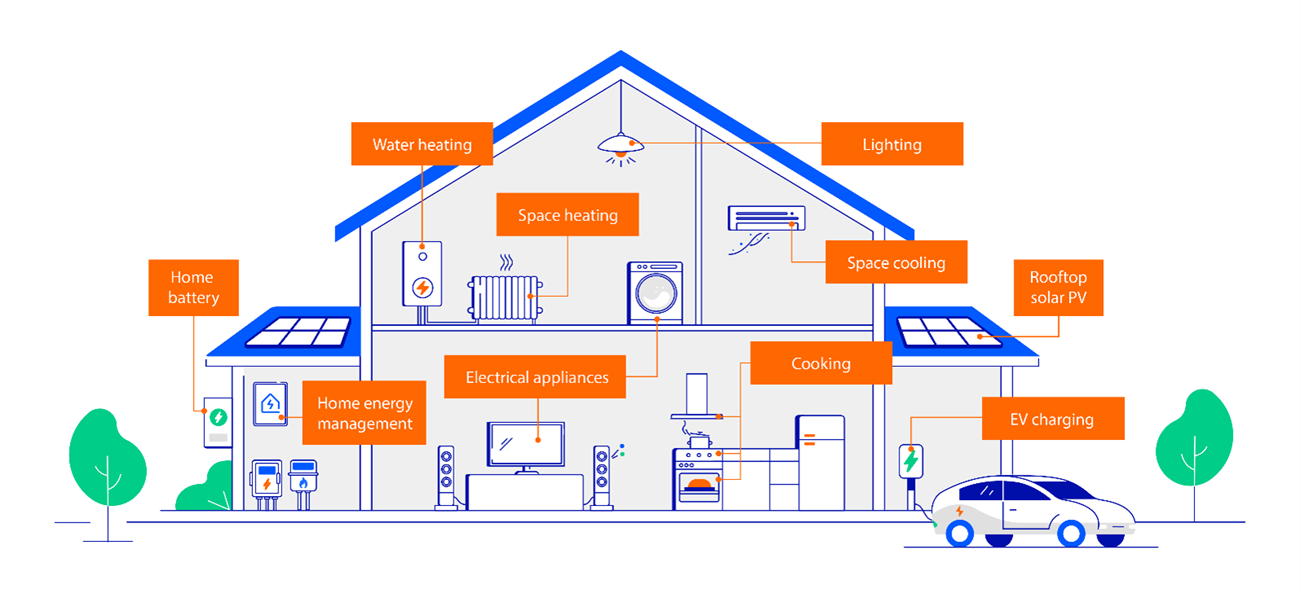
Figure 1 illustrates the main potential energy consumers, producers, and enablers within a household. It brings together the key sources of household energy demand – from space heating and hot water to cooking, cooling, electrical appliances, lighting, and electric vehicle (EV) charging – and shows how these increasingly interact with on-site generation, storage, and home energy management systems (HEMS). This reflects a broader shift from passive consumption toward a more active model, where homes can produce, store, or feed electricity into the grid. As a result, residential energy use can no longer be understood through a single metric such as final energy consumption or electricity demand alone. Rather, it increasingly emerges from the interaction between technologies, infrastructure, consumer behavior, and market signals.
Figure 1: Overview of potential household energy uses and technologies
Current residential demand is dominated by heating
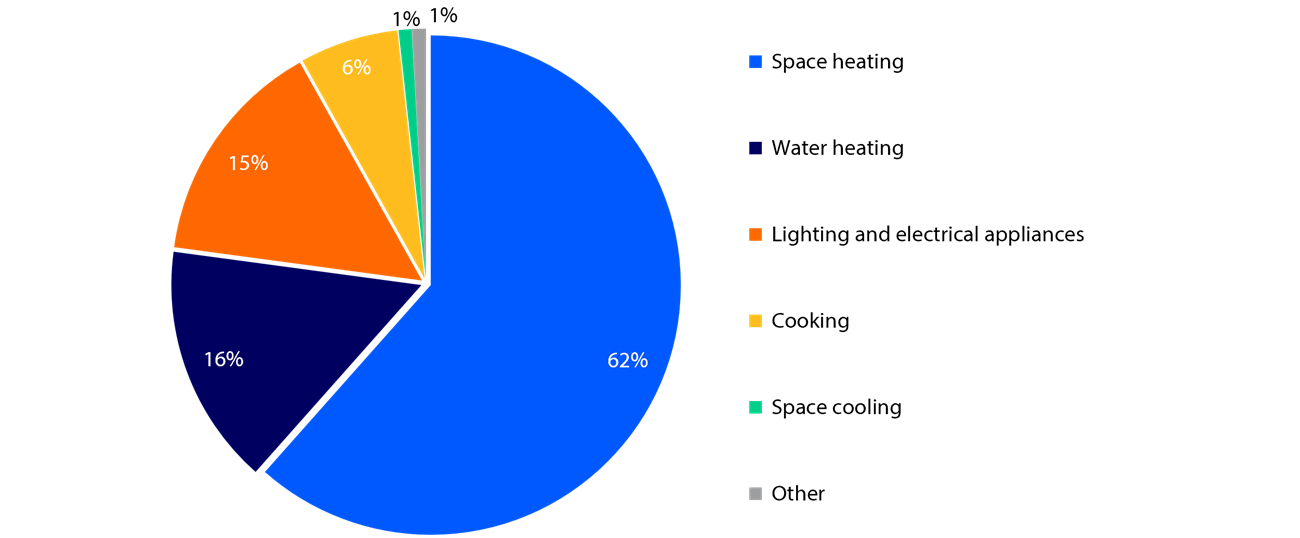
The majority of household FEC in residential buildings consists of heating, both space and water (see figure 2). The rest of the energy consumption consists of lighting and electrical appliances, cooking, space cooling, and other end uses.[1] Although EV charging is becoming an increasingly important component of household electricity demand, it is not included in this chapter because harmonized data on residential EV charging is not yet available at EU level.
It covers energy uses such as lawn mowers, swimming pool heating, outdoor barbecues, and saunas.
Figure 2: Share of final energy consumption of EU households per end use in 2024
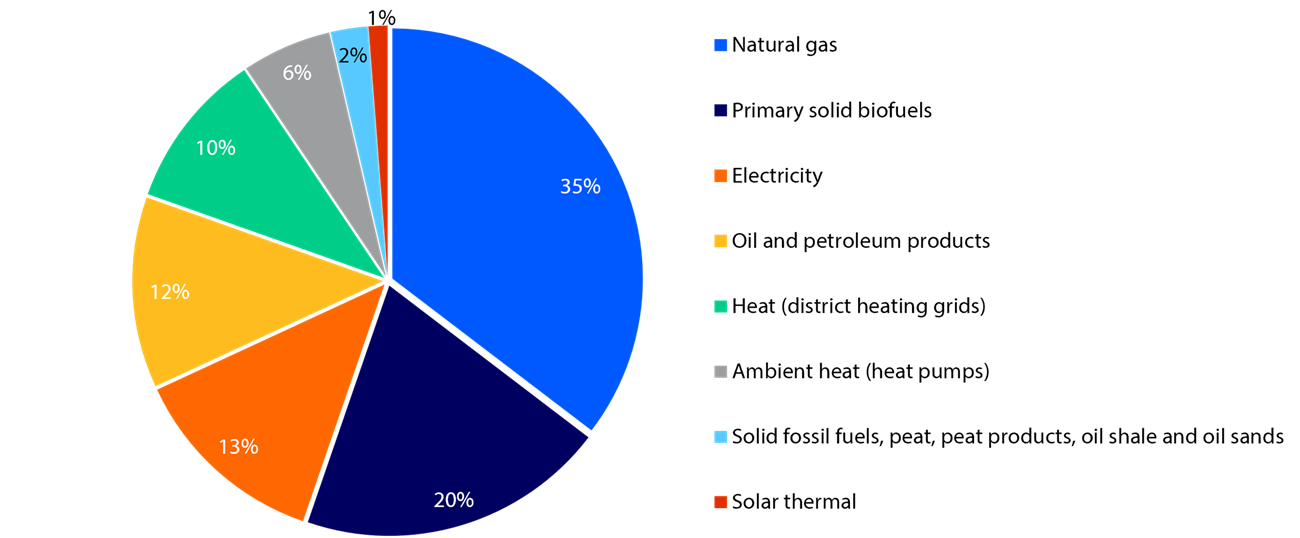
While lighting and electrical appliances are 100% supplied with electricity, and most space cooling as well, the energy demand for space and water heating along with cooking is met by a variety of energy carriers. Figure 3 shows that fossil energy carriers such as natural gas, oil and petroleum products, coal and peat account for half of household energy consumption related to space heating, water heating, and cooking. This shows how important it is to decarbonize specifically these parts of household energy consumption.
Figure 3: Share of energy carriers for space heating, water heating, and cooking in EU households in 2024
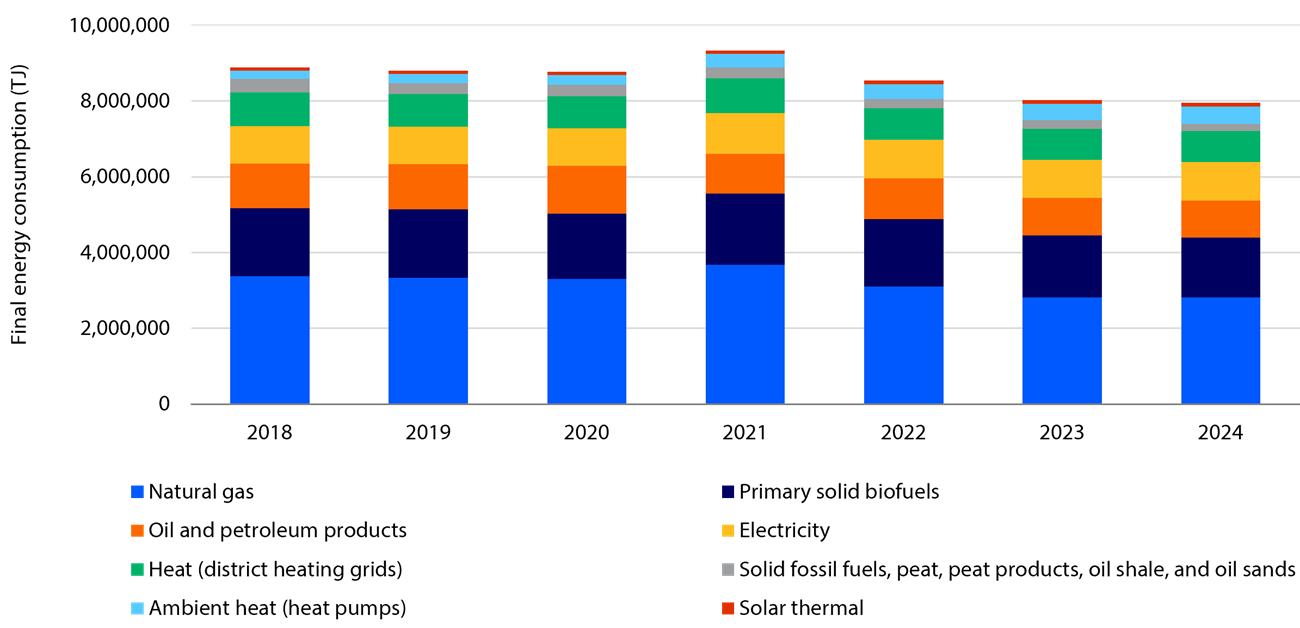
Next to fossil fuels, primary solid biofuels (wood), electricity, heat (district heating (and cooling) grids), and ambient heat (heat pumps) are important for meeting household demand for space heating, water heating, and cooking. Figure 4 shows that the overall energy consumption of these three uses peaked in 2021 and has since decreased by 15%. The share of natural gas, oil and petroleum products, and solid fossil fuels has decreased from 55% in 2018 to 50% in 2024. In contrast, the share of electricity and ambient heat has increased from 11% to 13%, but the absolute amount of electricity consumed has not increased over the past years.
Figure 4: Final energy consumption of EU households for space heating, water heating, and cooking by energy carrier between 2018 and 2024
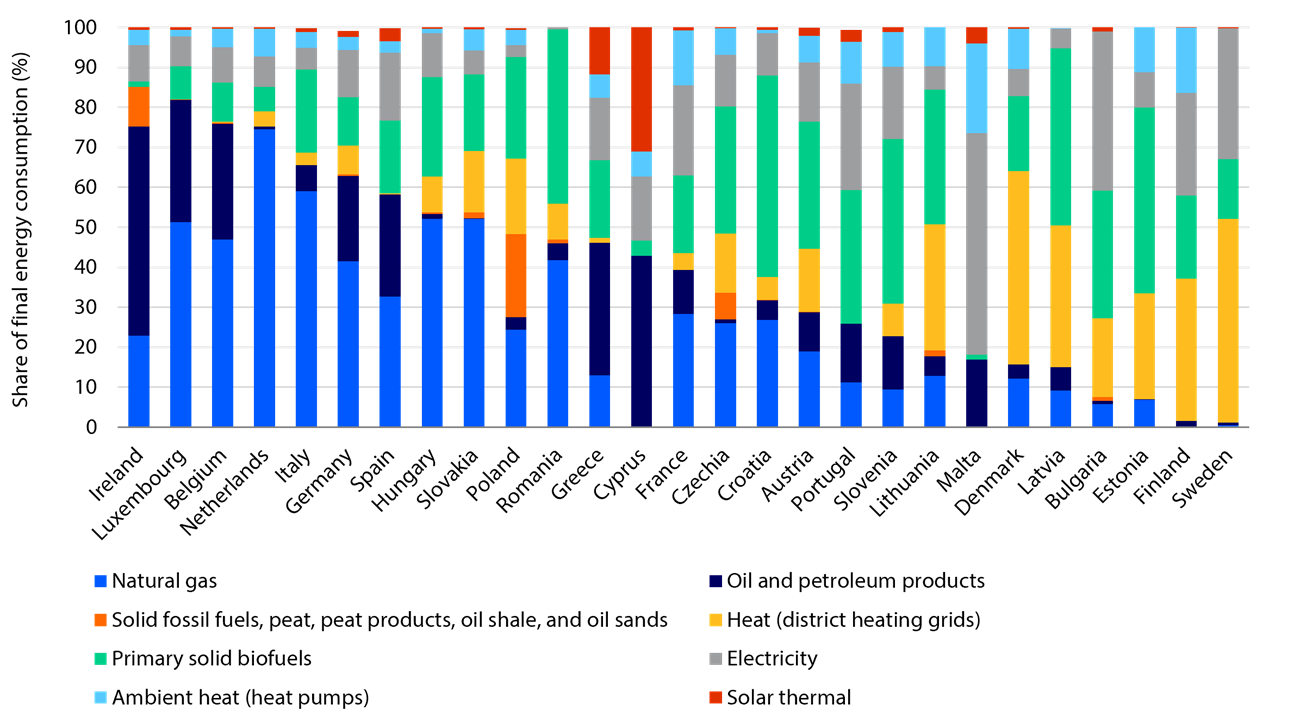
EU totals are interesting, but the energy mix consumed in households differs widely across Europe (see figure 5). In some countries like the Netherlands, Italy, and Hungary, natural gas is the dominant heating fuel, whereas Sweden hardly uses natural gas in the built environment at all. The Scandinavian countries and the Baltics have widely relied on district heating grids; some eastern European countries and the Baltics use a lot of primary solid biofuels. France has a relatively high share of electricity and ambient heat, but Germany and Spain rely more on oil and petroleum products.
Fossil fuel dependence also varies considerably across countries. While in Germany 63% of space heating, water heating, and cooking is met by fossil energy sources, in France this share is 39%. As a contrasting example, in Sweden the use of fossil energy sources is only 1%, as the demand is mainly met by district heating (51%), electricity (33%), and primary solid biofuels (15%).
The preferred decarbonization pathway therefore differs across countries due to infrastructure and regulation. Countries like the Netherlands, Italy, and Germany have a big decarbonization challenge, and electricity can play an important role here. However, in Sweden and Denmark, where direct fossil fuel consumption of households is low and the energy demand for space heating, water heating, and cooking is mainly met by district heating, electricity, and primary solid biofuels (which are regarded carbon-neutral when compliant with several EU regulations), the main challenge is to decarbonize the supplied electricity and district heating.
Figure 5: Share of final energy consumption in space heating, water heating, and cooking per energy carriers in the EU in 2024
In theory, all energy consumption in households can be electrified
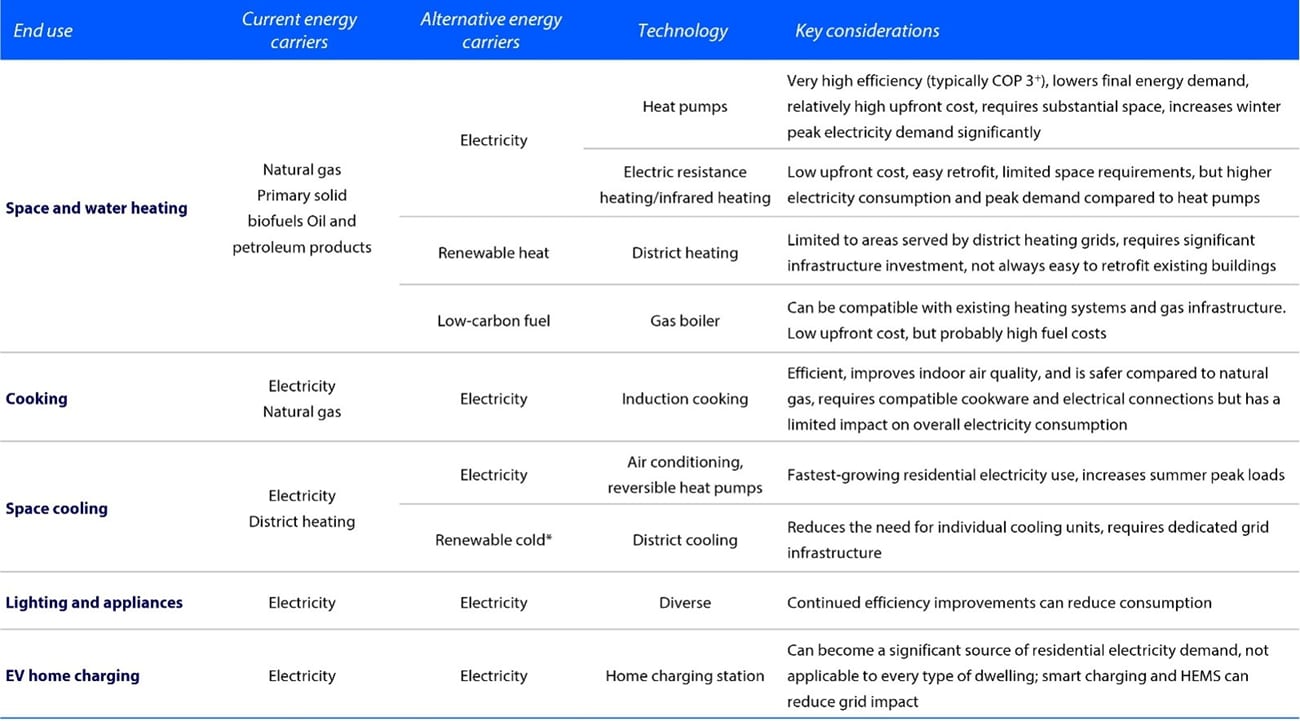
Household energy demand can, in principle, be electrified or already use electricity (see table 1). Several other low-carbon alternatives are available, ranging from renewable heating (provided through district heating (and cooling) grids) to low-carbon fuels. The alternatives differ considerably in their efficiency, investment costs, space requirements, and suitability for existing buildings. As a result, the pathway toward decarbonizing household energy use will vary across countries, regions, and building types, depending on the existing building stock, infrastructure, and local economics.
Table 1: Low-carbon technology options for energy usage in households
What can shape residential electrification by 2040?
While there is a wide range of normative scenario assessments on the electrification of the energy system and residential energy supply, we believe many of these studies insufficiently account for the implementation constraints that are particularly critical in the residential sector compared with other end-use sectors. Therefore, rather than presenting a quantitative forecast, this chapter focuses on the key factors we consider most important in shaping the pace and direction of residential electrification over the coming decade.
Why building renovation matters
The extent to which household energy use can be electrified depends heavily on the quality of the building stock. Better-insulated buildings require less energy for both heating and cooling and are generally better suited for low-temperature heating systems such as heat pumps and modern district heating (and cooling) grids.
Yet much of the EU building stock remains poorly insulated and equipped with inefficient heating systems. Measures such as roof, wall, and floor insulation, high-performance glazing, and ventilation systems with heat recovery can significantly reduce heating demand while improving thermal comfort.
Recognizing this, the EU has made renovation a central pillar of the transformation of the built environment. The revised Energy Performance of Buildings Directive (EPBD) sets a pathway toward a zero-emission building stock by 2050. Rather than prescribing a single emissions target, it requires member states to reduce average primary energy use in residential buildings by at least 16% by 2030, and 20% to 22% by 2035, with at least 55% of these savings coming from the renovation of the worst-performing buildings. It also mandates all new buildings to be zero-emission by 2030 and provides for the progressive phaseout of fossil-fuel heating. Recognizing differences in building stock, climate, and energy systems across Europe, member states are free to determine the most suitable pathways and must set these out in the National Building Renovation Plans (NBRPs).
The first draft NBRPs highlight the scale of the implementation challenge. According to the European Commission’s assessment, annual renovation rates sit around 1% of the building stock and deep renovations remain limited. As a result, a large share of the homes that will exist in 2040 have yet to undergo the upgrades needed for a low-carbon energy system.
From an electricity-demand perspective, renovation acts as a critical counterbalance to electrification. Because energy-efficient buildings require less energy, renovation rates strongly influence future household energy demand.
Space heating may be dominated by heat pumps
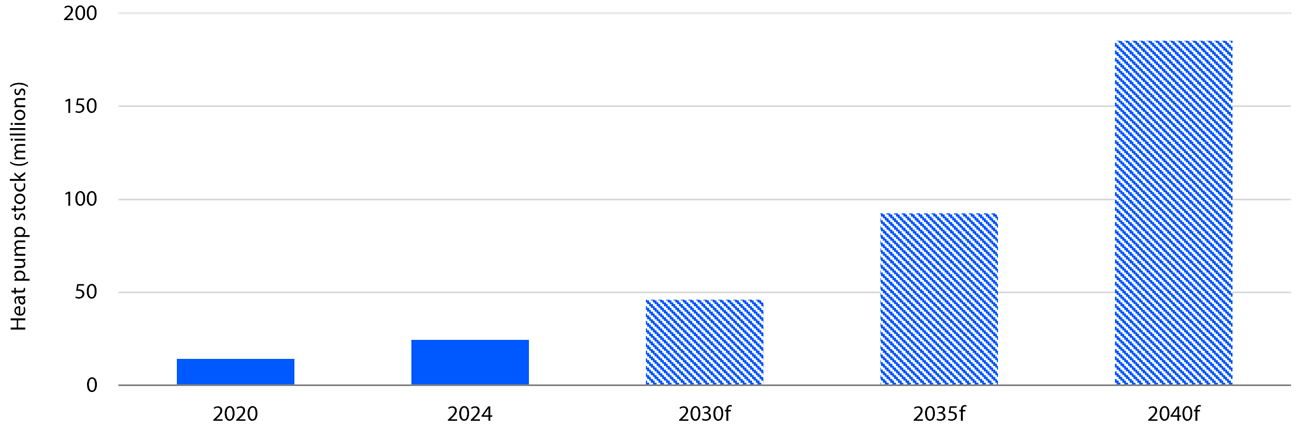
The European heat pump market has expanded significantly in recent years. Between 2019 and 2024, the installed stock almost doubled, driven primarily by growth in France, Italy, and Germany, while heat pump deployment also accelerated across a broad range of smaller member states. If historical growth rates were to continue, the EU heat pump stock could expand rapidly toward 2040, reaching 185m installed heat pumps (see figure 6).
Figure 6: Heat pump stock evolution scenario across the EU based on historical growth
However, sustaining this growth trajectory is far from guaranteed. The future pace of deployment will also depend on the ability of member states to translate European ambitions into national action. While REPowerEU, the EPBD, and the Electrification Action Plan[2] provide a strong policy framework, barriers related to upfront investment costs, installer shortages, permitting requirements, consumer awareness, and grid constraints remain.
Moreover, not all countries are starting from the same position. In member states with extensive district heating grids (such as the Nordics and the Baltics) or relatively low direct fossil-fuel use in buildings, heat pumps may play a smaller role than in countries such as Germany, Italy, or the Netherlands, where replacing gas boilers remains a central decarbonization challenge.
A large-scale shift toward heat pumps would also have important implications for electricity demand and grid infrastructure. While heat pumps reduce final energy consumption compared with fossil-fuel heating, they shift a large share of residential heat demand onto the electricity system. As a result, widespread adoption is expected to increase residential electricity consumption, particularly during the winter months. In some countries, increasing annual electricity consumption can be a challenge, but higher evening peak demand is likely to be the more significant issue. Cold winter mornings and evenings can place additional stress on local distribution networks, especially where heat pump use coincides with EV charging. However, the ultimate grid impact will depend on factors such as building renovation rates, thermal storage, smart energy management, and electricity market and grid signals.
It aims to increase annual heat pump installations from around 2.4m units in 2025 to approximately 4m units by 2030. Member states are also encouraged to bring the national electricity-to-gas ratio down to a maximum of 2.5 by 2030, meaning household electricity should cost no more than 2.5 times as much as gas per equivalent unit of energy.
The growing importance of space cooling
Cooling is likely to be the fastest-growing component of household energy consumption toward 2040, driven by rising temperatures, more frequent heatwaves, and growing demand for thermal comfort. While cooling currently represents only a small share of residential final energy consumption in the EU, its importance is increasing rapidly. Between 2018 and 2024, household energy consumption for space cooling doubled. The increase reflects a growing stock of air-conditioning units and longer periods of hot weather. These trends are expected to continue as climate change increases cooling needs while rising incomes improve access to cooling technologies.
Space cooling is almost entirely electric and is highly concentrated during hot summer periods. As a result, increasing air-conditioning penetration can lead to pronounced summer peak loads, particularly during heatwaves when demand rises simultaneously across large regions. By 2040, a growing share of cooling demand is expected to be provided by reversible heat pumps and high-efficiency air-conditioning units. Their efficiency will help limit electricity and peak demand growth.
However, technology is not the only factor impacting cooling demand. Building design and urban planning can significantly influence the need for active cooling. Measures such as insulation, external shading, high-performance glazing, natural ventilation, and reflective building materials can substantially reduce cooling requirements. At an urban level, increased vegetation and green spaces can help mitigate heat-island effects and lower local temperatures.
Although part of the cooling demand coincides with high solar PV generation, cooling demand peaks in the late afternoon and evening and sometimes continues through the night. Therefore, increasing cooling demand can strain the electricity grid.
The rise of residential EV charging
The electrification of passenger transport will increasingly blur the boundary between the transport and residential sectors. While EVs belong to the transport sector, many are charged at home,[3] making vehicle charging an important component of household electricity demand.
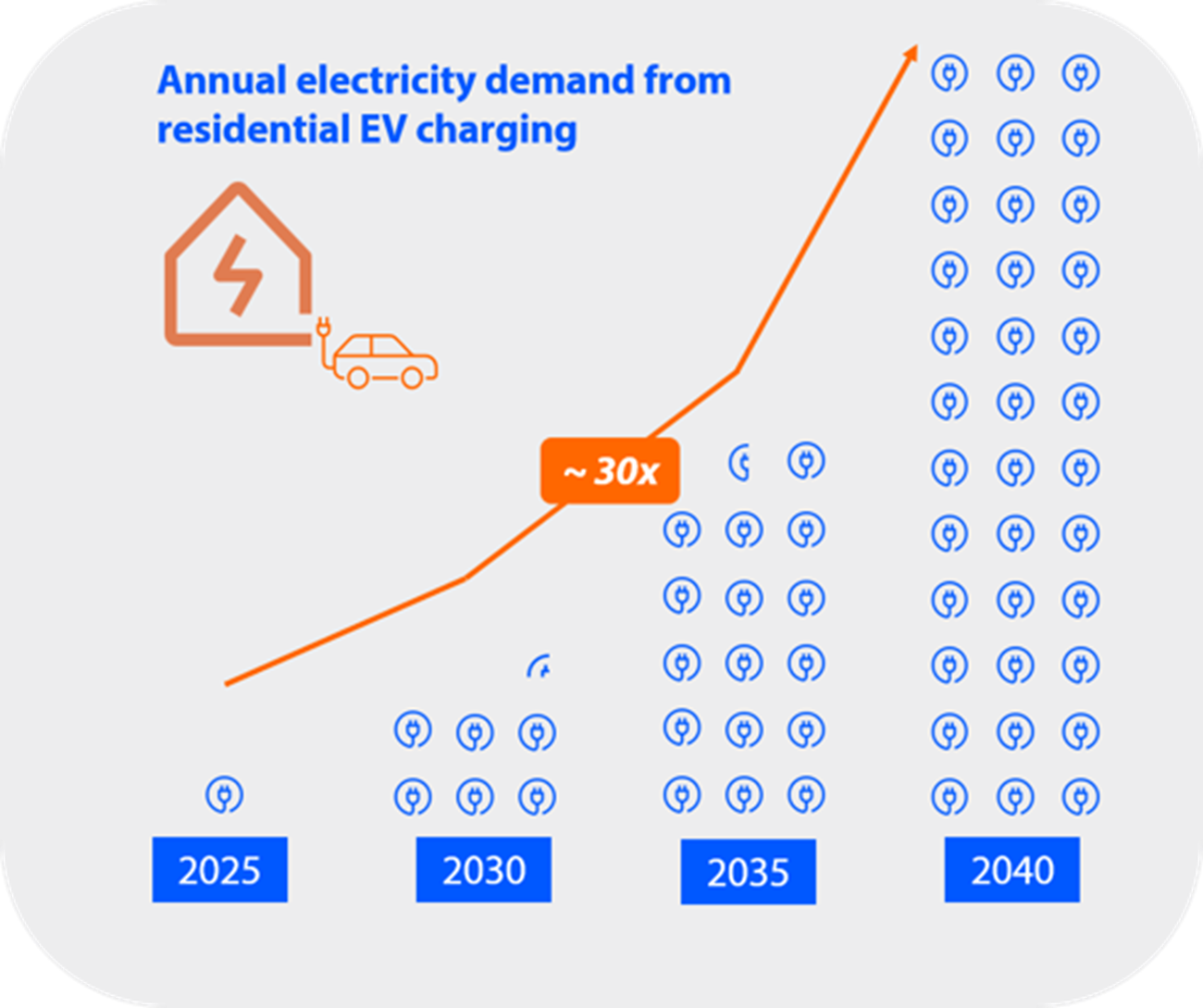
The number of electric vehicles on European roads is expected to increase strongly toward 2040, driven by tightening emissions standards, falling battery costs, and the gradual replacement of the existing vehicle fleet. As a result, residential electricity demand from EV charging is likely to rise substantially. Depending on the pace of EV adoption and the share of charging that occurs at home, residential charging could add hundreds of terawatt-hours of annual electricity demand across the EU by 2040 (see figure 7).
The extent of residential charging depends largely on access to private parking and dedicated charging infrastructure. Households living in detached and semi-detached homes are generally much better positioned to charge at home than residents of apartment buildings. In suburban and rural areas, where private driveways and off-street parking are more common, home charging is likely to become the dominant charging solution. In dense urban areas, a larger share of charging will continue to take place at public and workplace charging facilities.
75% of the charging happens at home, when owners have access to private charging.
Figure 7: Illustrative growth of annual electricity demand from residential EV charging across the EU
EV charging is inherently flexible as most vehicles remain parked for extended periods and do not need to be charged immediately upon arrival at home. By 2040, smart charging is therefore expected to become a standard feature of HEMS, enabling charging to shift toward periods of high renewable generation, low electricity prices, or spare grid capacity. Residential EV charging will not only increase electricity demand but could also become an important source of flexibility that helps integrate renewable energy and reduce pressure on electricity networks. Without such smart charging, however, simultaneous evening charging could reinforce local peak demand, particularly in neighborhoods with high concentrations of both EVs and electric heating.
Vehicle-to-grid (V2G) can further strengthen flexibility. By enabling bidirectional charging, EVs can also feed electricity back to the grid when needed. As the EV fleet grows, the combined battery capacity of millions of vehicles can become a significant distributed storage resource, helping absorb excess renewable generation and reduce peak demand. The extent to which V2G becomes commercially viable across the EU by 2040 will depend on supportive regulation, market design, charging infrastructure, and consumer adoption.
Rooftop solar PV and home batteries increase household self-consumption
The deployment of residential rooftop solar PV is expected to continue growing toward 2040, supported by falling technology costs and European regulation. Under the revised EPBD, solar installations will gradually become a standard feature of new buildings. However, adoption is likely to differ substantially across member states. While countries such as the Netherlands already have high levels of rooftop solar penetration, with one in three Dutch households having solar panels, others still have considerable room for growth.
The potential of the EU is considerable. According to recent research, only around 10% of EU building roofs currently host solar PV installations. Yet residential rooftops alone could accommodate more than 1.8 terawatt-peak of installed capacity. If this residential potential materializes, it can supply 30% of future electricity demand, which highlights the significant role residential rooftop generation can play toward 2040.
As electricity consumption increases, on-site solar generation can reduce households’ dependence on grid electricity. However, the value of rooftop solar increasingly depends on the ability to align production and consumption. Home batteries can support this by storing excess daytime generation for use during evening hours, increasing self-consumption, and reducing pressure on local electricity networks. Residential battery deployment remains limited but is growing rapidly, particularly in Germany, Italy, Austria, and Sweden. By 2040, both rooftop solar PV and home battery penetration are likely to be substantially higher, albeit with large differences across member states.
The combination of solar PV and battery storage may lead to increasing household electricity consumption. This is because home batteries incur efficiency losses during charging and discharging, while greater availability of self-generated electricity can encourage additional electricity use, a phenomenon referred to as the rebound effect. However, more of that demand is expected to be met behind the meter,[4] reducing households’ reliance on grid-supplied electricity and increasing their ability to respond to electricity prices and grid conditions.
Behind-the-meter refers to energy generation, storage, and consumption that take place on the customer's side of the electricity meter, rather than first passing through the public grid.
Managing (peak) demand in an electrified home
The challenge of residential electrification is not (only) how much electricity households consume, but (mainly) when they consume it. By 2040, households are expected to rely more heavily on electricity for heating, cooling, and mobility. At the same time, the growing ability to store electricity will increase annual electricity demand and, more importantly, significantly alter daily and seasonal demand profiles.
Without active management, electrification can reinforce existing demand peaks. On winter mornings and evenings, households may simultaneously use heat pumps, electric water, heating and electrical appliances, while summer heatwaves could drive strong growth in cooling demand in the evenings. Residential EV charging may further amplify peak loads if large numbers of vehicles are charged simultaneously. As a result, local distribution networks may increasingly be constrained not by annual electricity consumption, but by short periods of very high demand.
Increasing electricity consumption can only be accommodated efficiently if demand shifts toward periods of abundant renewable generation and available network capacity. Households are therefore expected to respond more strongly to dynamic electricity prices, network tariffs, and other incentives that encourage flexible consumption.
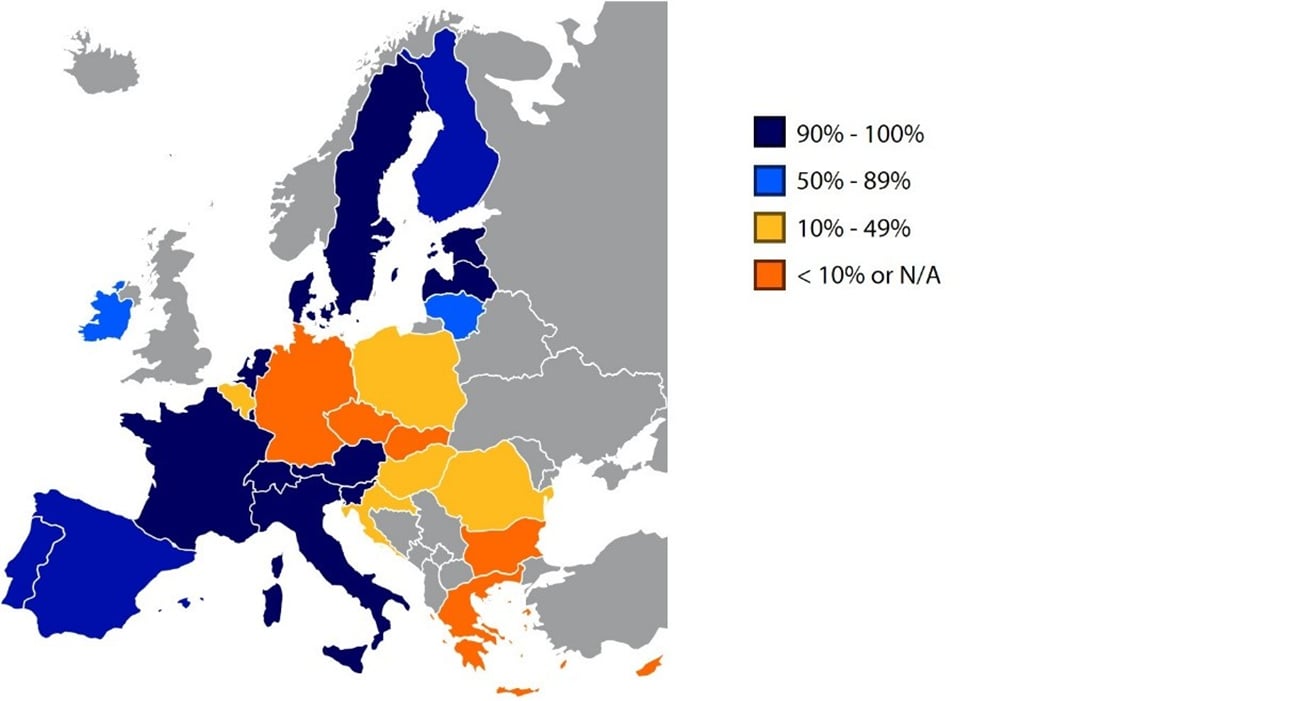
HEMS are expected to become a key enabler of this flexibility. By coordinating heat pumps, EV chargers, batteries, solar panels, and smart appliances, HEMS can automatically optimize household electricity consumption based on prices, comfort preferences, and grid conditions. However, such flexibility requires digital infrastructure. Smart meters provide the foundation by enabling time-dependent and dynamic pricing. While more than half of EU member states had smart meter penetration rates exceeding 90% in 2024, adoption remained extremely low in countries such as Germany and Czechia (see figure 8). Closing these gaps will be essential if households are to become more active and flexible players in the energy system.
Figure 8: Residential smart meter rollout in 2024
From energy consumer to active energy system participant
The residential built environment is entering a period of significant transformation. Today, space heating, water heating, and cooking in the EU are heavily dependent on fossil fuels, while electricity is primarily used for lighting, electrical appliances, and cooling. By 2040, this picture is likely to be very different. Heat pumps, air conditioning, home EV charging, rooftop solar PV, batteries, and HEMS are expected to become increasingly common in EU households.
However, the future impact on electricity demand is not straightforward. Electrification of heating, cooling, and mobility will increase consumption, while building renovations and efficiency improvements can reduce the amount of energy required to provide the same level of comfort. At the same time, rooftop solar PV and battery storage will allow households to generate and consume a growing share of their own electricity.
As a result, the key challenge for the electricity system is likely to be less about annual consumption and more about managing when and where electricity is used. Winter heating peaks, summer cooling peaks, and residential EV charging could create significant pressure on local distribution grids if demand remains unmanaged. By contrast, smart charging, home batteries, rooftop solar PV, and HEMS can provide substantial flexibility and help align consumption with renewable electricity generation.
The great electrification of households is therefore not simply about replacing fossil fuels with electricity. It represents a broader transformation toward a more decentralized, digital, and interactive energy system. The interaction between renovation, electrification, rooftop solar PV, batteries, EVs, and flexibility will increasingly determine overall system performance. In this context, households are expected to evolve from passive energy consumers into active participants in the electricity system, shaping not only how much electricity is used, but also when, where, and under what conditions it is consumed, generated, and stored.