Research
The great electrification: Can Europe’s grids keep pace?


The electricity grid is the backbone of the great electrification. Europe’s shift to renewable electricity requires grids to accommodate growing volumes of wind and solar power and connect new demand from transport, buildings, industry, and data centers. This article examines why grids are struggling to keep pace, the investment needed, the challenges of grid upgrades, and the consequences when capacity falls short.
Summary
The great electrification requires EUR 1.2 trillion in grid investments by 2040
The EU’s shift from fossil fuels toward renewable electricity depends on several developments advancing in parallel. On the demand side, transport, heating, and industrial processes are becoming increasingly electrified, while data centers add new sources of electricity demand. Meanwhile, wind and solar photovoltaic (PV) capacity are growing to replace fossil-based generation and meet the anticipated increase in electricity demand. These developments can only continue at the required pace if the electricity grids that link supply and demand also add sufficient capacity.
One of the most important challenges facing the EU’s electrification ambitions is the growing mismatch between the speed of renewable energy deployment and electrification on the one hand, and the pace of grid expansion on the other. While solar PV and battery projects can typically be developed and constructed within two to three years, and onshore wind projects typically within four and eight years, the transmission and distribution infrastructure needed to connect them often requires significantly longer. Distribution-grid projects can take eight to ten years from planning to commissioning, while large transmission projects and cross-border interconnectors frequently exceed a decade. As a result, grid development is increasingly becoming the key bottleneck to the electrification of the European economy.
Figure 1: Keeping pace with renewable energy deployment and electrification requires EUR 1.2 trillion in grid investment by 2040
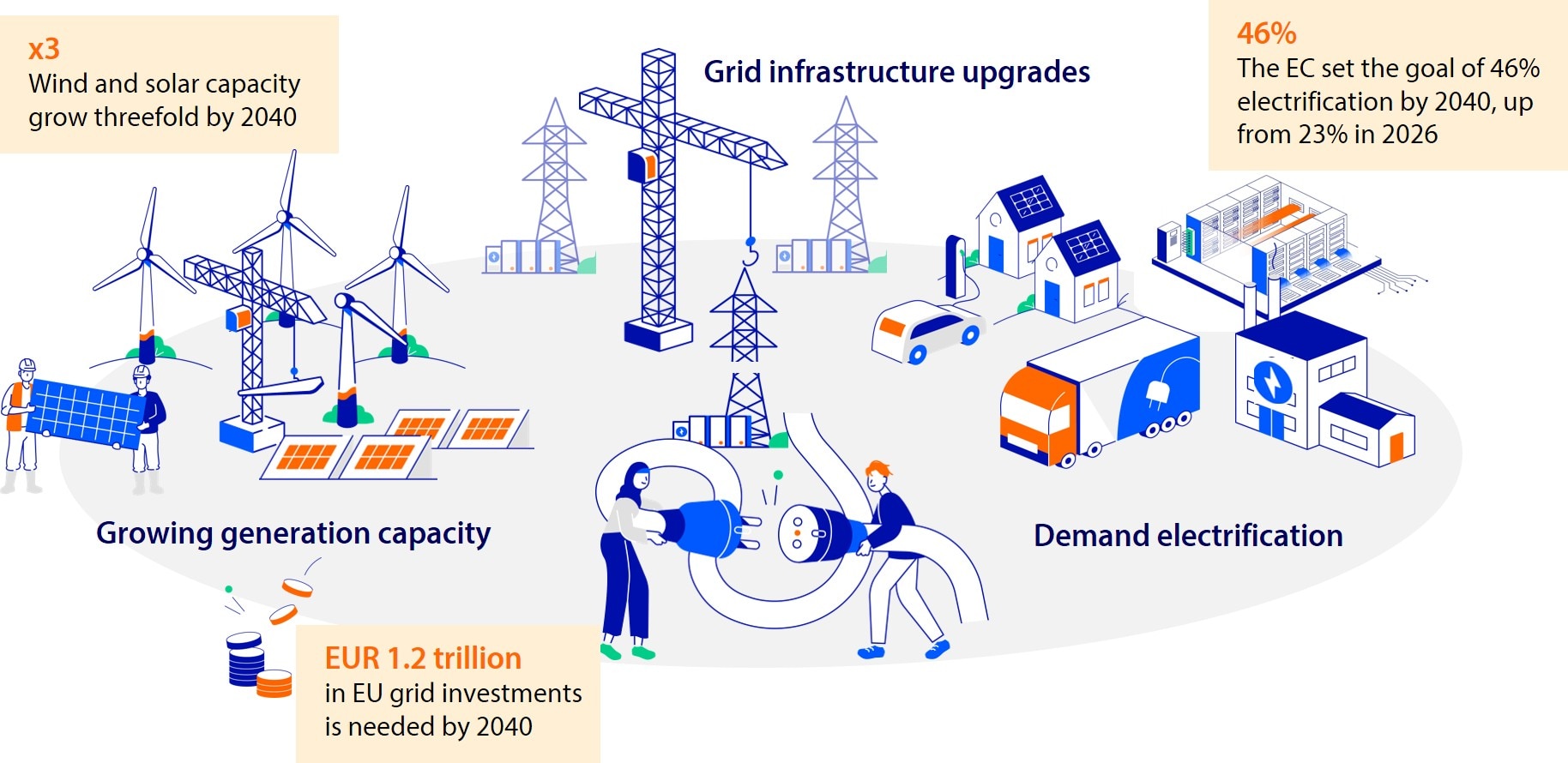
This timing mismatch risks slowing decarbonization efforts, delaying investment decisions, and undermining the EU’s efforts to speed up the energy transition. In the Electrification Action Plan, the European Commission sets a target of 46% electrification by 2040 to improve the EU’s energy affordability and resilience. However, the commission identifies insufficient network capacity and connection bottlenecks as key barriers to achieving its electrification objectives.
By mid-2025, at least 16 EU member states had grid-connection queues. In the Netherlands, for example, grid operators reported more than 15,000 requests for additional offtake capacity and nearly 9,000 requests for feed-in capacity awaiting connection at the end of 2025. These queues indicate that the demand for grid capacity is growing faster than grid operators can provide new capacity in some parts of the network.
To build the required grid capacity, the EU needs to invest an estimated EUR 1.2 trillion in grid upgrades by 2040, with EUR 730bn in distribution grids and EUR 472bn in transmission grids (see figure 1). The challenge, however, extends well beyond mobilizing capital: Investment plans also require regulatory approval, while project delivery depends on timely permitting, access to land, skilled labor, and increasingly constrained equipment supply chains.
Growing grid investment needs differ sharply across Europe
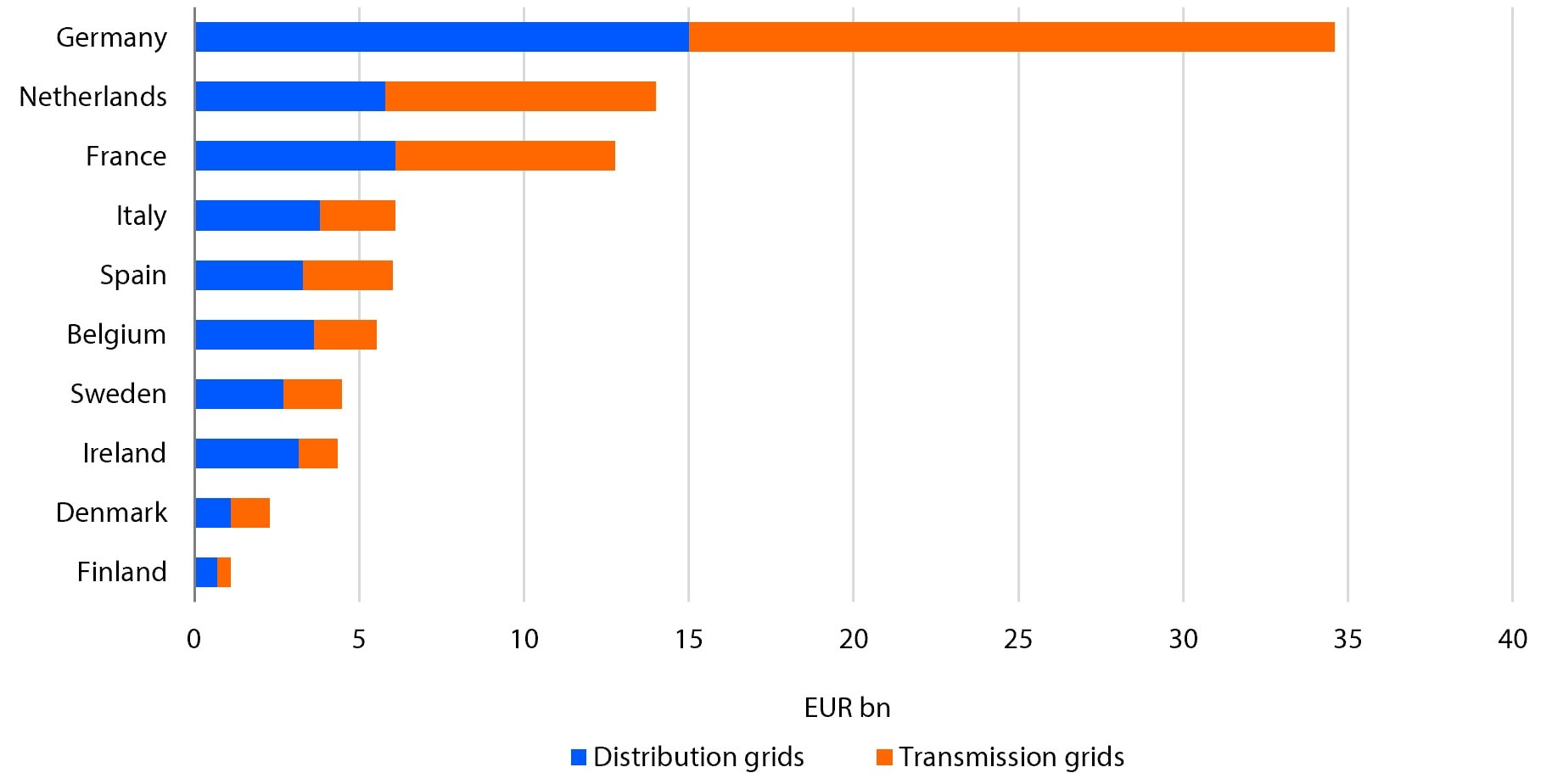
The grid investments are not spread evenly across Europe. Figure 2 shows the annual investment plans for national transmission and distribution grids in selected European countries. Germany clearly stands out with its planned investments of on average EUR 34.6bn per year. This exceeds the combined planned investments of the next three countries, the Netherlands, France, and Italy (EUR 32.9bn).
For most countries, the planned investments are significantly higher than those in the previous planning timeframe. The Netherlands, Spain, and Sweden saw their annual transmission grid investments more than double, while in France annual investments between 2026 and 2035 are close to ten times higher than they were up to 2025.
Figure 2: Average annual planned transmission and distribution grid investments over the current plan horizon
But injecting capital into the grids is not the entire story. Grid infrastructure upgrades require extensive planning, land acquisition, permitting, and development processes, while renewable capacity buildout and demand electrification continue to accelerate. Because grid development projects are generally slower than renewable project developments and electrification, grid capacity is increasingly becoming a bottleneck for the EU’s great electrification.
Why yesterday’s grid is struggling with tomorrow’s electricity system
What the grid was designed for
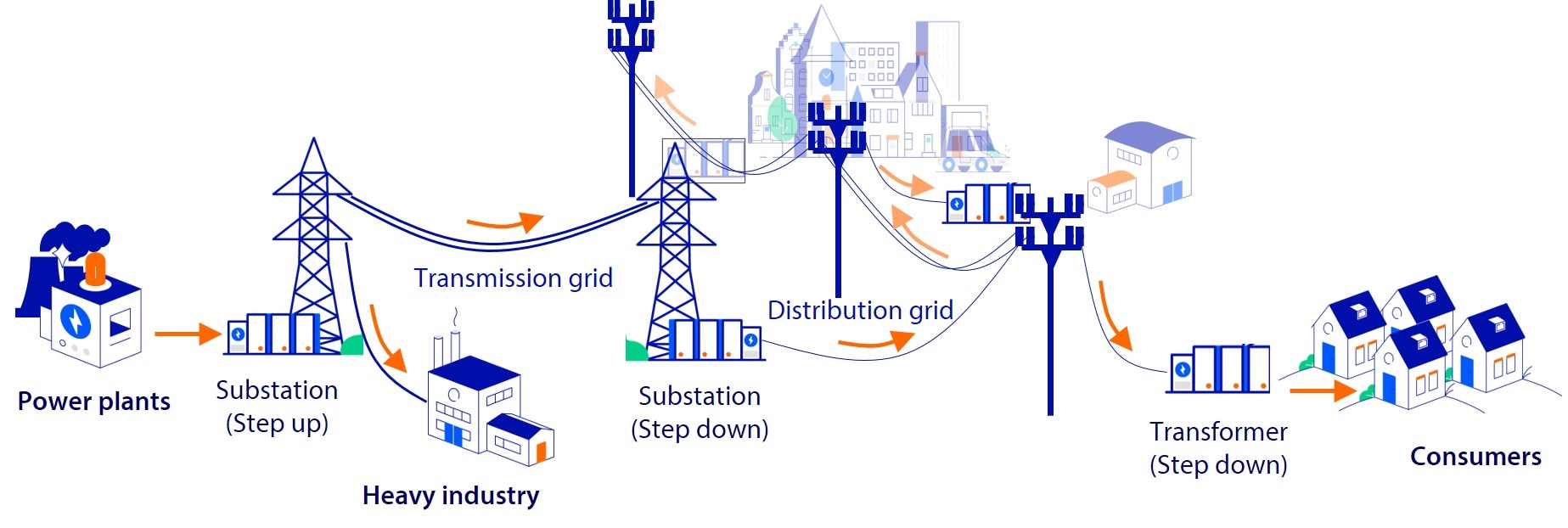
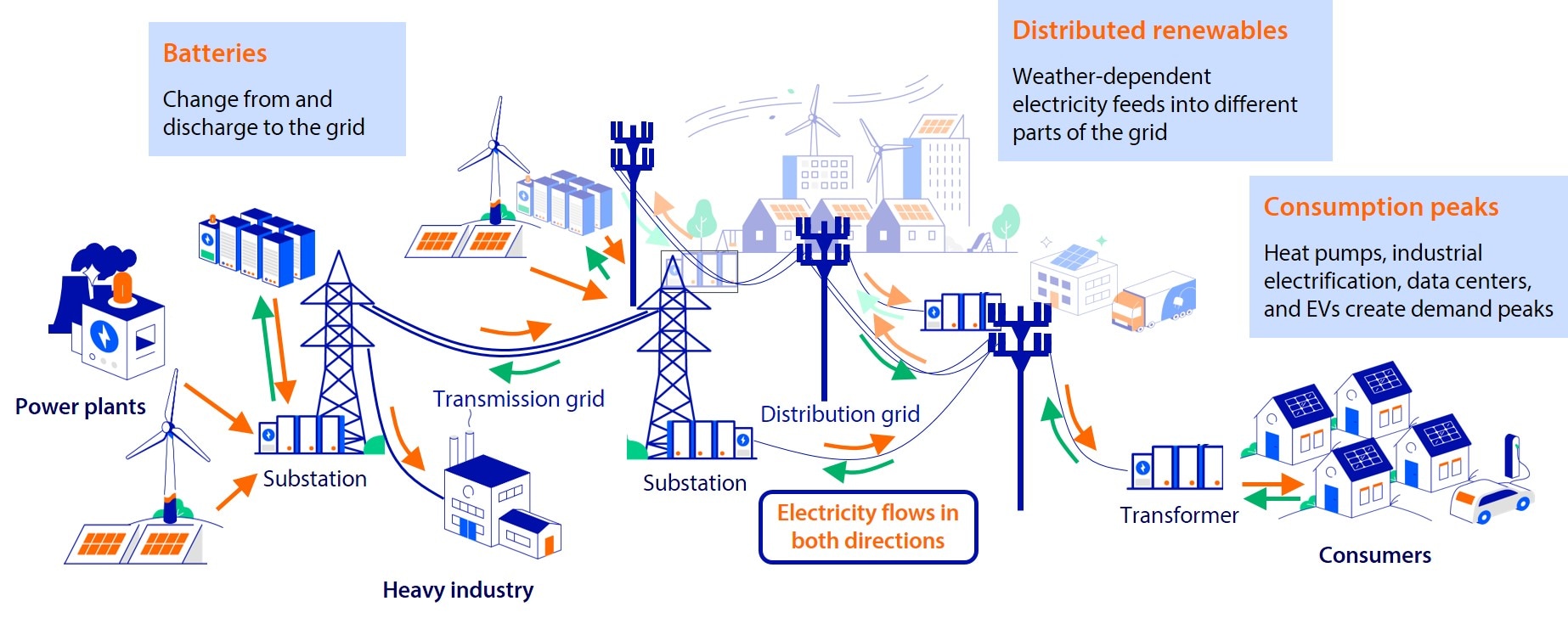
Europe's electricity grids were largely designed around a one-way flow of electricity (see figure 3). In the traditional electricity system, power was generated by a relatively small number of large, programmable power plants and transported to millions of consumers. Electricity typically entered the high-voltage transmission network, traveled across regions and sometimes national borders, and was then stepped down to lower voltage levels through substations for distribution to businesses and households. Transmission system operators (TSOs) develop and operate the high-voltage network, while DSOs manage the medium- and low-voltage networks that connect the grid to end users.
Figure 3: The grid was designed to transport electricity from centralized power plants to end users
How the grid is used today
That same grid is being used differently today, as shown in figure 4. Wind and solar place different demands on the grid than conventional power plants. Their output is weather-dependent and does not always coincide with periods of high electricity demand. Furthermore, renewable generation is more geographically dispersed across the grid. While large wind and solar farms may feed into the transmission grid, many renewable projects connect directly to distribution grids, and rooftop solar PV feed electricity into local residential networks. Battery energy storage systems (BESS) are also being deployed at various points across the grid, providing rapid charging when electricity is abundant and discharging when demand is higher. This can significantly affect local grid conditions. As a result, the grid needs to handle electricity flows in both directions.
Meanwhile, energy consumption is electrifying through the adoption of heat pumps, electric vehicles (EVs), and electrified processes, while data centers have emerged as a significant new source of electricity demand. Although the level of electricity demand has not increased yet, the demand for grid transport capacity has, resulting in the current grid capacity issues.
Figure 4: How the grid is used today
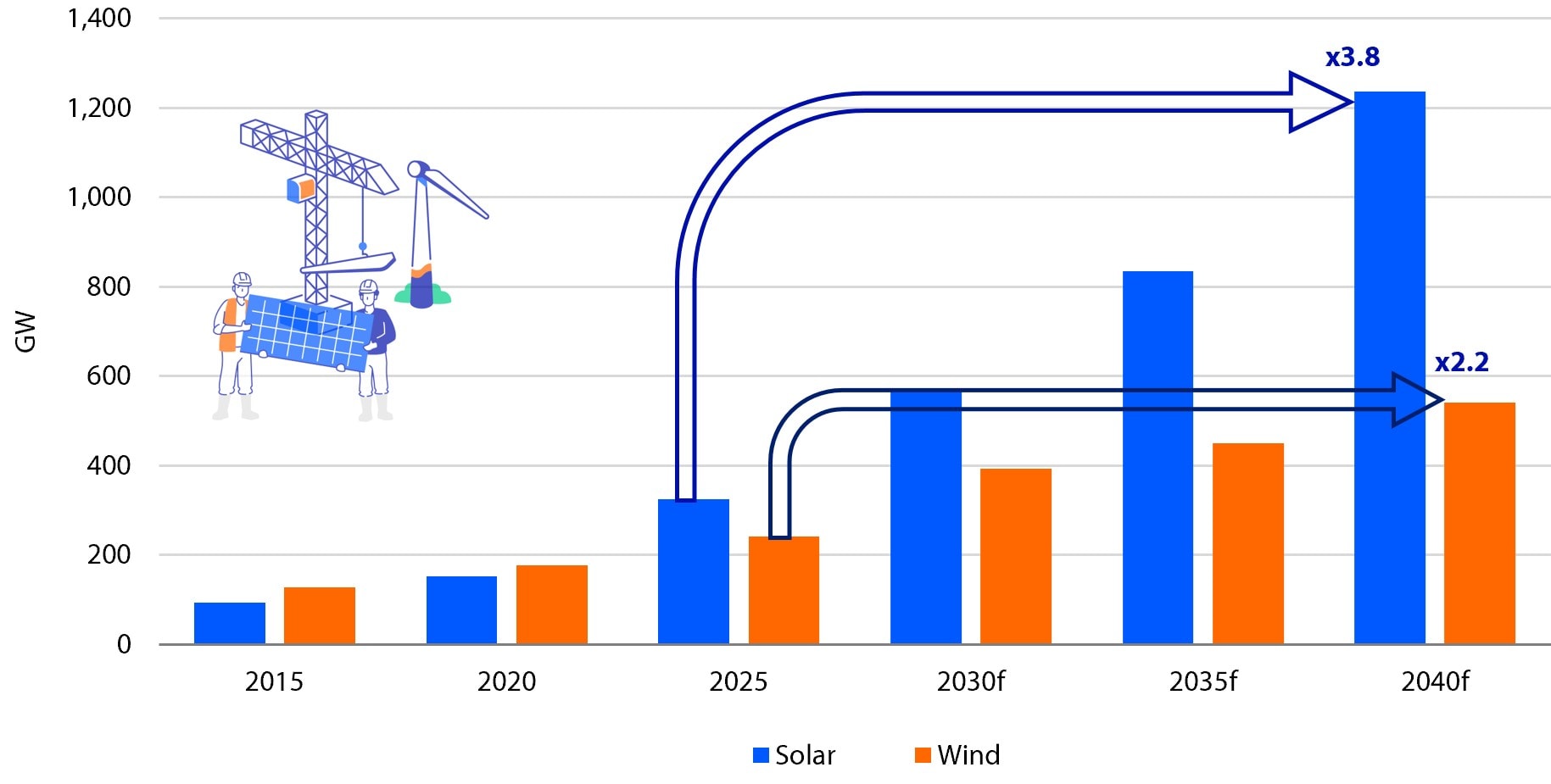
The scale of the changes is significant. Heat pump installations have doubled between 2019 and 2024 and are expected to increase further. EV energy consumption is expected to rise up to 20 times current levels by 2040. In addition, a large share of industrial energy demand is easy to electrify. Meanwhile, solar PV and wind generation capacity are expected to continue to grow (see figure 5).
Figure 5: Historic and forecast installed solar and wind generation capacity, 2015-2040f
Electrification and renewables cause peaks in grid loads
Figure 6: Example of how electrification and renewables, like rooftop solar PV, cause load peaks that exceed the capacity limits of grid components
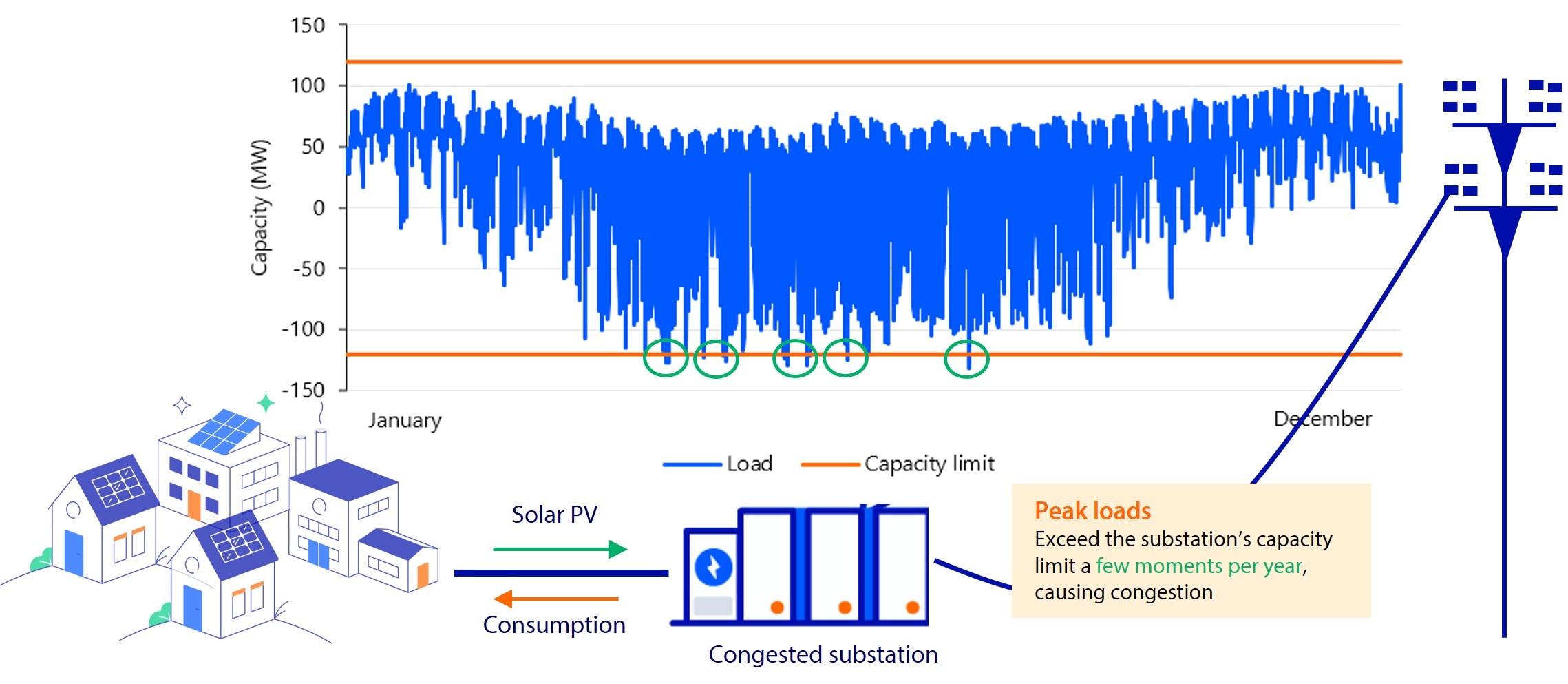
These changes in the electricity system are causing issues for the existing grid infrastructure. Electricity networks are designed around the maximum power they must carry at a given moment (in MW), not the amount of electricity transported over a year (in MWh). Every cable, transformer, and substation has a capacity limit, measured in MW. To manage costs, grid operators aim to provide a balance between enough capacity and not making network users pay for infrastructure that is rarely needed. For instance, grid operators design their networks on the assumption that households and businesses are unlikely to use their maximum power at the same time. As a result, the required transport capacity is typically lower than the sum of all individual connection capacities. This approach helps contain infrastructure costs while ensuring the network can accommodate expected demand peaks.
Electrification is changing the patterns of electricity usage, causing larger peaks in demand and supply. An example of this is shown in figure 6, where rooftop solar PV generation exceeds the capacity of a local substation for a few hours per year. When peaks threaten to exceed the capacity limit of grid components, congestion occurs and grid operators must take measures to ensure that the grid remains within its operating limits.
Such measures include operational activities such as the activation of reserved balancing capacity and the redispatch of generation, but can also lead to delays or restrictions for new grid connections. These operational measures lead to an increase in system costs, while delaying and restricting new grid connections incur societal and economic losses for renewables, industry, and households.
Execution of grid upgrades faces multiple bottlenecks
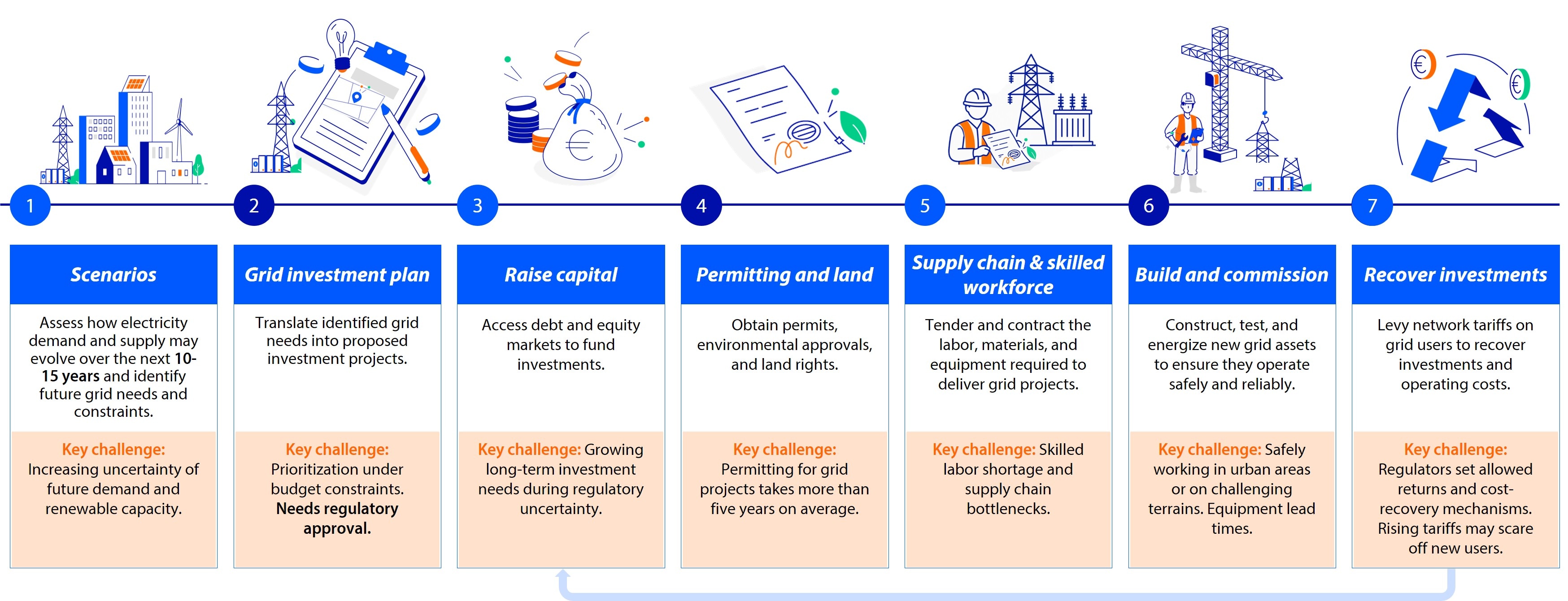
Figure 7: How grid investments are planned, executed, and recovered
Planning more than a decade ahead
New grid infrastructure typically takes more than a decade to progress from planning to commissioning, requiring network operators to make investment decisions long before new renewable generation, industrial loads, EVs, or heat pumps are connected to the system. The result is that grids must effectively be designed around expectations of what the electricity system will look like ten to fifteen years from now. Dutch TSO TenneT assumes standard timelines of 13.5 years for new high-voltage substations and 15 years for new high-voltage overhead lines.
This long planning horizon has become increasingly difficult to manage. Historically, network development was based on relatively predictable growth in electricity demand and a centralized generation fleet. Today, grid operators need to estimate where renewable generation, batteries, electrified industrial processes, data centers, and residential electrification will occur, often long before project developers themselves have made final investment decisions. Investing too late results in congestion and connection queues. Investing too early risks creating underutilized assets and higher costs for grid users. Finding the right balance has become considerably more complex as the pace of change in the energy system accelerates. The challenge is particularly pronounced for DSOs, as many operators are still adapting their planning processes and organizational capabilities to their changing responsibilities for integrating renewables and accommodating higher coincident demand.
Raising capital in a regulated monopoly
Electricity networks are regulated monopolies, meaning that investments, revenues, and allowed returns are subject to regulatory approval. Regulators determine how quickly investments can be recovered and the allowed return on invested capital that network operators may earn. Regulatory periods are typically three to five years, which is shorter than the typical planning horizon of grid operators. An overview of the current regulatory frameworks for European energy networks can be found in the CEER Regulatory Frameworks Report.
These regulatory frameworks are designed to protect consumers from excessive network costs, but they also directly influence the ability of TSOs and DSOs to raise debt and equity financing. As investment requirements increase to levels that are multiple times higher than historical averages, access to capital becomes increasingly important. The allowed returns set by the regulator are a key parameter in that access. Investors and lenders require confidence that investments can be recovered over time and that returns adequately compensate for the associated risks. At the same time, network operators must balance debt and equity financing while maintaining strong enough credit ratings to secure affordable access to capital.
Recovering grid investment costs creates new risks
The regulatory framework governing electricity grids creates several interrelated tensions between stakeholders. Policymakers increasingly expect network operators to invest ahead of demand to avoid future bottlenecks, while regulators remain responsible for preventing unnecessary spending and protecting affordability. Uncertainty over future demand, cost-recovery mechanisms, and allowed returns can weaken investor confidence and make it more difficult or expensive for grid operators to raise capital. Consequently, debates concerning investment incentives, cost-recovery mechanisms, and allowed returns have become a central feature of network regulation. In some countries, including Finland, Belgium, and France, these disputes have reached the courts.
At the same time, recovering rapidly rising investment costs through network tariffs may itself create a longer-term risk. Higher tariffs can encourage well-capitalized households and businesses to reduce their reliance on the public grid through behind-the-meter solutions like self-generation or storage. As a result, a larger share of the network’s fixed costs would fall on the remaining users, placing more upward pressure on tariffs and further reinforcing the incentive to seek alternatives to the grid. Such a feedback loop would not only complicate cost recovery, but could also widen the divide between users that can afford to reduce their grid dependence and those that cannot.
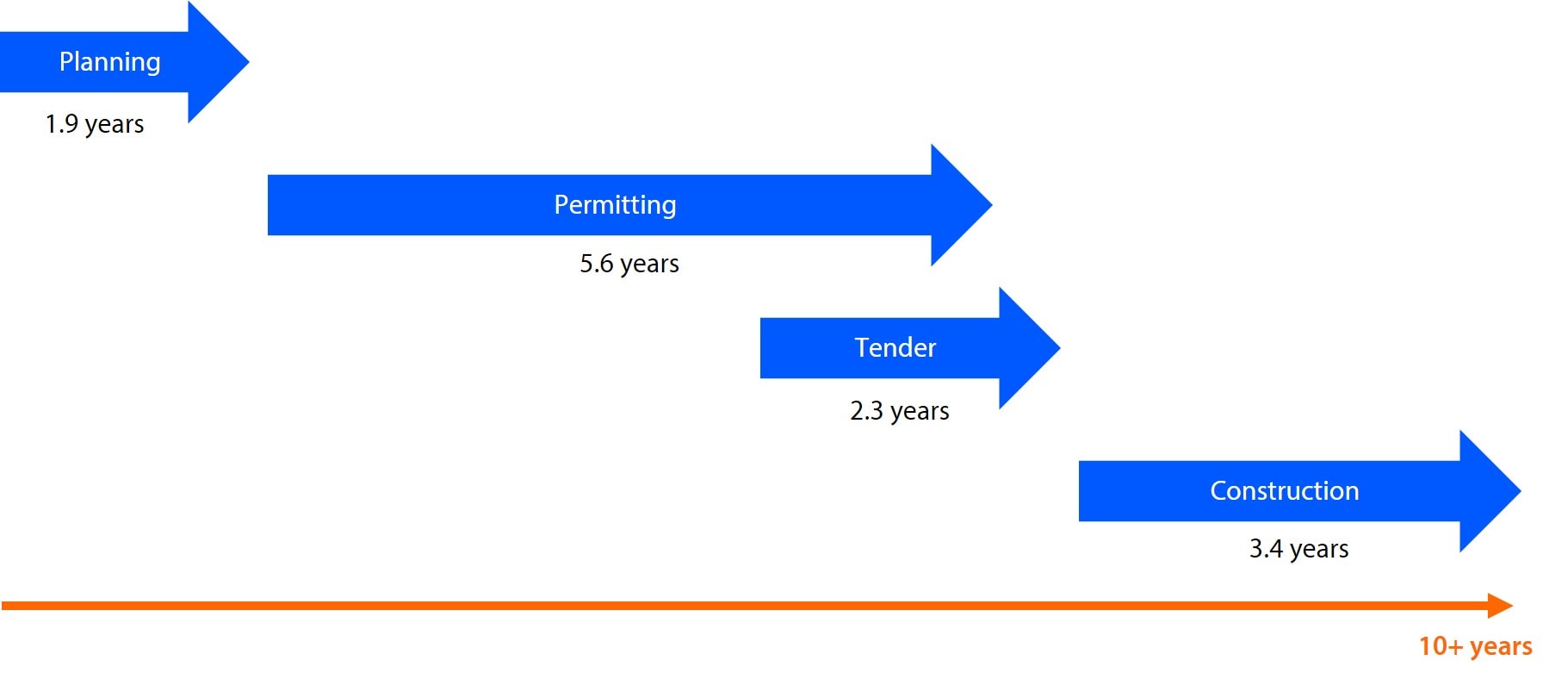
Figure 8: Average timelines of a grid development project
Permitting is currently the largest bottleneck to grid upgrades
Even where investment plans have been approved and financing is available, permitting procedures frequently delay project development. Environmental assessments, land-use approvals, public consultations, and legal appeals can add years to project timelines before construction even begins. For large transmission projects, permitting typically represents the longest phase of the development process. In a consultation by the European Commission in 2025, 78% of stakeholders identified permitting as the largest obstacle to expanding the EU’s grid infrastructure at the pace required for the energy transition.
Recognizing this challenge, the European Commission has made accelerating permitting procedures a central element of the European Grids Package. The package aims to simplify administrative processes, improve coordination between authorities, establish clearer timelines for permit-granting procedures, and accelerate approvals for grid, storage, and renewable energy projects.
Supply chains and skilled labor are emerging as the next bottlenecks
As utilities and system operators accelerate investments in clean technologies, shortages of both critical equipment and skilled labor are emerging as major bottlenecks. Demand for power cables, transformers, and other grid components has risen sharply, stretching manufacturing capacity and extending delivery times, while growing competition for skilled workers is making it increasingly difficult to deliver grid expansion projects on schedule.
According to the International Energy Agency (IEA), procurement lead times for key transmission equipment have roughly doubled since 2021. Power cables now typically require two to three years to procure, while large power transformers can take up to four years. For specialized high-voltage direct current cables (HVDC), increasingly used for offshore wind and cross-border interconnections, lead times can exceed five years.
At the same time, utilities and system operators are facing growing challenges in attracting and retaining the skilled workforce required to design, permit, construct, and operate electricity networks. Transmission and distribution operators across Europe report shortages of engineers, project managers, technicians, and other specialized personnel, raising concerns that workforce availability may become a limiting factor for grid expansion. ENTSO-E reports that 88% of European transmission system operators face workforce shortages, while European DSO associations have warned that skills gaps are increasingly delaying infrastructure delivery and energy-transition objectives.
These supply-chain and labor constraints are becoming increasingly important because they are much harder to address in the short term than, for example, permitting. New transformer and cable manufacturing facilities require significant capital investment and take years to develop. Similarly, developing the required workforce takes years of education, training, and practical experience. As a result, even projects that have secured funding, permitting, and regulatory approval can still face delays because critical equipment or skilled personnel are not available when needed. Moreover, shorter permitting periods leave less time to procure long-lead items and secure the necessary workforce before construction begins, increasing the likelihood that supply-chain and labor constraints will become the primary limiting factors for grid expansion.
The cost of inaction outweighs the massive investment needs
The cost of managing congestion is rising rapidly
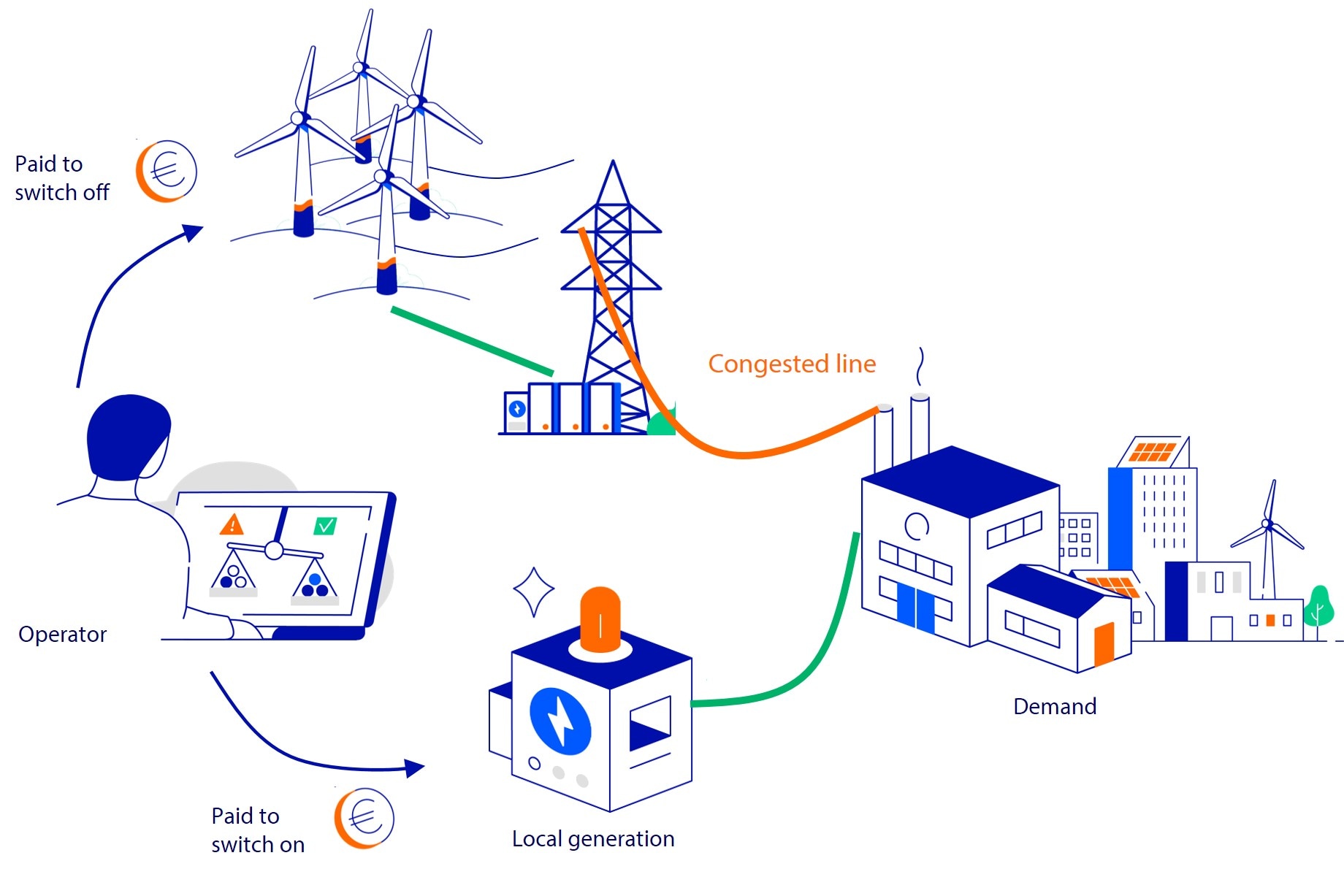
As grid congestion becomes more widespread, system operators are increasingly forced to intervene in electricity markets to maintain the secure operation of the network. Measures such as redispatch and renewable curtailment allow operators to manage bottlenecks, but they also impose significant additional costs on the electricity system. According to ACER, the cost of managing congestion on the European power grid reached approximately EUR 4bn in 2023, while the volume of remedial actions increased by 14.5% compared with the previous year.
Figure 9: Illustrative example of how congestion management works and leads to costs
Looking ahead, these costs are expected to rise substantially if network expansion does not keep pace with electrification and renewable deployment. The European Commission Joint Research Centre (JRC) estimates that annual congestion-management costs could increase to between EUR 11bn and EUR26bn by 2030, depending on grid-development assumptions. By 2040, annual costs could reach approximately EUR 34bn even under very ambitious grid-expansion scenarios and exceed EUR 100bn under a business-as-usual scenario. The study projects that redispatch volumes could increase almost six-fold as growing renewable generation places additional pressure on transmission networks.
Figure 10: Forecast annual congestion-management costs in Europe
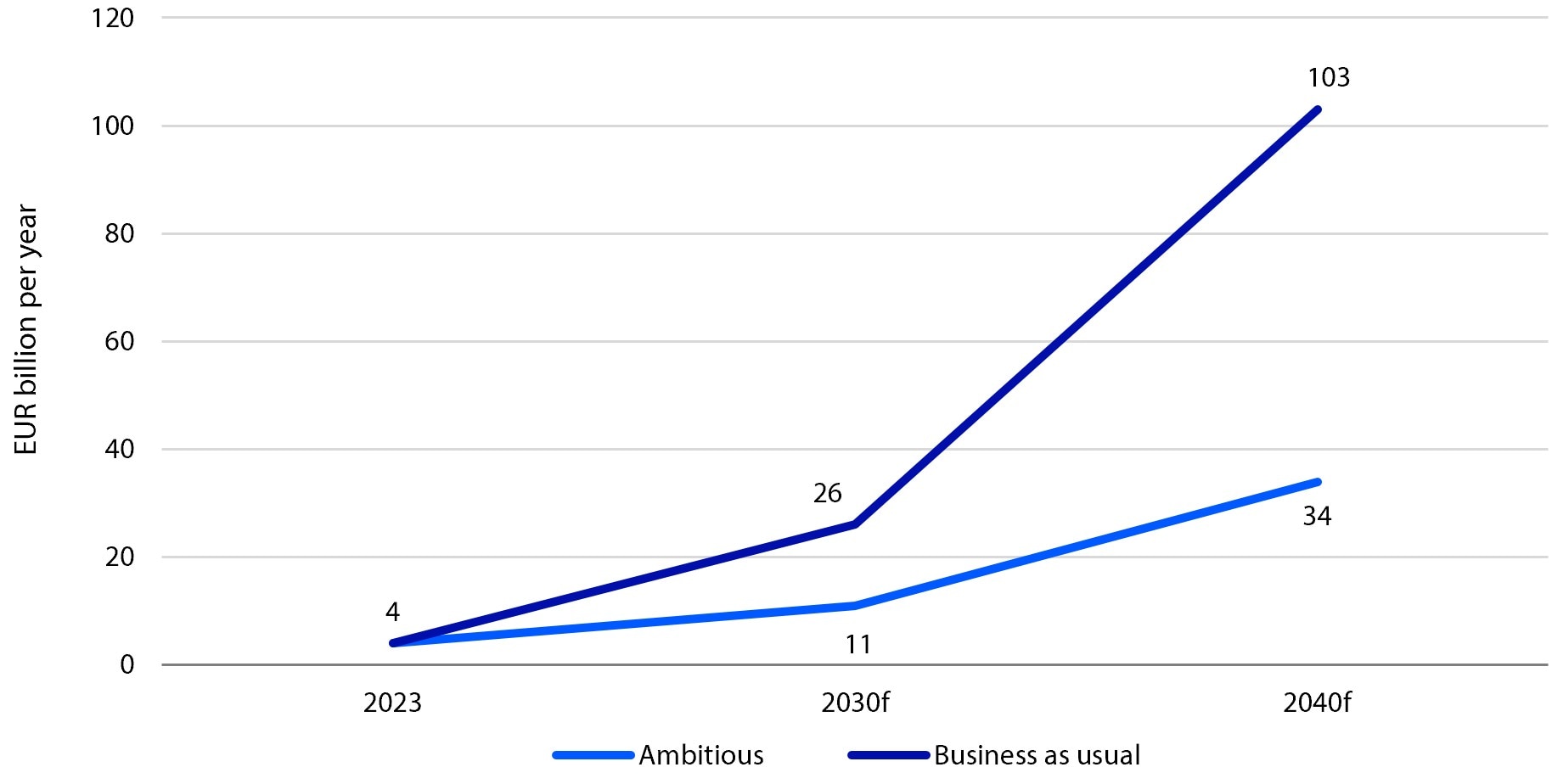
The difference in annual congestion-management costs between these scenarios is approximately EUR 70bn, which is broadly comparable to the required grid investments of EUR 80bn to EUR 100bn per year. Meanwhile, the total economic, environmental, and societal losses of underinvestment extend far beyond congestion-management costs. Some studies estimate that cumulative gross domestic product (GDP) losses due to grid constraints could reach EUR 1.6 trillion in Germany and EUR 4.7 trillion across the EU by 2050.
Grid congestion leads to renewable curtailment
Another consequence of grid congestion is that renewable energy is curtailed when grids cannot handle the growing volume of wind and solar energy generation being fed into the grid simultaneously. Germany illustrates the scale that curtailment can reach in a transmission-constrained system. In 2024, Germany curtailed 2.98% of its renewable generation, equivalent to approximately 4.6TWh of offshore wind, 3.4TWh of onshore wind, and 1.4TWh of solar generation – enough energy to power 3m households. Great Britain faces a similar challenge, particularly in transporting wind power from Scotland to demand centers in England. In 2024, 8.3TWh, or approximately 10% of potential wind generation, was curtailed because of grid congestion. When renewable generation is curtailed due to grid constraints, it is possible that demand is met by a more carbon-intensive generation mix.
Delays in electrification and renewable projects due to growing grid connection queues
One of the clearest signals that electricity networks are becoming a constraint on the energy transition is the rapid growth of grid connection queues. Across Europe, requests for new electricity demand, renewable generation, and storage capacity increasingly exceed the capacity currently available on the grid. As a result, projects that are otherwise ready to proceed can face delays of months or years before they connect, slowing renewable deployment, industrial electrification, housing development, and other investment.
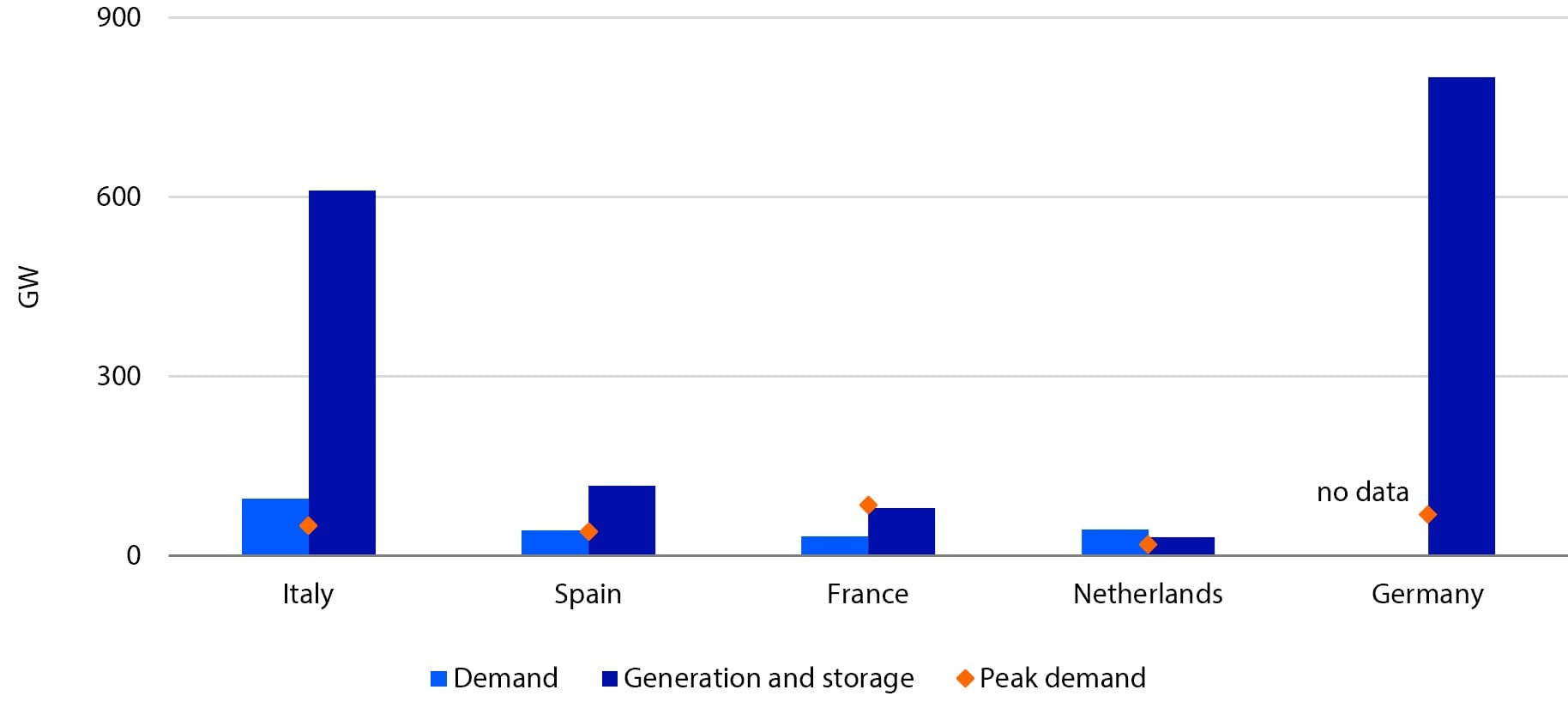
Figure 11 illustrates the scale of this challenge by comparing connection queues for new demand and for generation and storage projects with peak electricity demand in selected countries. Italy’s generation and storage queue exceeds 600GW, while Spain’s exceeds 100GW. In the Netherlands, TSO and DSO waiting lists include 44GW of demand requests and 32GW of generation requests. To put this into perspective, national peak demand is roughly 19GW, illustrating the scale of the current demand for grid access. Although not every queued project will ultimately be built, the figures demonstrate that demand for grid access is far outpacing the capacity that networks can currently provide.
The effects are increasingly visible in the real economy. In the Utrecht region (in Dutch) of the Netherlands, grid constraints have placed new and larger connections on waiting lists, affecting business expansion, housing projects, and electrification initiatives. Denmark offers a comparable example: After a surge in applications from large consumers, including data centers, batteries, and power-to-X projects, Energinet temporarily paused new connection agreements and shifted away from a purely first-come-first-served approach. These cases show how grid availability is becoming a key determinant of when and where new economic activity can take place, with implications for regional development, competitiveness, and the pace of decarbonization.
Figure 11: Grid connection queues for demand and generation and storage projects compared to peak demand in selected countries
The success of the great electrification depends on the grid
The electricity grid is the backbone of the great electrification. Electrifying transport, buildings, and industry, while integrating rapidly growing volumes of wind, solar, storage, and data centers, is only possible if electricity can be transported to where and when it is needed. When grid development falls behind, the effects cascade through the energy transition: renewable generation is curtailed, system costs rise, and new demand, generation, and storage projects are forced to wait for a connection. Grid capacity therefore increasingly determines not only how quickly Europe can decarbonize, but also where new housing, industrial activity, and other investment can take place.
Given long project lead times and the need to align the interests of grid operators, regulators, investors, governments, and grid users, Europe’s grid constraints are unlikely to ease quickly. RaboResearch expects congestion and connection queues to remain a challenge throughout the next decade. Even as permitting improves, shortages of skilled workers and constrained equipment supply chains are likely to play a larger role in determining the pace of grid expansion. As a result, measures that make better use of existing capacity, including flexibility, storage, smart system operation, alternative connection arrangements, and more effective queue management, will become increasingly important for alleviating congestion and accelerating electrification. A forthcoming publication in RaboResearch’s Great Electrification series will examine these options in more detail.